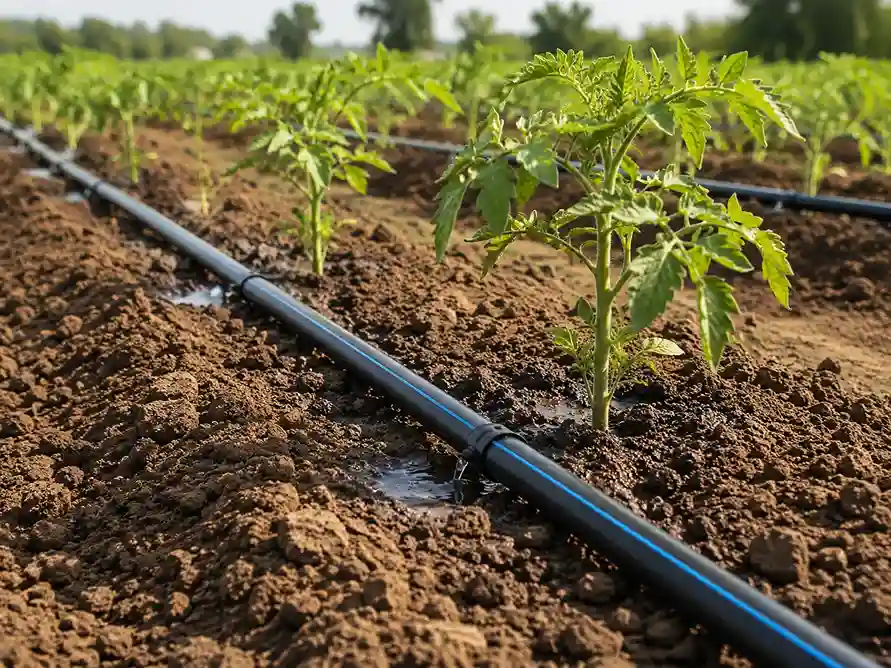
Pipe leaks in irrigation systems may seem like a minor issue at first, but their impact can affect multiple aspects of agricultural operations. Uneven water distribution can prevent crops from receiving a consistent water supply.
Water wastage increases operational costs that could otherwise be reduced. The time spent dealing with repeated repairs should also be allocated to more productive farming activities.
In many cases, pipe leaks do not occur because the pipes are damaged, but because the pipes selected from the beginning are not suitable for the irrigation system requirements.
Choosing the wrong material for the soil conditions, using pipes with unsuitable pressure ratings, or installing incompatible fittings are issues that can actually be avoided through careful planning before purchase.
Let’s explore the important factors you need to consider before buying pipes for an agricultural irrigation system.
7 Factors to Consider When Choosing Agricultural Pipes
1. Match the Pipe with Your Irrigation System Type
The type of irrigation system determines the required pipe specifications. Drip irrigation systems require low-pressure pipes and smaller diameters for lateral lines.
Sprinkler irrigation systems require higher pressure capacity and pipes with adequate pressure ratings for the main distribution lines. Surface irrigation systems have different requirements altogether.
Start by identifying your irrigation system before deciding on the pipe material or diameter. Mistakes at this stage can affect every technical decision that follows.
2. Choose the Right Pipe Material
Pipe material determines resistance to environmental conditions, flexibility during installation, and the overall service life of the irrigation system.
The three most commonly used materials for agricultural irrigation systems are HDPE, PVC, and LDPE, each with different characteristics.
For example, agricultural fields with unstable soil conditions or uneven terrain are better suited with flexible materials such as HDPE or LDPE compared to rigid PVC pipes.
Meanwhile, for pressurized main pipelines, HDPE PE 100 pipes are highly recommended due to their superior performance and longer service life.
3. Ensure the Working Pressure (PN/SDR) Matches Your Requirements
Every pipe has a maximum working pressure limit, usually expressed through PN (Pressure Nominal) or SDR (Standard Dimension Ratio) ratings.
Pipes operated beyond their recommended pressure limits will experience faster degradation and have a higher risk of leakage or failure.
Calculate the system’s operating pressure, including possible pressure spikes, then select a pipe with a suitable PN rating and safety margin.
For example, HDPE pipes with SDR 11 are rated for PN 16 working pressure, while SDR 17 corresponds to PN 10.
4. Determine the Right Pipe Diameter
Pipe diameter determines the water flow capacity that the irrigation system can handle.
The main pipeline that delivers water from the source to the entire agricultural area requires a larger diameter, while secondary distribution lines can use smaller diameters.
Incorrect diameter calculations can cause significant pressure drops at the end of distribution lines, resulting in areas farther from the water source receiving less water than planned.
ALVApipe Water is available in various diameter options, including OD 20 mm, 25 mm, 32 mm, 40 mm, 50 mm, 63 mm, 75 mm, 90 mm, up to 250 mm, allowing both main pipelines and secondary distribution networks to be properly configured according to system requirements.
5. Pay Attention to Pipe Connections and Fitting Quality
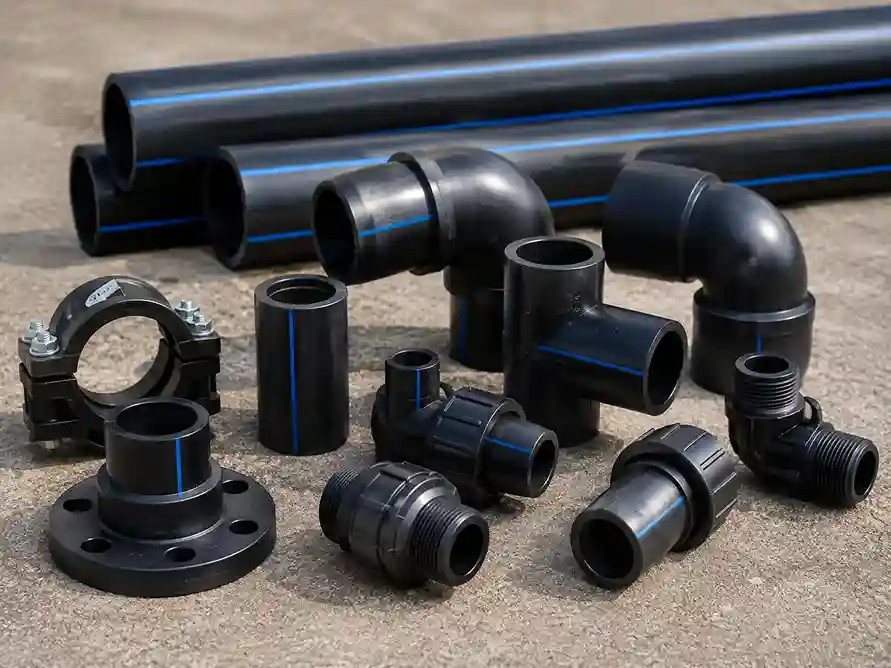
Pipe joints are one of the most vulnerable points in an irrigation system.
Fittings that are incompatible with the pipe material or improperly installed connections can become major causes of leaks after the system has been operating for some time.
Make sure the fittings are specifically designed for the selected pipe material and are supplied by a reliable manufacturer to ensure dimensional compatibility.
For HDPE pipes, butt fusion and electrofusion connection methods provide excellent joint integrity because they create a connection that becomes part of the pipe structure itself.
6. Consider Land Conditions and Environmental Factors
Agricultural environments can be challenging for piping materials.
Exposure to fertilizers, pesticides, high humidity, and temperature fluctuations between day and night requires pipes with adequate chemical and thermal resistance.
For fields exposed to direct sunlight, make sure the pipe material has sufficient UV resistance.
Meanwhile, for underground installations, consider the pipe’s ability to withstand external pressure from surrounding soil.
7. Choose a Trusted Pipe Manufacturer or Supplier
Technical specifications are only valuable when the delivered product actually meets those standards.
Choose a supplier or manufacturer that can provide certification documents rather than relying only on unsupported claims.
Manufacturers with valid SNI certification provide assurance that their products have undergone independent technical testing to verify material quality, dimensions, and pipe performance.
One of the SNI-certified HDPE pipes that can be considered is ALVApipe, which holds SNI 4829.2:2015 certification issued by the National Standardization Agency of Indonesia (BSN), with documentation that can be verified.
Learn more about HDPE pipe SNI standards and the testing parameters behind them.
Comparison of Agricultural Pipe Types
Below is a comparison of three commonly used pipe materials for agricultural irrigation systems to help you select the right option based on your land conditions and irrigation requirements.
| Pipe Type | Advantages | Limitations | Best Applications |
| HDPE | Flexible, corrosion resistant, service life up to 50 years, UV resistant, available in various pressure classes | Higher initial cost compared to PVC | Pressurized main pipelines, underground installation, uneven terrain |
| PVC | Affordable, widely available, lightweight | Less flexible, vulnerable to cracking under extreme temperatures and impact | Secondary distribution lines, low-pressure irrigation systems |
| LDPE | Highly flexible, lightweight, easy to roll and move | Lower working pressure, weaker structural strength | Drip irrigation lateral lines, final distribution lines |
Why Is HDPE Pipe Widely Used for Agricultural Irrigation Systems?
Among various available pipe materials, HDPE pipes are increasingly becoming the preferred choice for modern irrigation systems.
There are several strong reasons behind this trend:
- Flexible and Able to Follow Land Contours. With elasticity exceeding 700%, HDPE pipes can follow uneven land surfaces and adapt to soil movement without cracking or leaking. This flexibility makes HDPE suitable for agricultural areas with challenging terrain conditions.
- Resistant to Corrosion and Moisture. HDPE material does not easily react with fertilizers, pesticides, or minerals commonly found in agricultural environments.. Its corrosion resistance prevents material degradation caused by chemical exposure and helps maintain clean irrigation water quality.
- Strong Connections Through Proper Installation Methods. HDPE pipe systems can achieve excellent joint strength through proper welding methods. The butt fusion process creates a connection that becomes integrated with the pipe body, reducing the risk of leakage at connection points.
- Available in Various Sizes and Pressure Classes. HDPE pipes are available in a wide range of sizes, from small diameters for lateral irrigation lines to large diameters for main distribution pipelines. Various pressure classes, ranging from PN 6.3 to PN 16, allow farmers and irrigation planners to select pipes based on specific technical requirements.
- Suitable for Various Modern Irrigation Applications. From low-pressure drip irrigation systems to higher-pressure sprinkler systems, HDPE pipes can be adapted to almost all types of irrigation systems used in modern agriculture.
Why Does Pipe Selection Determine Irrigation System Reliability?
Choosing the right pipe directly affects how reliably an irrigation system performs throughout the growing season.
A properly selected pipe system helps to:
- Maintain Even Water Distribution. Ensure water flows evenly throughout the entire irrigation network so every area of the field receives a consistent supply according to crop requirements.
- Reduce the Risk of Leakage. Minimize leaks that can damage soil conditions around leakage points and disrupt irrigation performance.
- Improve Water Use Efficiency. Support efficient water management because a properly integrated system reduces water losses along the distribution network.
- Reduce Repair Frequency. Lower the need for frequent repairs that require additional time, labor, and operational costs during critical farming periods.
- Reduce Long-Term Operational Costs. Control long-term expenses because suitable pipe materials provide the expected service life with minimal maintenance requirements.
Agricultural Pipe Buying Checklist
Use the following checklist before deciding which agricultural pipe to purchase:
- The irrigation system type has been determined (drip, sprinkler, or surface irrigation)
- The pipe diameter matches the planned water flow requirements
- The pipe working pressure matches the irrigation system’s operating pressure
- The pipe material is suitable for land conditions and environmental factors
- The fittings are compatible with the selected pipe material
- The supplier provides clear and verifiable product specifications
- Product certification is available and valid (such as SNI certification for HDPE water pipes)
Choose the Best Agricultural Pipe with ALVApipe Support!
Choosing agricultural pipes should not be based only on price.
Material selection, pipe diameter, working pressure, land conditions, and connection quality must be evaluated together to ensure the chosen solution matches the irrigation system requirements.
PT Alpha Cikupa Makmur, through its ALVApipe brand, is an SNI-certified water pipe manufacturer in Tangerang that has been operating since 1998.
The company produces HDPE water pipes made from PE 100 material, certified under SNI 4829.2:2015 and ISO standards.
ALVApipe products are available in diameters ranging from OD 20 mm to 250 mm, with pressure classes from SDR 11 to SDR 26.
Every ALVApipe product is manufactured under strict and consistent quality control standards to ensure reliable performance in every production batch.
The ALVApipe team is also ready to help you determine the most suitable pipe specifications based on your irrigation system requirements and agricultural land conditions.
Contact the ALVApipe team via WhatsApp at +6287726663295 to get expert recommendations and the best price offer for your agricultural pipe needs!