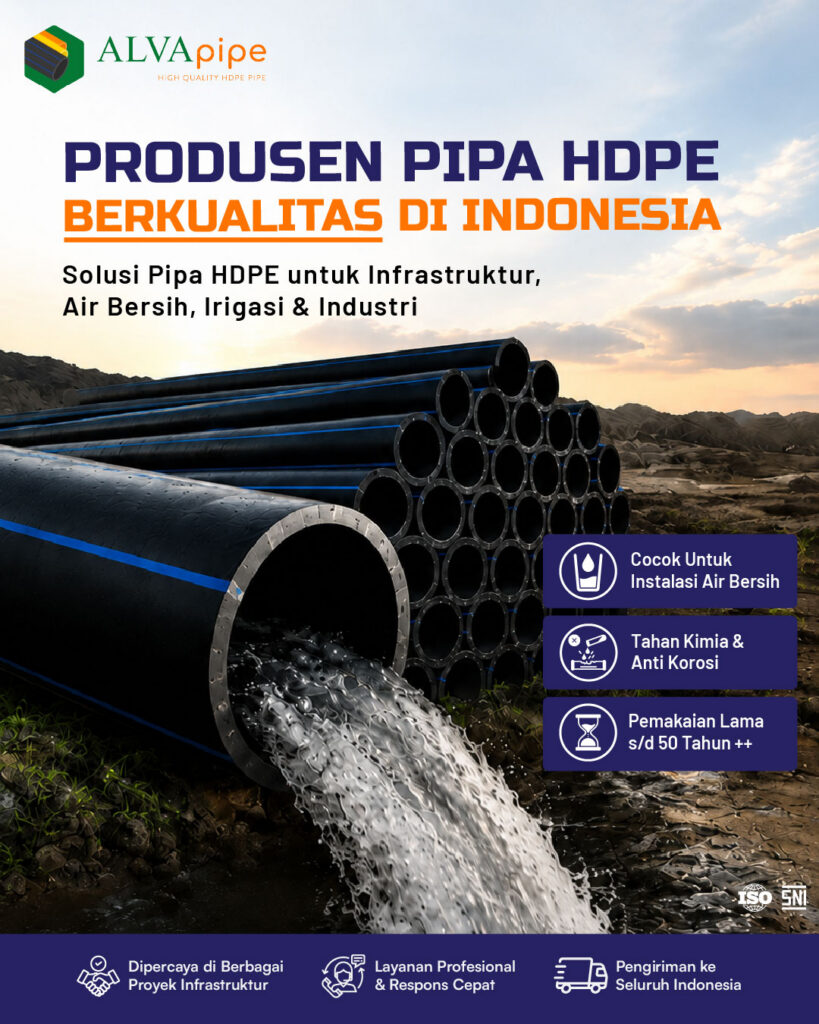
The Indonesian HDPE pipe market is filled with numerous brands offered at vastly different price points from inexpensive products with unclear specifications to those backed by official certification documents.
These price differences often reflect differences in material quality, manufacturing standards, and whether the products have undergone testing to verify that they are truly safe and reliable for use.
Before deciding which pipe to purchase, one important question should be answered: Can the quality of the pipe you use truly be guaranteed?
What Is SNI Certification for HDPE Pipes?
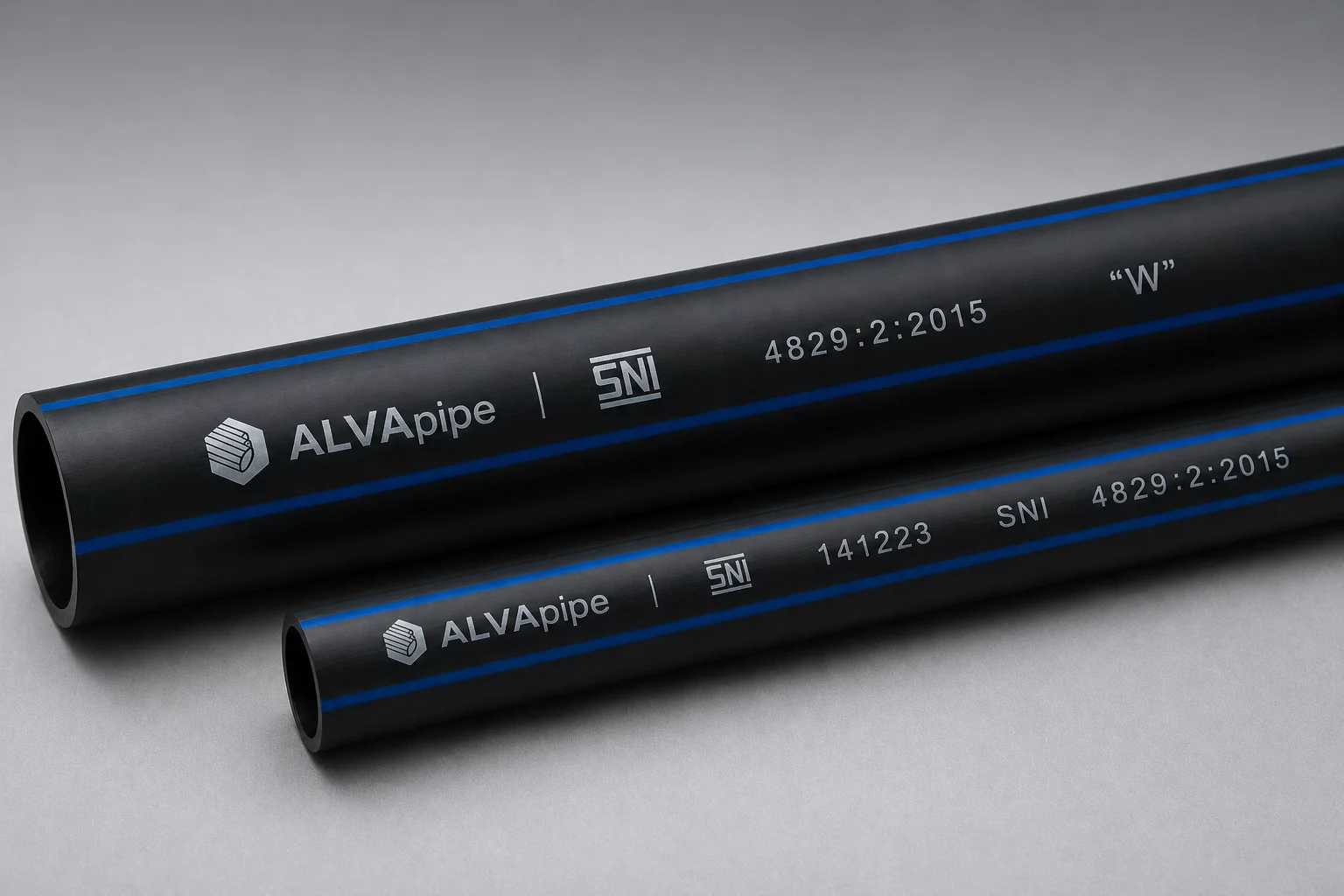
SNI (Indonesian National Standard) is a technical standard established by the National Standardization Agency of Indonesia (BSN) as the official quality benchmark for products distributed in Indonesia. For HDPE pipes used in drinking water supply systems, the applicable standard is SNI 4829.2:2015.
This standard specifies the technical requirements that every HDPE pipe product must meet before it can be marketed with the SNI label. These requirements cover material specifications, dimensions, wall thickness, and a series of performance tests that products must pass before certification is granted.
Why Is SNI Important for Projects and Pipe Retailers?
1. Ensures Consistent Product Quality
SNI-certified products are manufactured under measurable and verified standards. This means that the quality you receive in the first batch should remain consistent in subsequent batches, thanks to monitoring mechanisms that ensure production standards are continuously maintained.
2. Meets Large-Scale Project Requirements
Infrastructure projects funded by government institutions or official organizations almost always require the use of SNI-certified materials.
Without this certification, your materials may be rejected during inspections, potentially causing project delays and additional costs.
3. Builds Customer Trust
For pipe retailers, offering SNI-certified products serves as a quality assurance. Customers are more likely to purchase from suppliers that can provide this guarantee than from those that cannot.
Learn more about water pipe quality standards that should serve as a reference when selecting products for resale or project applications.
Testing Parameters Under SNI Certification for HDPE Pipes
Before SNI certification is granted, HDPE pipes must undergo a series of technical tests, including the following:
1. Dimensional and Wall Thickness Testing
The first test verifies that the pipe’s physical dimensions including its outside diameter (OD) and wall thickness match the stated specifications.
For example, a pipe labeled as “SDR 11 OD 110 mm” must genuinely have a minimum wall thickness of approximately 10 mm throughout its cross-section.
2. Hydrostatic Pressure Testing
This test simulates actual operating conditions by applying water pressure inside the pipe over a specified period. Two types of hydrostatic tests are commonly performed:
- Short-term hydrostatic test. The pipe is subjected to high pressure for a short duration to verify the material’s basic strength.
- Long-term hydrostatic test. The pipe is tested under specific pressure conditions for an extended period to predict its long-term performance.
3. Density Testing
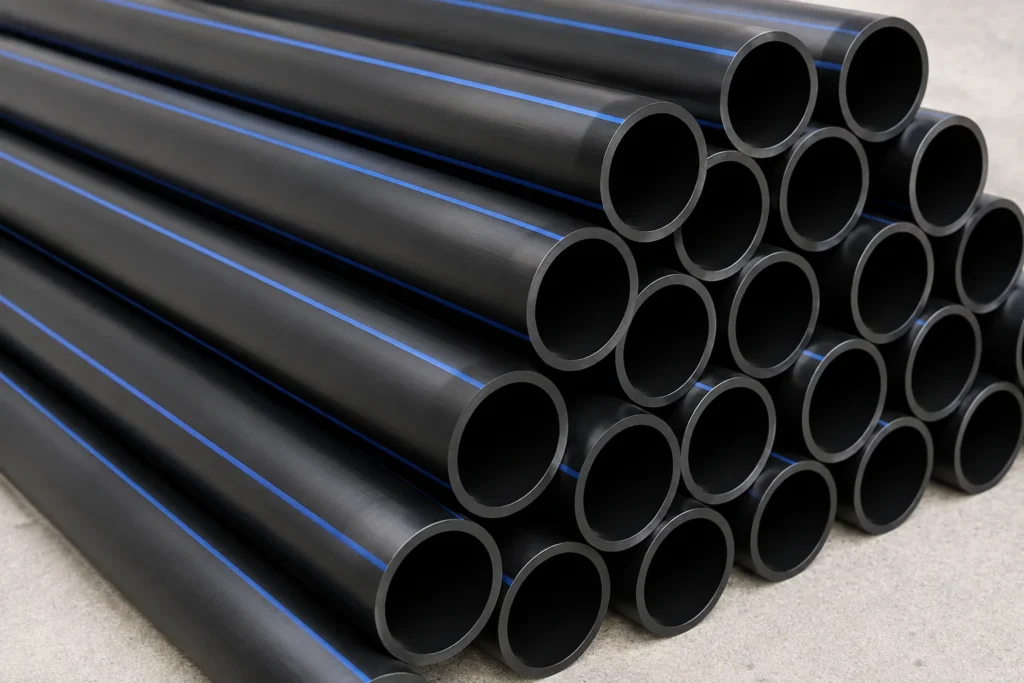
Density testing verifies that the material used genuinely meets the claimed resin grade specifications, whether PE80 or PE100.
If the density does not comply with specifications, the material’s mechanical strength will fail to meet the required standards even if the pipe appears visually correct.
This is one of the reasons uncertified pipes pose significant risks. Without verified density testing, there is no guarantee that the material actually matches the grade indicated on the label.
4. Slow Crack Growth Resistance Testing
Slow crack growth is a dangerous pipe failure mechanism because it develops gradually and often remains undetectable from the outside.
Small cracks within the material structure can propagate over many years until they eventually result in leaks or complete system failure.
Imagine a pipe that has been buried underground for ten years and appears perfectly intact externally, while microscopic cracks have slowly spread internally until the system suddenly fails without warning.
To assess this vulnerability, laboratories perform tests designed to accelerate the slow crack growth mechanism.
One commonly used method is the Full Notch Creep Test (FNCT). In this test, material samples are intentionally notched and immersed in a specialized detergent solution at elevated temperatures of around 80°C.
These conditions simulate decades of operational stress and environmental exposure within a much shorter testing period. The time taken before the material cracks is then measured.
The longer the material withstands the test, the better its resistance to slow crack growth under actual service conditions.
5. Environmental Resistance Testing
This category includes several tests evaluating the material’s ability to withstand environmental conditions encountered during operation, such as:
- Thermal Stability Testing (Oxidation Induction Time): Measures the material’s resistance to degradation caused by prolonged heat exposure.
- UV Resistance Testing: Verifies that the material contains adequate UV stabilizers to prevent deterioration due to sunlight exposure.
- Chemical Resistance Testing: Ensures that the material does not react adversely to chemicals commonly present in transported water or surrounding soil conditions.
Ensure Your HDPE Pipes Are SNI Certified Choose ALVApipe!
SNI certification for HDPE pipes is a verification system that ensures every pipe has undergone rigorous testing and meets the minimum standards established for safety and performance.
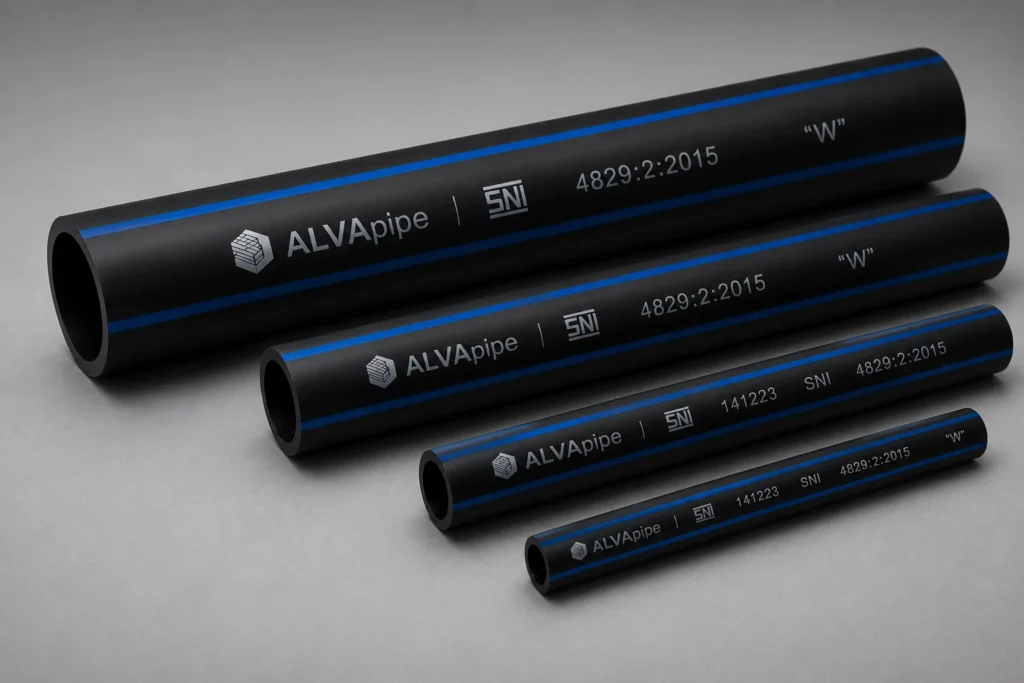
Through its ALVApipe brand, PT Alpha Cikupa Makmur manufactures HDPE water pipes that have obtained official SNI 4829.2:2015 certification from the National Standardization Agency of Indonesia (BSN), along with 69.42% Domestic Component Level (TKDN) recognition from the Ministry of Industry.
Every product is manufactured under strict quality control standards as part of our direct HDPE pipe manufacturing operations, ensuring reliable quality consistency in every shipment.
Consult with the ALVApipe team today regarding your HDPE water pipe requirements. Contact ALVApipe via WhatsApp at +62 877-2666-3295 for specification recommendations and the best pricing tailored to your project needs.