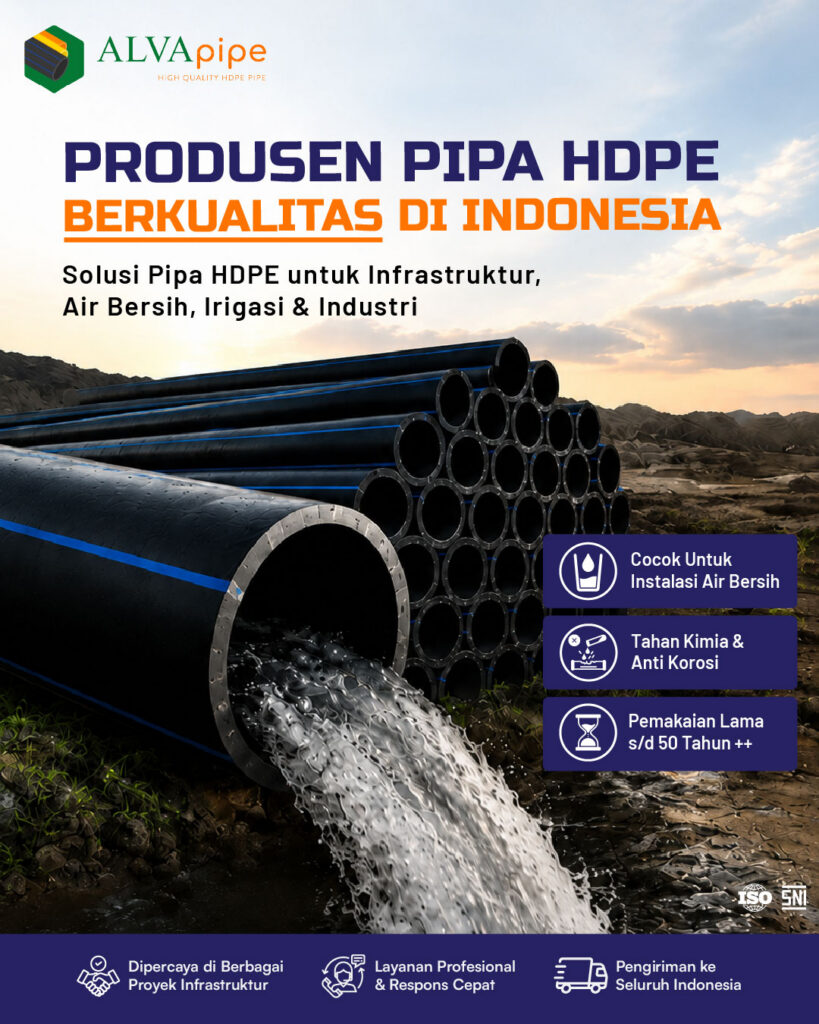

The lifespan of HDPE pipes generally reaches 50 years or more when installed and used under proper conditions.
This long service life comes from the characteristics of high-density polyethylene material, which is chemically resistant to corrosion, pressure, and various environmental conditions.
Compared to other materials such as metal pipes that are prone to rust or PVC pipes that are more vulnerable to high pressure, HDPE pipes offer significantly superior long-term durability.
However, the 50-year lifespan is not an automatic guarantee. Several factors determine whether the pipe can truly reach that service life or fail much sooner.
Why Is Pipe Lifespan Important in Infrastructure Projects?
In infrastructure projects, pipe material selection is often based only on initial cost. In reality, procurement cost is only a small portion of the total expense throughout the project lifecycle.
Pipes with shorter lifespans require more frequent replacement. Every replacement carries costs far beyond the pipe price itself, including excavation, operational downtime, labor, and potential damage to surrounding infrastructure.
In large-scale projects such as clean water distribution networks, irrigation systems, or industrial infrastructure, these costs can become extremely significant.
In addition, pipes approaching the end of their lifespan usually begin showing gradual issues.
Small undetected leaks, declining water pressure, or water contamination are common problems that emerge over time. All of these require recurring maintenance costs and disrupt operations.
In short, the decision made at the beginning of the project determines how many costs and operational problems will arise over the next several decades.
Factors That Affect HDPE Pipe Lifespan
HDPE pipe durability is not determined by a single factor. There are five major variables that should be understood before making procurement decisions.
1. Material Quality and Manufacturing Process
Not all HDPE pipes are manufactured to the same standard. The quality of the polyethylene raw material, extrusion process consistency, and compliance with production standards determine how consistently the pipe performs in real operating conditions.
HDPE pipes produced according to recognized quality standards have uniform material density, consistent wall thickness, and precise dimensional tolerances.
Pipes made with substandard materials may appear physically similar, but their long-term performance is very different.
This is why choosing an HDPE pipe supplier that can provide technical documentation and product certifications is extremely important.
2. Operational Pressure and Load
Every HDPE pipe is designed to operate within a certain pressure rating, commonly expressed as PN (Pressure Nominal).
Using pipes below their recommended pressure rating is the ideal condition for maximizing HDPE pipe lifespan.
On the other hand, operational pressure that frequently exceeds design limits or repeated extreme pressure fluctuations accelerates material fatigue.
Water hammer or sudden pressure surges are among the most common causes of premature piping system failure and can usually be prevented with proper system design.
3. Environmental Conditions (Soil, Temperature, UV Exposure)
For underground installations, surrounding soil conditions significantly influence how long HDPE pipes will last.
Soils containing aggressive chemicals, extreme pH levels, or specific contaminants may accelerate material degradation, even though HDPE is generally resistant to most chemicals.
Operating temperature also plays a major role. HDPE pipes perform optimally at temperatures up to 60°C, with ideal daily operating temperatures ranging between 20°C and 40°C.
Continuous exposure to temperatures above 60°C can reduce mechanical strength and shorten material lifespan.
For above-ground installations, UV exposure becomes another important factor, since ultraviolet radiation can degrade plastic materials without adequate protective layers.
4. Installation Method
Improper installation procedures are one of the most common causes of premature HDPE pipe lifespan reduction.
Uneven soil compaction around the pipe, bending beyond the allowable radius, or poorly executed joints can all become future failure points.
HDPE pipe installation specifications differ depending on the application, whether for drainage, clean water distribution, or industrial systems. For this reason, installation teams must understand and follow the appropriate technical guidelines.
5. Maintenance and Usage
HDPE pipes are known as low-maintenance materials, but that does not mean they require no maintenance at all.
Regular inspections to detect early warning signs, operational pressure monitoring, and immediate response to detected anomalies are practices that help pipes achieve or even exceed their planned lifespan.
Improper usage, such as transporting fluids chemically incompatible with HDPE or consistently operating above pressure ratings, will shorten pipe lifespan even if the material quality itself is excellent.
Signs That an HDPE Pipe Is Reaching the End of Its Lifespan
HDPE pipes nearing the end of their service life usually do not fail suddenly. There are several early warning signs that can be detected beforehand.
- Declining Flow Performance: If water flow rate or pressure at the end of the system begins decreasing without changes in the source or pump, this may indicate problems within the pipeline.
- Emerging Leaks: Small leaks that initially appear at one point and gradually increase are signs that the material integrity is declining.
- Deformation or Cracks: For installations that can be visually inspected, pipe wall deformation, cross-sectional shape changes, or surface cracks are clear indications that the pipe is no longer in optimal condition and should be evaluated immediately.
Choose the Right Pipe from the Start
The ability of HDPE pipes to last up to 50 years provides long-term value that directly impacts total project cost, operational reliability, and reduced disruption over decades.
However, this value can only be achieved when the initial decisions are correct from choosing high-quality materials and reliable manufacturers to selecting specifications suited to the project requirements.
These early decisions determine whether the pipe will last 20 years or 50 years.
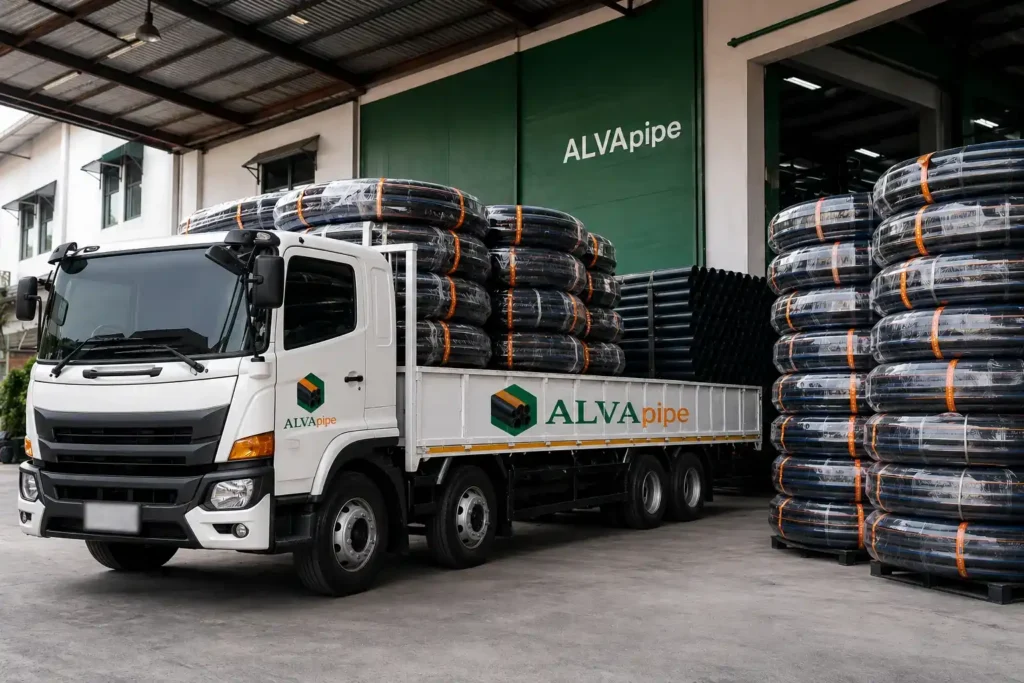
ALVApipe provides HDPE water pipes manufactured according to quality standards for various infrastructure project needs.
Produced directly by PT Alpha Cikupa Makmur since 1998, every ALVApipe product is certified with SNI and ISO standards, corrosion-resistant, flexible, and designed with an estimated lifespan of up to 50 years.
Consult your project’s HDPE water pipe requirements with the ALVApipe team to receive the most suitable specification recommendations based on your project conditions and scale!