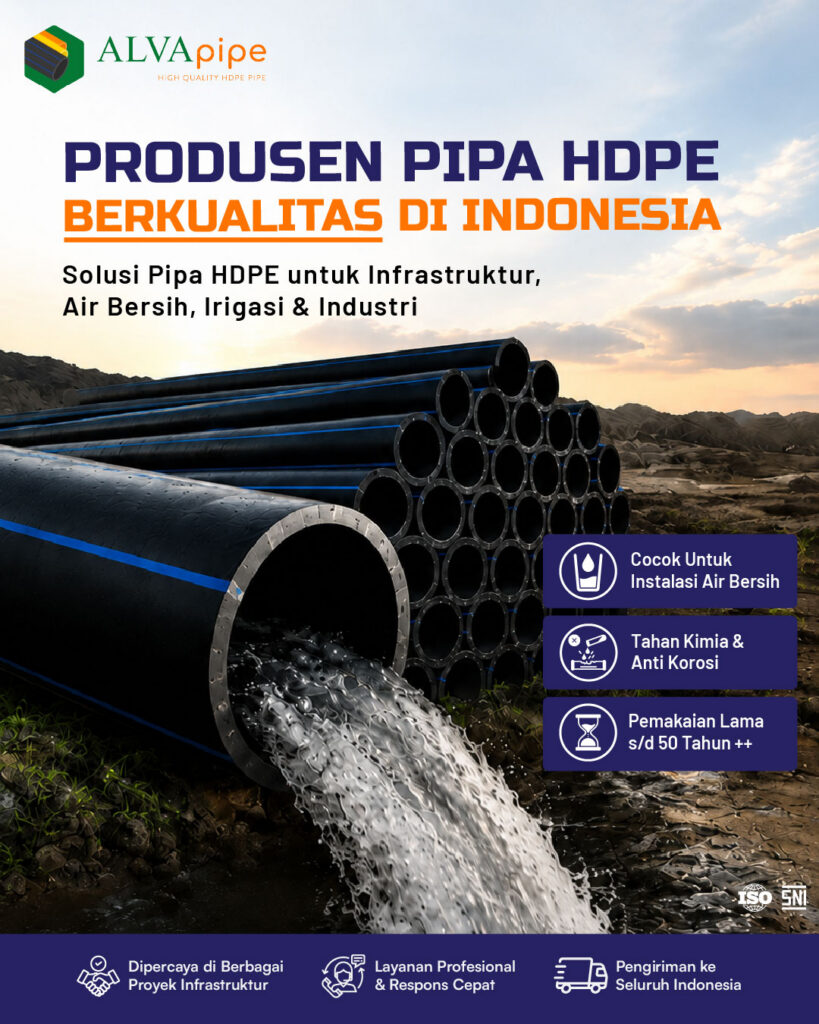
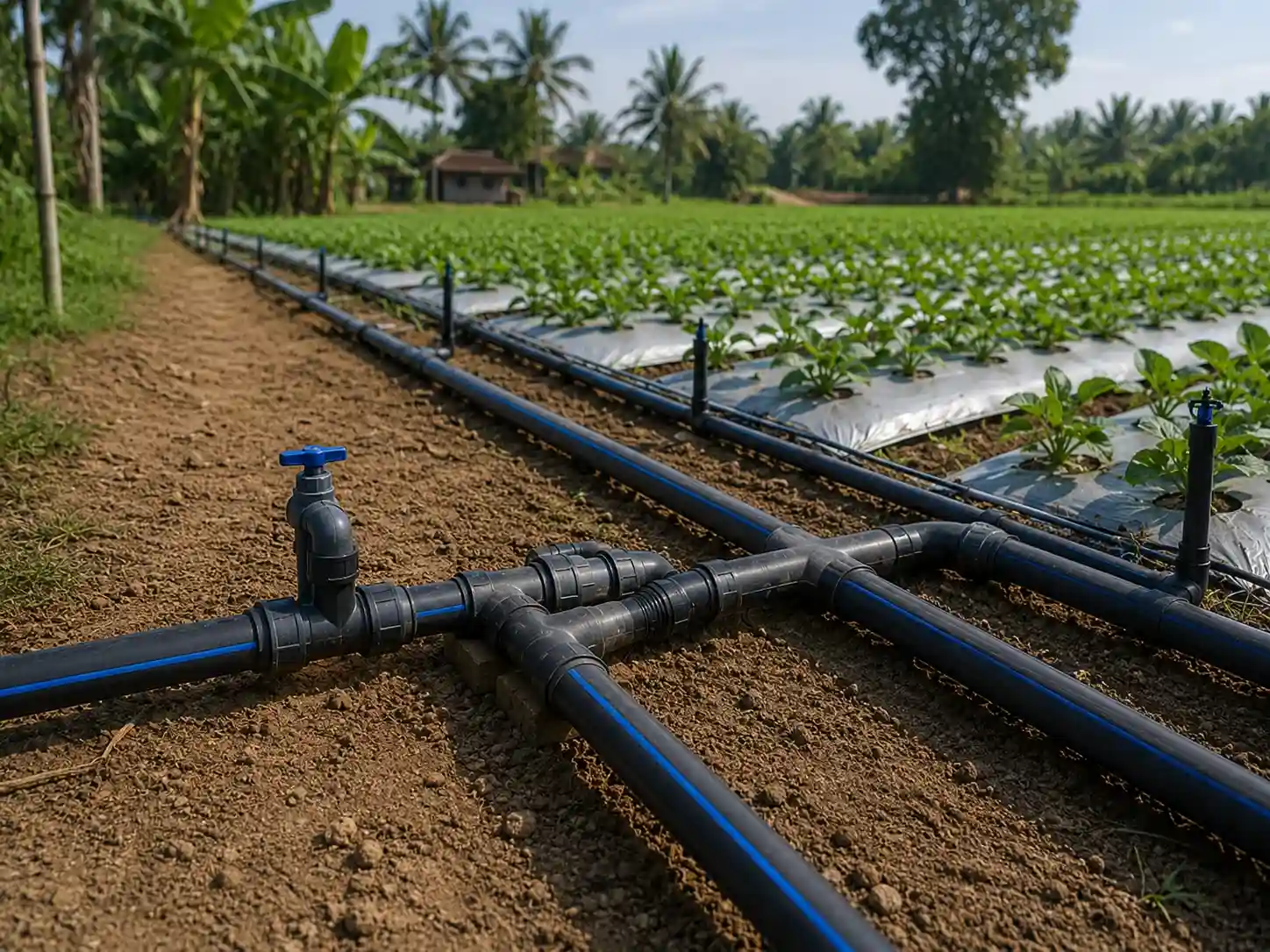
HDPE pipes are becoming increasingly popular in modern agricultural irrigation systems, ranging from small-scale drip irrigation networks to large-scale water distribution systems for extensive farming areas.
However, like any other piping material, HDPE pipes have their own strengths and limitations. Understanding these characteristics is essential before selecting the right piping solution for your irrigation system and field conditions.
By evaluating both the advantages and disadvantages of HDPE pipes, farmers and agricultural project planners can make better decisions to ensure efficient, reliable, and long-lasting irrigation infrastructure.
Let’s explore the key benefits and limitations of HDPE pipes for agricultural applications.
Understanding HDPE Pipes for Agricultural Irrigation Systems
HDPE pipes are manufactured from High-Density Polyethylene (HDPE), a high-density polyethylene material known for its strength, flexibility, and excellent resistance to environmental conditions.
This material is available in several grades, with PE100 being one of the highest-performance grades commonly used for water supply systems and agricultural irrigation applications.
One of the main advantages of HDPE pipes is their high flexibility, allowing them to easily follow uneven land contours while reducing the need for excessive bends and fittings. This characteristic simplifies installation and minimizes potential leakage points.
HDPE pipes also offer excellent resistance against fertilizers, pesticides, and chemical exposure. Unlike metal pipes, HDPE does not corrode, making it highly suitable for agricultural environments with high moisture levels and varying soil conditions.
In agriculture, HDPE pipes are widely used for various applications, including:
- Main water distribution pipelines
- Drip irrigation systems
- Sprinkler irrigation networks
- Underground irrigation installations
- High-pressure water transmission systems
Their durability, chemical resistance, and adaptability make HDPE pipes one of the preferred choices for modern agricultural irrigation infrastructure.
Advantages of HDPE Pipes for Agriculture
1. Flexible and Able to Follow Land Contours
One of the biggest advantages of HDPE pipes is their exceptional flexibility. With elasticity exceeding 700%, HDPE pipes can adapt to uneven terrain and changing field conditions without requiring numerous elbows or additional fittings.
This flexibility simplifies the installation process while reducing the number of connection points that could potentially become leakage sources.
High flexibility also allows HDPE pipes to withstand soil movement commonly found in agricultural areas, including soil expansion and contraction caused by changes in moisture content.
For farms located on uneven landscapes or areas with unstable soil conditions, HDPE pipes provide a more reliable solution compared to rigid piping materials.
2. Excellent Resistance to Corrosion and Moisture
Agricultural environments often expose irrigation pipes to fertilizers, pesticides, minerals, and continuous moisture. These conditions can accelerate degradation in certain piping materials, especially metal-based pipes.
HDPE pipes have excellent chemical resistance, allowing them to maintain their structural performance even when exposed to various agricultural substances.
Unlike steel pipes, HDPE pipes do not rust or corrode. This characteristic significantly extends their service life and reduces maintenance requirements over time.
3. Strong and Reliable Pipe Connections with Proper Joining Methods
HDPE pipes can be connected using butt fusion or electrofusion methods, where the pipe sections are heated and fused together to create a strong, seamless connection.
When the fusion process is performed correctly using proper equipment and qualified technicians, the strength of the joint can match or even exceed the strength of the original pipe body.
4. Available in Various Diameters and Pressure Ratings
HDPE pipes are available in a wide range of diameters, allowing them to meet different agricultural irrigation requirements.
Small-diameter HDPE pipes can be used for specific distribution lines, while larger diameters are suitable for main water supply networks that transport large volumes of water across agricultural fields.
In addition, HDPE pipes are available in various pressure classes, ranging from PN 6.3 to PN 16, allowing users to select the appropriate specification based on system pressure requirements.
Choosing the correct pipe diameter and pressure rating ensures optimal performance, efficient water distribution, and longer service life.
For more information about HDPE water pipes and available specifications, consult reliable HDPE pipe manufacturers.
5. Long Service Life with Proper Application
Certified PE100 HDPE pipes can have an estimated service life of up to 50 years when operated according to recommended conditions and installation standards.
This long lifespan reduces the frequency of pipe replacement, making HDPE pipes a cost-effective investment for long-term agricultural infrastructure.
Compared with materials that require frequent maintenance or replacement, HDPE provides better lifecycle value for irrigation systems designed for continuous operation.
6. Suitable for Various Agricultural Irrigation Systems
HDPE pipes are compatible with almost all modern agricultural irrigation methods, including:
- Drip irrigation systems
- Sprinkler irrigation systems
- Subsurface irrigation systems
- Gravity-fed water distribution systems
Their ability to handle different pressure requirements and environmental conditions makes HDPE pipes a versatile choice for various agricultural applications.
7. Requires Relatively Low Maintenance
Once properly installed, HDPE pipes require minimal maintenance compared with many alternative piping materials.
For example, HDPE does not require repainting like steel pipes, and it does not experience chemical degradation as easily as some conventional materials.
Lower maintenance requirements help reduce operational costs while minimizing downtime in agricultural irrigation systems.
Disadvantages of HDPE Pipes for Agriculture
Although HDPE pipes offer many advantages for agricultural irrigation systems, there are several limitations that should be considered before installation. Understanding these factors helps ensure that HDPE pipes are selected according to project requirements, budget considerations, and technical conditions.
1. Higher Initial Investment Compared to Some Alternative Pipes
The initial cost of HDPE pipes is generally higher than PVC or LDPE pipes with similar diameters.
This higher upfront investment is mainly influenced by the superior material properties of HDPE, including its flexibility, durability, chemical resistance, and longer service life.
However, when considering the total lifecycle cost, HDPE pipes can become a more economical choice because they require less maintenance and have a significantly longer operational lifespan.
For agricultural projects designed for long-term operation, the initial investment in HDPE pipes can provide better value over time.
2. Requires Specialized Joining Methods and Equipment
HDPE pipe installation commonly uses butt fusion or electrofusion methods to create strong and permanent joints.
However, these joining techniques require specialized equipment and trained personnel to ensure proper installation quality.
For projects located in remote agricultural areas, the availability of fusion machines and experienced technicians should be considered before choosing HDPE pipe systems.
If a simpler installation method is required, mechanical fittings can be used as an alternative. However, mechanical connections generally do not provide the same level of long-term integrity as fusion joints.
3. Installation Requires Skilled Technicians
The performance and service life of an HDPE pipe system depend heavily on proper installation practices.
Incorrect installation, such as excessive bending, improper fusion procedures, insufficient burial depth, or incorrect handling during transportation, may reduce the pipe’s durability and operational reliability.
Therefore, HDPE pipe installation should be carried out by technicians who understand proper procedures, including:
- Pipe handling and storage
- Fusion temperature and pressure control
- Alignment during joining
- Trenching and underground installation requirements
Proper installation ensures that HDPE pipes can achieve their expected performance throughout their service life.
4. Pressure Rating Selection Must Match the Application
HDPE pipes are available in different SDR (Standard Dimension Ratio) classes, which determine their ability to withstand operating pressure.
Selecting the wrong SDR class can result in reduced performance, inefficient material usage, or potential system failure.
The pipe specification should be selected based on:
- Operating pressure requirements
- Maximum static pressure
- Pressure fluctuations
- Water hammer risks
- Installation conditions
Choosing the correct pressure class ensures that the irrigation system operates safely and efficiently.
If you are unsure about the required specification, consult an HDPE pipe specialist to determine the most suitable solution for your agricultural application.
Comparison of HDPE Pipes with Other Pipe Materials
Besides understanding the advantages and disadvantages of HDPE pipes, comparing them with other commonly used agricultural piping materials is important when selecting the most suitable irrigation solution.
The following table shows the comparison between HDPE, PVC, and LDPE pipes:
| Aspect | HDPE | PVC | LDPE |
| Flexibility | Very high | Low | Very high |
| Corrosion resistance | Excellent | Good | Good |
| Joining method | Fusion welding or mechanical fitting | Solvent cement or mechanical connection | Compression fitting |
| Working pressure | PN 6.3 to PN 16 | Medium | Low |
| Installation difficulty | Moderate, requires specific procedures | Easy | Very easy |
| Main application | Pressurized main pipelines, underground installations | Secondary distribution lines, low-pressure applications | Drip irrigation lateral lines |
When Are HDPE Pipes the Right Choice for Agriculture?
HDPE pipes are most suitable for agricultural applications under the following conditions:
1. Drip Irrigation Systems
For drip irrigation, HDPE pipes are commonly used as main distribution pipelines that transport pressurized water from the source to distribution manifolds.
For smaller lateral drip lines, LDPE pipes are often preferred because they are lighter and easier to install.
2. Sprinkler Irrigation Systems
Sprinkler irrigation requires stable water pressure to ensure uniform water distribution.
HDPE pipes are suitable for main pipelines and distribution networks because they can withstand higher operating pressures while maintaining long-term reliability.
3. Main Water Distribution Networks
Large agricultural areas require pipelines capable of transporting high volumes of water efficiently.
HDPE pipes with larger diameters are commonly used for main water transmission lines because of their durability, pressure resistance, and low maintenance requirements.
4. Farms with Uneven Terrain
Agricultural fields with irregular landscapes often require piping systems that can adapt to changing ground conditions.
The flexibility of HDPE pipes reduces the need for additional fittings and minimizes potential leakage points, making them suitable for challenging terrain.
5. Long-Term Agricultural Infrastructure Projects
For farming projects that require reliable infrastructure for decades, HDPE pipes provide significant advantages.
With a service life of up to 50 years and minimal maintenance requirements, HDPE offers excellent long-term economic value compared with many conventional piping materials.
How to Choose the Right HDPE Pipe for Agricultural Applications
Selecting the right HDPE pipe is an important step in designing an efficient and reliable agricultural irrigation system. The pipe specification should not be chosen only based on price, but also according to technical factors such as water flow requirements, operating pressure, material quality, and installation conditions.
The following factors should be considered when choosing HDPE pipes for agriculture:
1. Determine the Required Pipe Diameter
Pipe diameter should be selected based on the required water flow rate (Q) for each section of the irrigation system.
The diameter calculation should consider the recommended flow velocity for pressurized water distribution systems, which is generally around 0.5 to 3 m/s.
The main pipeline, which carries the total water volume from the source, typically requires a larger diameter. Meanwhile, secondary distribution lines and smaller irrigation zones can use smaller diameters according to their individual flow requirements.
Choosing the correct diameter helps maintain stable water pressure, reduces energy losses, and improves overall irrigation efficiency.
2. Select the Appropriate Pressure Class (PN/SDR)
HDPE pipes are available in different SDR (Standard Dimension Ratio) classes, which determine the pipe wall thickness and pressure resistance capability.
Before selecting a pipe class, calculate the actual operating pressure of the irrigation system, including:
- Maximum static pressure
- Operating pressure fluctuations
- Potential pressure surge caused by water hammer
As a safety margin, the selected pressure rating should generally be 20–25% higher than the maximum operating pressure.
Common HDPE pipe pressure classifications include:
| SDR Class | Pressure Rating |
| SDR 11 | PN 16 |
| SDR 13.6 | PN 12.5 |
| SDR 17 | PN 10 |
| SDR 21 | PN 8 |
Selecting the correct SDR class ensures that the pipe can withstand operating conditions safely while avoiding unnecessary material costs.
3. Verify Material Quality
The quality of HDPE material directly affects pipe performance and durability.
For agricultural irrigation applications, it is recommended to choose pipes manufactured from PE100 material with verified certification.
Certified PE100 HDPE pipes should meet important quality parameters, including:
- Material density within the specified range
- Accurate wall thickness according to the claimed SDR classification
- Resistance against slow crack growth
- Compliance with hydrostatic pressure testing standards
For Indonesian applications, ensure the product complies with relevant standards such as SNI 4829.2:2015, which verifies the quality and performance requirements of HDPE water pipes.
Understanding HDPE pipe standards and testing parameters helps users avoid low-quality products that may fail prematurely.
4. Choose the Appropriate Joining Method
The joining method plays an important role in determining the reliability of an HDPE irrigation system.
For permanent pressurized pipelines, recommended joining methods include:
- Butt Fusion. Butt fusion is commonly used for larger pipe diameters, generally above 63 mm. This method creates a strong connection by heating and fusing the pipe ends together.
- Electrofusion. Electrofusion can be used for various pipe sizes, including smaller diameters. The fitting contains an embedded heating element that melts and bonds the pipe surface with the fitting.
Both methods can produce joints with strength equal to or greater than the pipe body when performed correctly.
For applications requiring removable connections or areas with limited access, mechanical compression fittings can be used. However, their long-term integrity is generally lower compared with fusion-based connections.
5. Consider the Manufacturer’s Reputation
Choosing a reliable manufacturer is essential to ensure consistent pipe quality and long-term system performance.
Before purchasing HDPE pipes, verify the following:
- Valid product certifications
- Permanent pipe markings showing material grade, standards, and SDR classification
- Manufacturing quality control processes
- Proven experience in agricultural and infrastructure applications
A trusted manufacturer provides not only quality products but also technical support to help customers select the correct specifications.
Choose High-Quality HDPE Pipes for Agriculture with ALVApipe
HDPE pipes provide significant advantages for modern agricultural irrigation systems, including:
- High flexibility
- Excellent corrosion resistance
- Long service life of up to 50 years
- Compatibility with various irrigation methods
- Low maintenance requirements
As an SNI-certified water pipe manufacturer in Tangerang, Indonesia, PT Alpha Cikupa Makmur through the ALVApipe brand produces high-quality HDPE water pipes made from PE100 material, certified according to SNI 4829.2:2015 and ISO standards.
ALVApipe HDPE pipes are available in:
- Outer diameter (OD): 20 mm to 250 mm
- Pressure classes: SDR 11 to SDR 26
Each ALVApipe product is manufactured under strict quality control procedures to ensure consistent performance and reliability in every production batch.
Whether you need HDPE pipes for drip irrigation, sprinkler systems, agricultural water distribution, or long-term farming infrastructure, ALVApipe provides solutions tailored to your project requirements.
Consult Your Agricultural HDPE Pipe Requirements with ALVApipe
Choosing the right HDPE pipe specification is essential for building an efficient and durable irrigation system.
Contact the ALVApipe team today to discuss your agricultural pipe requirements and receive recommendations for the most suitable specifications and competitive pricing.
WhatsApp: +6287726663295