In planning a water infrastructure project, budget constraints often drive decisions toward selecting the cheapest pipe materials available.
However, is a lower upfront cost truly beneficial in the long run? When it comes to infrastructure piping systems, the answer is usually no.
In fact, inexpensive materials at the beginning can become a major source of expenses once the system is operational if their service life does not match the project’s requirements.
Why Is Pipe Lifespan So Important in Infrastructure Projects?
1. Impact on Long-Term Costs
The cost of a piping system is not limited to the purchase price of the material. There are also routine maintenance costs, inspection costs, repair costs when leaks occur, and replacement costs if the system fails prematurely.
Pipes with a shorter service life require more frequent replacement.
Unfortunately, replacing a system that has already been installed within building structures or underground involves demolition costs, reconstruction costs, and operational disruptions that can be several times greater than the cost of the material itself.
Therefore, when selecting pipe materials, what should be calculated is the total cost of ownership, which includes the purchase price plus all costs incurred throughout the pipe’s service life.
Suppose you purchase two types of pipes for the same project requirement, both with a diameter of 3/4 inch (25 mm).
Pipe A is a standard pipe with an estimated service life of approximately 15 years and a price of around IDR 4,000 per meter.
Pipe B is the ALVApipe HDPE Pipe 3/4 Inch (25 mm) PN 10 SDR 17, sold in 100-meter rolls at a price of IDR 574,418 per roll. This translates to approximately IDR 5,744 per meter, with an estimated service life of up to 50 years due to its PE 100 material and SNI and ISO certifications.
Over a 50-year period, Pipe A would need to be replaced at least three times, resulting in a material cost of approximately IDR 12,000 per meter, excluding demolition and reinstallation expenses.
Meanwhile, Pipe B only needs to be installed once, with a total material cost of approximately IDR 5,744 per meter for the entire period. Although Pipe B has a higher upfront cost, its long-term cost is significantly lower.
2. Reliability of Water Distribution Systems
Water distribution systems are essential utilities that support all operational activities in residential developments, industrial estates, and public infrastructure projects.
Any disruption to the system, no matter how small, directly affects everyone who depends on it.
Pipes with long service lives and stable performance help project owners minimize the risk of service interruptions caused by network failures.
3. Operational Efficiency
From a project management perspective, any unplanned repair or replacement of piping system components disrupts operational efficiency.
Resources must be mobilized, work areas secured, and activities dependent on the water system temporarily suspended.
Investing in pipes with the appropriate service life from the outset is an effective way to minimize these unplanned disruptions and ensure consistent system performance throughout its operational lifespan.
Factors That Affect Pipe Lifespan
1. Pipe Material
Each material has different characteristics in terms of resistance to pressure, corrosion, and material degradation over time.
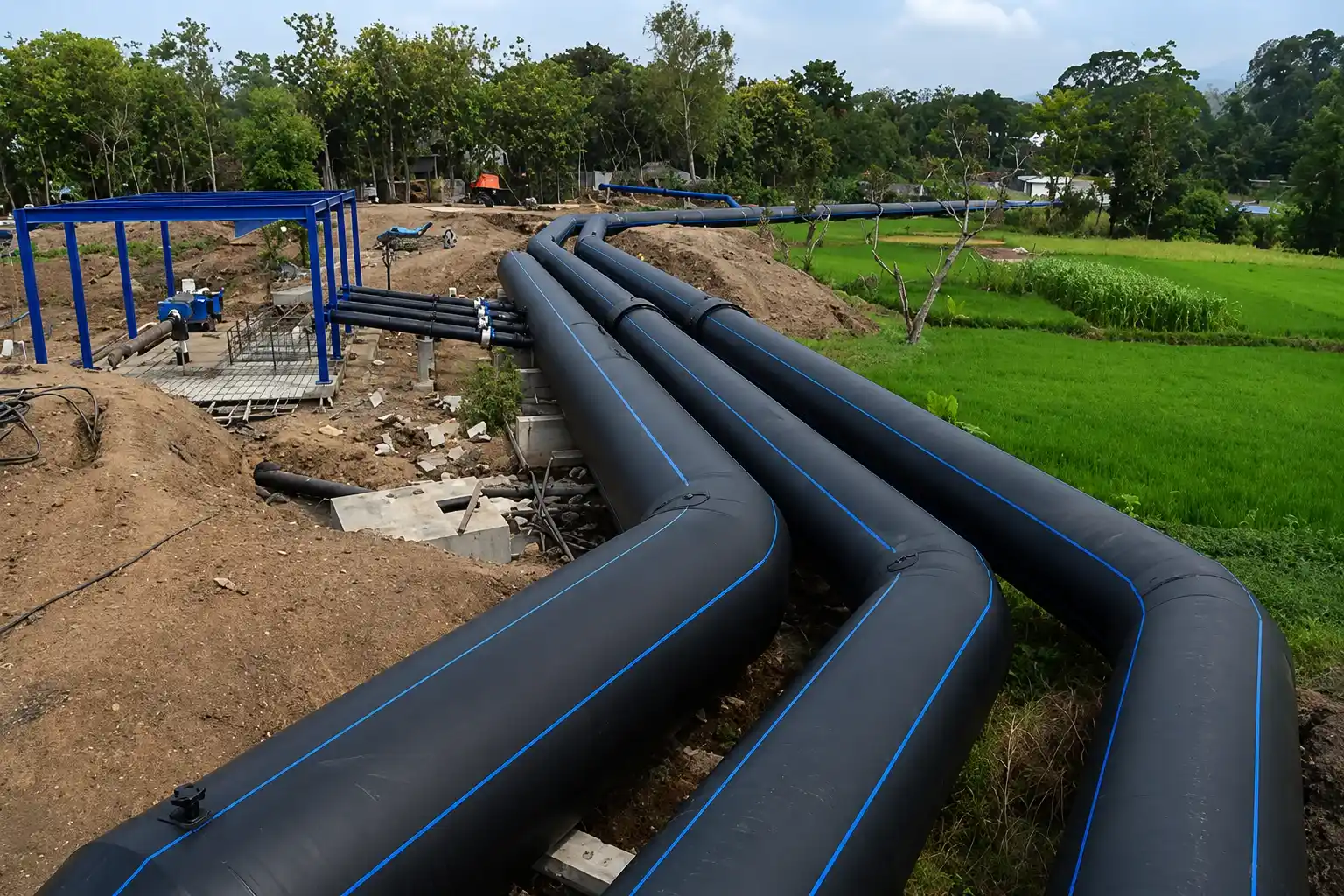
PE 100 HDPE pipes, for example, have an estimated service life of up to 50 years because they are manufactured from high-density polyethylene with a dense molecular structure that resists slow crack growth, corrosion, and chemical reactions commonly found in underground installations and potable water distribution systems.
In contrast, lower-grade materials or products manufactured without strict quality control standards may deteriorate much sooner than expected.
Learn more about water pipe quality standards that should be used as a reference when evaluating material quality before procurement.
2. Environmental Conditions
The installation environment influences the rate of material degradation. Important factors include:
- Soil conditions: Soil containing aggressive chemicals or extreme pH levels can accelerate the degradation of certain materials, even those generally resistant to standard chemicals.
- Operating temperature: HDPE performs optimally at temperatures up to 60°C. Continuous exposure to temperatures above this range may reduce material strength.
- UV exposure: For above-ground installations, direct sunlight exposure can gradually degrade the outer layer of the pipe over time.
3. Installation Quality
Even the best materials can fail prematurely if installation is not performed correctly.
Common causes include improper jointing, bending radii that exceed minimum limits, or uneven load distribution during backfilling.
Therefore, ensure that the installation team has the expertise and equipment appropriate for the type of material being used.
ALVApipe HDPE Pipes: A Long-Term Infrastructure Investment
HDPE (High-Density Polyethylene) pipes are high-density polyethylene piping materials that have become the preferred choice for modern water infrastructure projects.
Unlike steel or PVC pipes, HDPE pipes offer exceptional flexibility with elasticity exceeding 700%, allowing them to adapt to ground movement without cracking or leaking.
The material is also resistant to chemical reactions commonly found in water distribution systems, does not corrode, and features a smooth inner surface that minimizes flow resistance and helps maintain system pressure efficiency.
that has consistently demonstrated quality, product availability, and technical support for projects of all sizes is PT Alpha Cikupa Makmur.
One of HDPE water pipes suppliers that has consistently demonstrated quality, product availability, and technical support for projects of all sizes is PT Alpha Cikupa Makmur.
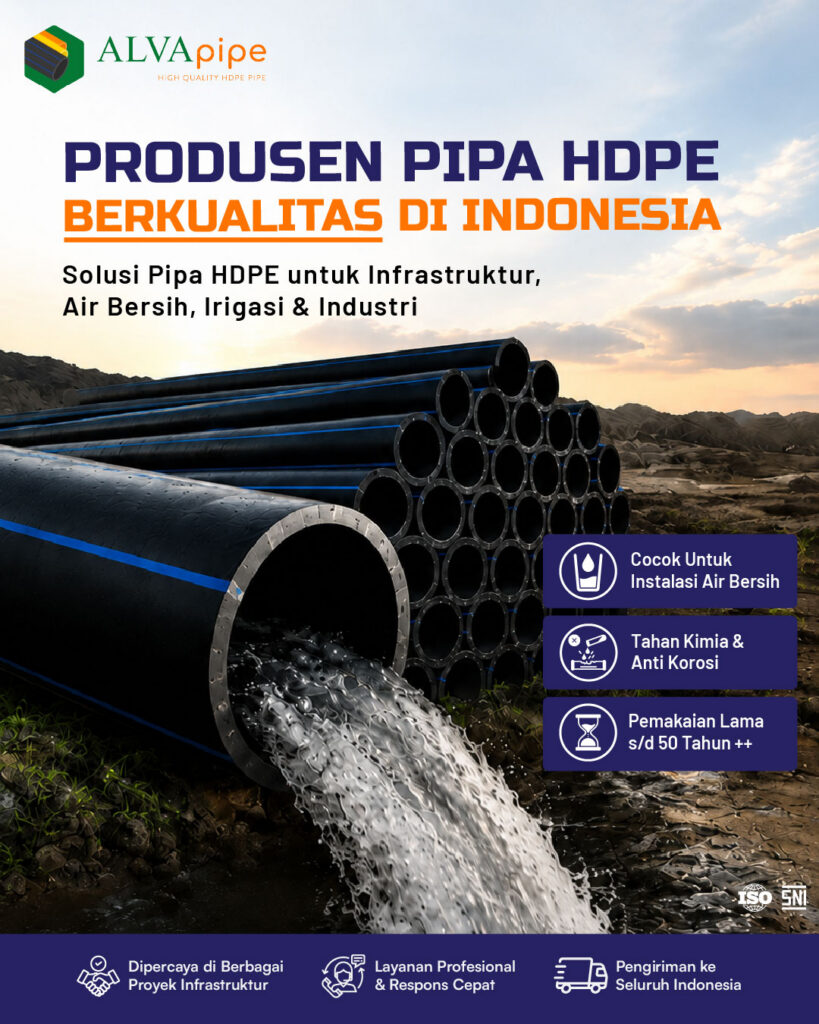
Through the ALVApipe brand, PE 100 HDPE water pipes are available with an estimated service life of up to 50 years and are certified to SNI and ISO standards.
The pipes are available in diameters ranging from OD 20 mm to 250 mm and in various pressure classes from SDR 11 to SDR 26.
Every ALVApipe product is manufactured directly at the company’s Tangerang production facility under strict and consistent quality control standards for every production batch.
Interested in learning more about ALVApipe HDPE water pipe specifications or need custom pipes for your project requirements?
Contact the ALVApipe team today via WhatsApp at +62 877-2666-3295 and get the best pricing offer!