In many infrastructure projects, product certification is often treated as nothing more than an administrative formality. A document that must be attached during the tender process, briefly checked, and then filed away.
Meanwhile, procurement decisions continue to be driven primarily by two factors: price and availability.
So, does certification actually affect the quality of products used in the field?
The answer is yes it has a significant impact. This article explains why.
Why Is Certification So Important in Projects?
1. Ensures Product Quality and Consistency
Certification is issued only after pipe products undergo a series of technical tests conducted by authorized institutions.
Products that pass these tests demonstrate that their quality meets the minimum required standards.
Without certification, there is no verification mechanism to ensure that the product quality matches the specifications provided. Claims made by manufacturers or distributors without official certification cannot be independently verified.
Learn more about water pipe quality standards that should be used as a reference when evaluating products before procurement.
2. Meets Project Requirements
For projects funded by government agencies or official institutions, the use of SNI-certified materials is mandatory.
Pipes without valid certification may be rejected during technical inspections, potentially affecting project schedules and budgets.
Even in large-scale private projects, clients and project consultants often require certification documents as part of the material selection process.
Therefore, choosing certified pipe products is an effective way to meet these requirements without lengthy negotiations.
3. Reduces Technical Risks
Certified products have been tested to ensure that their field performance matches the claimed specifications.
When certified pipes are used in a project, there is verified technical evidence that the pipes can withstand the required pressure, maintain consistent dimensions, and use materials that meet the specified grade.
In contrast, uncertified pipes introduce technical uncertainties that are often difficult to detect before problems arise in the field.
When those problems eventually occur after installation, the resulting costs are usually far greater than the initial savings achieved through a lower purchase price.
Parameters Tested in HDPE Pipe Certification
The following are the main parameters evaluated during the HDPE pipe certification process:
- Hydrostatic pressure testing: Pipes are tested under specified pressure conditions for a designated period to verify their pressure resistance.
- Dimensional and wall thickness testing: Verifies that the outside diameter and wall thickness remain consistent according to the specified SDR classification throughout the pipe length and cross-section.
- Material testing (density and material quality): Ensures that the material meets the required grade specifications, such as PE 80 or PE 100, with density values that comply with standards.
- Slow crack growth testing: Measures the material’s resistance to crack propagation that may develop gradually within the structure over time.
- Environmental resistance testing: Includes thermal stability, UV resistance, and chemical resistance evaluations.
Types of HDPE Pipe Certifications
1. SNI (Indonesian National Standard)
SNI is the mandatory certification for HDPE pipe products marketed in Indonesia. For HDPE pipes used in drinking water supply systems, the applicable standard is SNI 4829.2:2015, established by the National Standardization Agency of Indonesia (BSN).
This certification verifies that the product complies with nationally established technical requirements, including material specifications, dimensions, and performance tests as described above.
2. TKDN (Domestic Component Level)
TKDN is a certification issued by the Indonesian Ministry of Industry. This certification measures the percentage of domestic content within a product, including raw materials, labor, and manufacturing processes.
A high TKDN value indicates that the majority of production activities and components originate from within Indonesia.
3. ISO (International Organization for Standardization)
ISO certification, particularly ISO 9001 for Quality Management Systems, verifies that the manufacturer implements internationally standardized quality control systems throughout its production process.
For international projects or clients requiring global standards, ISO certification provides additional assurance that the manufacturer operates according to internationally recognized professional practices.
How to Verify That an HDPE Pipe Has Official Certification
1. Check the Product Marking
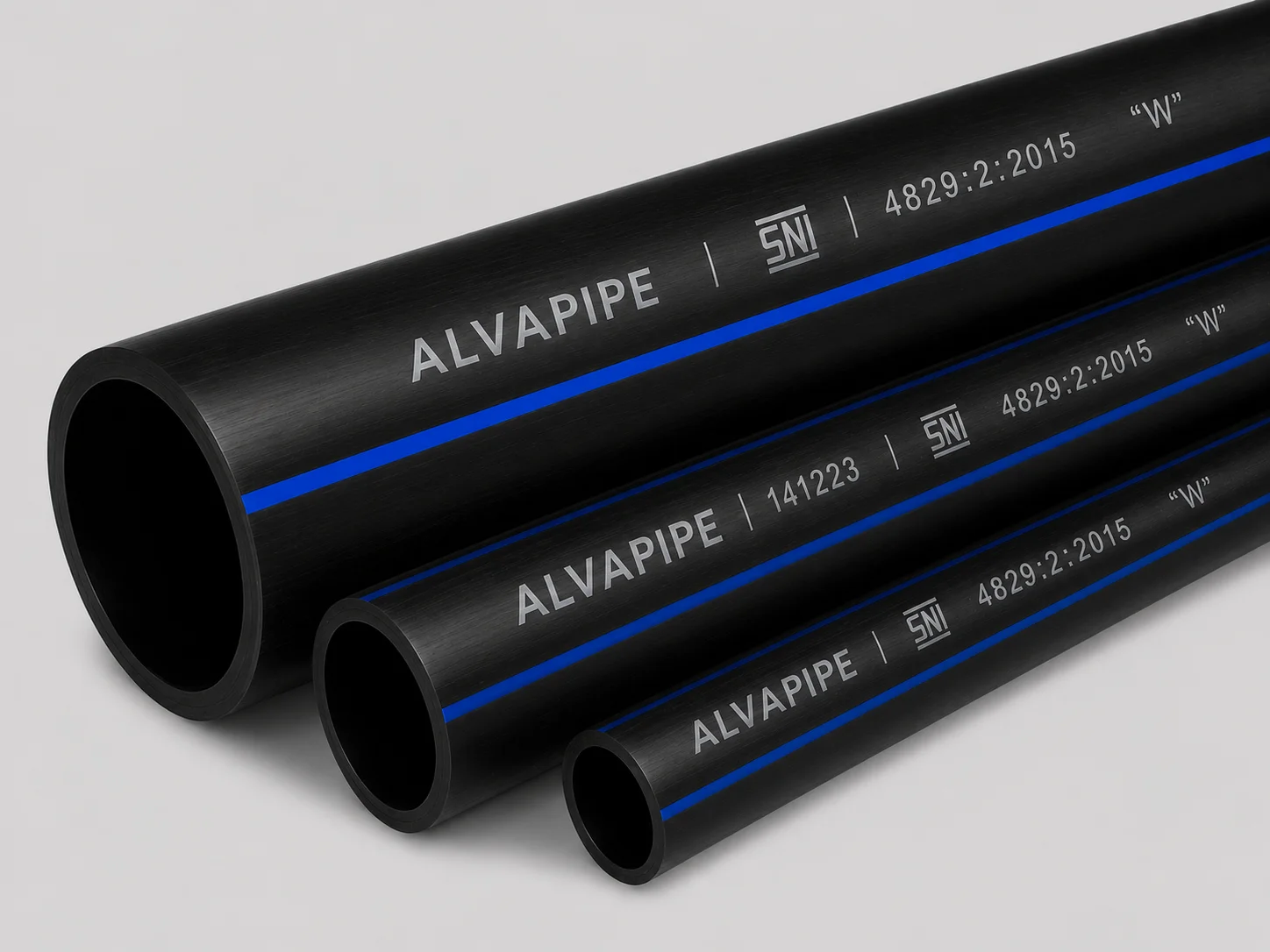
Officially certified HDPE pipes always feature permanent markings printed directly on the pipe body, including the manufacturer’s name, outside diameter, SDR classification, applicable standards such as SNI, material grade, and year of production.
If the pipe you receive does not have complete and clearly readable markings, it should be treated with caution as a potentially uncertified product.
2. Verify Certification Documents
Request official certification documents from the supplier before making a purchase decision.
For example, when reviewing SNI certification, ensure that the certificate number can be verified through the relevant BSN database.
A valid certificate will include the manufacturer’s name, certified product type, applicable standard number, certification validity period, and the certification body that issued it.
For example, ALVApipe, as an HDPE pipe manufacturer, holds both SNI and TKDN certifications, which can be clearly viewed on the HDPE water pipe product page.
3. Purchase from a Trusted Supplier
The quality and durability of HDPE pipes depend heavily on the authenticity of the materials and the manufacturing standards used.
Products that do not meet required quality standards may circulate in the market and pose risks of failures or leaks in infrastructure projects.
Therefore, where you purchase your pipes is just as important as the pipe brand itself. The safest approach is to buy directly from the manufacturer or from authorized distributors appointed by the manufacturer.
ALVApipe: Certified HDPE Pipes for Government and Private Projects
PT Alpha Cikupa Makmur, through its ALVApipe brand, manufactures HDPE water pipes with complete and officially verified certifications, including:
- SNI 4829.2:2015 issued by the National Standardization Agency of Indonesia (BSN), ensuring product suitability and safety for drinking water supply systems;
- TKDN 69.42%, officially recognized by the Ministry of Industry, meeting procurement requirements for government projects
- ISO Certification, demonstrating an internationally standardized quality management system.
With these certifications, ALVApipe products comply with national project regulations for both government and large-scale private sector projects.
Every product is manufactured directly at the Tangerang production facility under strict quality control standards to ensure reliable consistency in every production batch.
Interested in learning more about ALVApipe HDPE water pipe specifications or need custom pipe solutions for your project?
Contact the ALVApipe team today via WhatsApp at +62 877-2666-3295 for product recommendations and the best pricing tailored to your project requirements!