Understanding the tips for properly installing HDPE pipes is an important step for piping contractors, area developers, plumbing technicians, and project owners who want their water networks to operate reliably in the long term. HDPE pipes are known for their flexibility, pressure resistance, and good resistance to environmental conditions. However, material quality alone is not enough. How the pipe is handled, trench conditions, the joining process, and testing before backfilling all determine whether the installation can perform optimally or cause problems in the future.
The proper way to install HDPE pipes essentially begins before the pipe is placed into the ground. The work area needs to be properly prepared so that the pipe does not receive undue loads. The trench surface, pipe bedding, bending radius, and material handling methods need to be considered from the beginning. Small mistakes at this stage can place additional stress on the pipe and potentially affect network performance after it is put into use.
Land Preparation and Trenching for HDPE Pipes
Trench preparation is one of the stages that determines the safety of the pipe once it is underground. The trench must have sufficient space to place the pipe, perform the joining process, and provide protection against the surrounding soil load. Trench depth cannot be determined using a single measurement for every project because it needs to be adjusted according to the pipe diameter, soil conditions, surface loads, installation location, and project technical standards.
Once the trench route is ready, the bottom needs to be made stable and free from sharp stones or hard materials that could create concentrated pressure on the pipe wall. The use of bedding or a sand base of approximately 10 to 15 cm can help create a more evenly distributed supporting surface. Under certain soil conditions, the thickness and type of supporting layer need to be adjusted based on the technical design and field conditions.
Pipe handling should also not be done carelessly. HDPE pipes should not be dragged directly over rough surfaces because friction can cause scratches on the surface. Lifting and handling should use methods that do not damage the pipe wall, especially when the material will be used for a pressurized network.
Sand Bedding and Handling Pipes Made from Virgin Material
Pipes placed on level bedding will receive better load distribution. Once the pipe is in the proper position, initial backfilling should also be carried out using material that does not contain sharp objects. The purpose is to protect the pipe wall before the trench is completely closed.
The selection of pipe material also determines the durability of the installation. PE-100 HDPE pipes made from high-quality raw materials have a flexible characteristic that allows them to follow the installation route and ground movement within the design limits. This characteristic is one of the reasons HDPE pipes are widely used for underground water networks.
For projects requiring controlled quality standards, the manufacturer should also be carefully considered. ALVApipe produces HDPE pipes through processes that prioritize consistent quality along with an ISO 9001:2015 quality management system. Information about products and piping requirements can be learned through ALVApipe.
Proper HDPE Pipe Joining Methods According to Industry Standards
Once the trench is ready and the pipe is in the correct position, joint quality becomes the next determining factor in properly installing HDPE pipes. Joints made using the proper procedures will produce a tighter, stronger network that can maintain system integrity when subjected to water pressure. Conversely, mistakes during the joining process can become weak points that trigger leaks even when the pipe itself is of good quality.
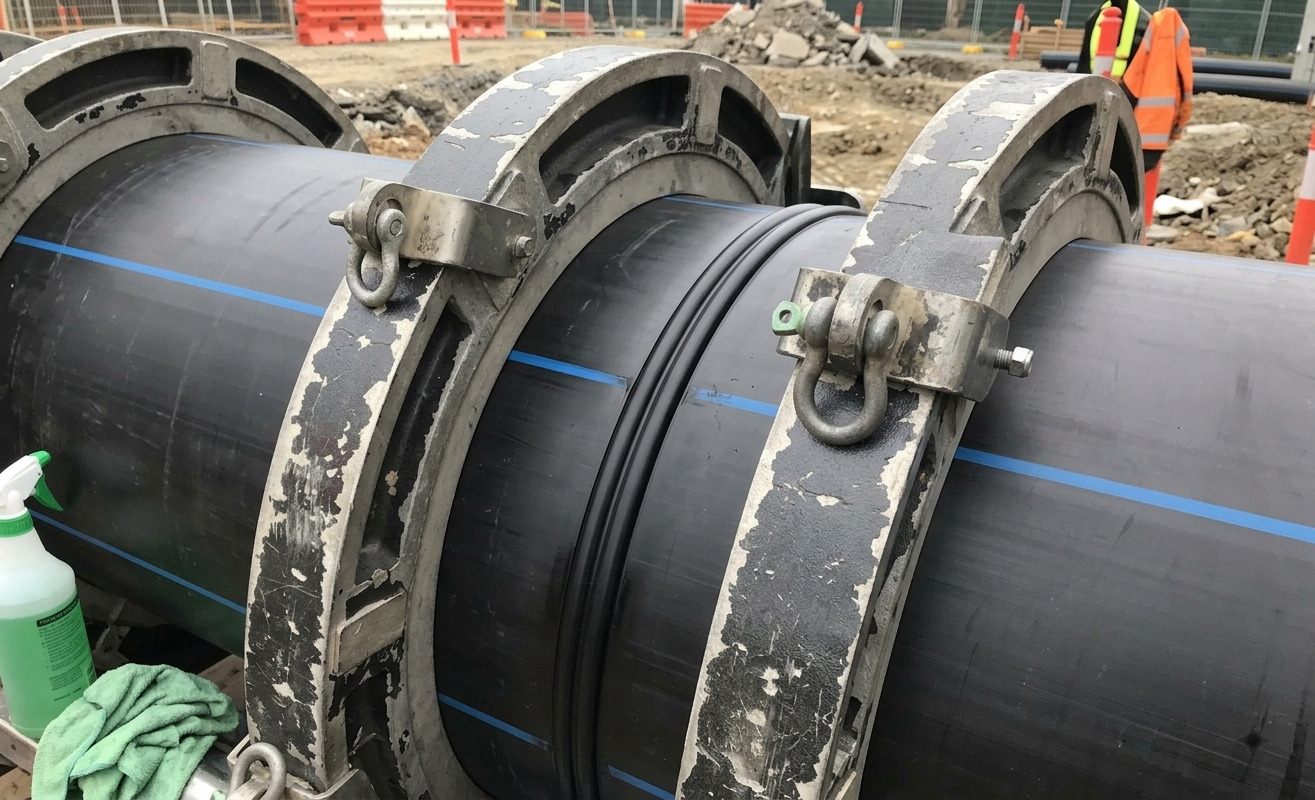
In installation practice, the joining method needs to be adjusted according to the pipe diameter, site conditions, project requirements, and type of joint used. For certain sizes, compression fittings can be a practical option. For larger-diameter pipes, the HDPE butt fusion joining method is widely used because both pipe ends are heated and then pressed together until they fuse into a single material. Electrofusion can also be used when site conditions require greater flexibility, especially in areas that are difficult to access with a butt fusion machine.
Butt Fusion and Compression Fitting Techniques for ALVApipe
Butt fusion requires specialized equipment and an operator who understands the joining parameters. The surfaces of both pipe ends must be positioned straight, clean, and even before the heating process is carried out. A heating plate is then used to heat both pipe ends until they reach the appropriate condition before they are brought together with controlled pressure.
For PE100 pipes, some installation guidelines use a heating plate temperature range of approximately 220 to 235°C, but this figure should not be considered a universal setting for all products and project conditions. The actual parameters need to follow the manufacturer’s procedures, diameter, wall thickness, SDR, equipment used, and project standards or specifications.
The cleanliness of the HDPE PE100 pipe heating equipment must also be considered. A dirty heating plate surface, contaminated pipe ends, inaccurate positioning, or failure to follow the required cooling time can affect joint quality. Butt fusion technical guidelines also emphasize that the pipe should not be moved before the cooling process is complete.
For certain applications, compression fittings can be a more practical alternative, particularly for small sizes or sections of the installation that require mechanical joints. The choice of method should not only consider ease of installation but also working pressure, site access, network configuration, and the project’s technical requirements.
For ALVApipe HDPE pipes, the thermal joining process needs to be carried out using the proper procedures so that the material characteristics can be utilized to their maximum potential. Pipes made from quality raw materials with consistent dimensions will help operators produce more uniform joints when the machine parameters, pressure, temperature, and time have been adjusted according to the product specifications.
One thing that is often overlooked is the cooling process. A newly formed joint needs time to reach a stable condition. Forcing the pipe to move or applying loads before the required cooling time has been reached can affect the quality of the fusion. HDPE butt fusion cooling time depends on the pipe wall thickness and joining procedure. For example, a pipe with a thickness of 10 mm requires approximately 8 minutes, while a thickness of 40 mm requires approximately 23 minutes under PE100 parameters referring to SNI 06-4829-2005.
With a controlled joining process, HDPE pipes can form a network with minimal weak points. This is one of the advantages of HDPE systems compared with installations that rely too heavily on multiple mechanical joints.
Hydrostatic Pressure Testing Procedure Before Backfilling
HDPE pipes that have already been joined cannot immediately be considered ready for use. Before the trench is completely closed, the network needs to be inspected through pressure testing to ensure that there are no leaks, pipe damage, or problematic joints. This stage is an important part of the HDPE pipe installation guide for projects, especially for clean water networks that will operate under certain pressure.
Testing is carried out after the pipe system has been installed and the joints are in accordance with the installation procedure. The pipeline is then gradually filled with water so that trapped air can be released. The test pressure is subsequently determined based on the system design, pipe specifications, pressure class, project standards, and applicable technical requirements. Because HDPE characteristics are affected by time and temperature, testing parameters should not be determined based solely on a single figure applicable to every installation.
At this stage, visual inspection is still necessary. The installation team can observe the joint areas, fittings, valves, and sections of the pipe that may have been damaged during the installation process. Any pressure drop that does not comply with the testing procedure needs to be investigated before the system is declared to meet the requirements.
Testing before backfilling provides significant benefits to the project. If a problem is found while the pipe is still easily accessible, repairs can be carried out more quickly. Conversely, leaks that are only discovered after the entire pipeline has been covered with soil can make the repair process much more complicated because it requires excavation work again.
Ensuring the Reliability of the ALVApipe SNI Piping System
Installation reliability is not only determined by the joining process, but starts with the quality of the pipe being used. SNI-standard ALVApipe HDPE pipes are designed to support piping system requirements by considering material quality, production consistency, and quality control within the manufacturing environment.
In HDPE pipe installation, material quality becomes increasingly important because the pipe will face internal pressure as well as loads from the surrounding environment. The flexible characteristics of HDPE allow the pipe to accommodate minor changes in soil conditions without the brittle characteristics of materials that are prone to cracking. However, this flexibility still needs to be supported by excavation method, bedding, joining, and backfilling methods.
Bedding preparation using suitable materials also plays a role in maintaining the pipe’s position and load distribution around the pipe. Modern HDPE installation references generally place a bedding layer of around 100 to 150 mm as one of the practices used to provide even support, while actual conditions should still follow the project design and specifications.
The same applies to the joining process. Butt fusion is not simply a matter of heating both pipe ends and pressing them together. The pipe end surfaces need to be prepared, aligned, heated using appropriate parameters, and then joined with controlled pressure and cooling time. For PE100 material, technical fusion references use heating plate temperatures within a certain range, with 220°C being one of the figures commonly found in procedures, while the actual parameters must follow the standards, diameter, wall thickness, material, and equipment being used.
This is why Proper HDPE Pipe Installation cannot be separated from the quality of the applicator and work equipment. High-quality pipes require an equally good installation process so that the capabilities of the material can be utilized optimally.
Creating a Strong and Problem-Free Piping Installation with ALVApipe
Ultimately, the success of an HDPE pipe installation is not only about how the pipe is placed in the ground. A good system is built from a series of interconnected decisions, starting from material selection, route preparation, pipe handling, joining methods, to testing before the network is covered again.
For projects that require highly reliable clean water networks, selecting the manufacturer is also part of the strategy for maintaining the installation’s service life. Pipes with consistent materials, controlled production processes, and adequate technical support will provide a stronger foundation for fieldwork.
ALVApipe is an HDPE pipe manufacturer that prioritizes product quality and actual field requirements. With strategic production facilities in Cikupa and the Jatake Industrial Estate, Tangerang, ALVApipe can be an option for contractors, area developers, facility managers, and project owners who require pipe supplies for various water network needs.
Product information, piping solutions, and project specification requirements can be learned through ALVApipe. By selecting the right material and applying Proper HDPE Pipe Installation Tips, projects not only aim to complete installations on time, but also build networks that are better prepared to withstand working pressure and environmental conditions in the long term.
If you are preparing a water network project and need HDPE pipes that meet your technical requirements, consult the specifications for diameter, pressure class, required quantity, and installation method from the early stages. Proper planning will help prevent material or an installation that could potentially incur additional costs in the future.
Come and consult your water pipe requirements with the ALVApipe team via WhatsApp +6287726663295 or the [Contact Us] button below for consultation and the best price quotation according to your project requirements!