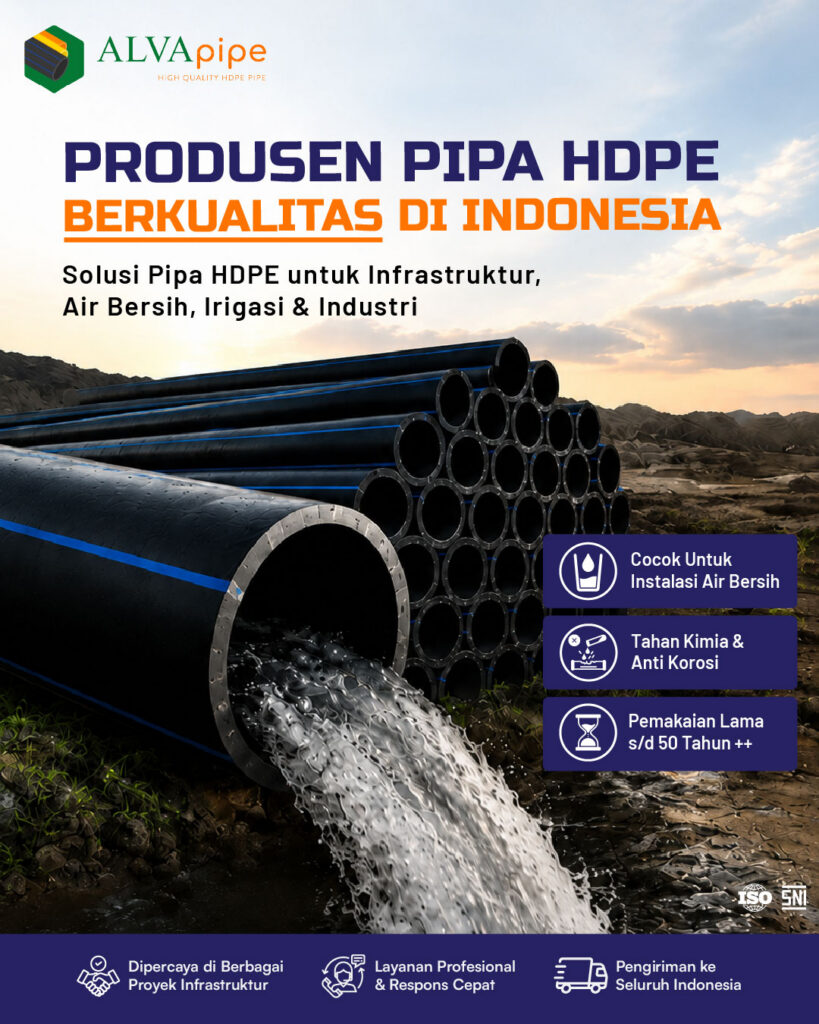
Clean water reaching the tap does not only depend on the quality of the water source. The pipelines that carry water from the source to homes, buildings, residential areas, or public facilities also play a major role in maintaining the quality and reliability of water distribution. Therefore, Recommended Pipes for Clean Water should not only be considered based on price, but also on the material, product standards, durability, and suitability for the installation conditions.
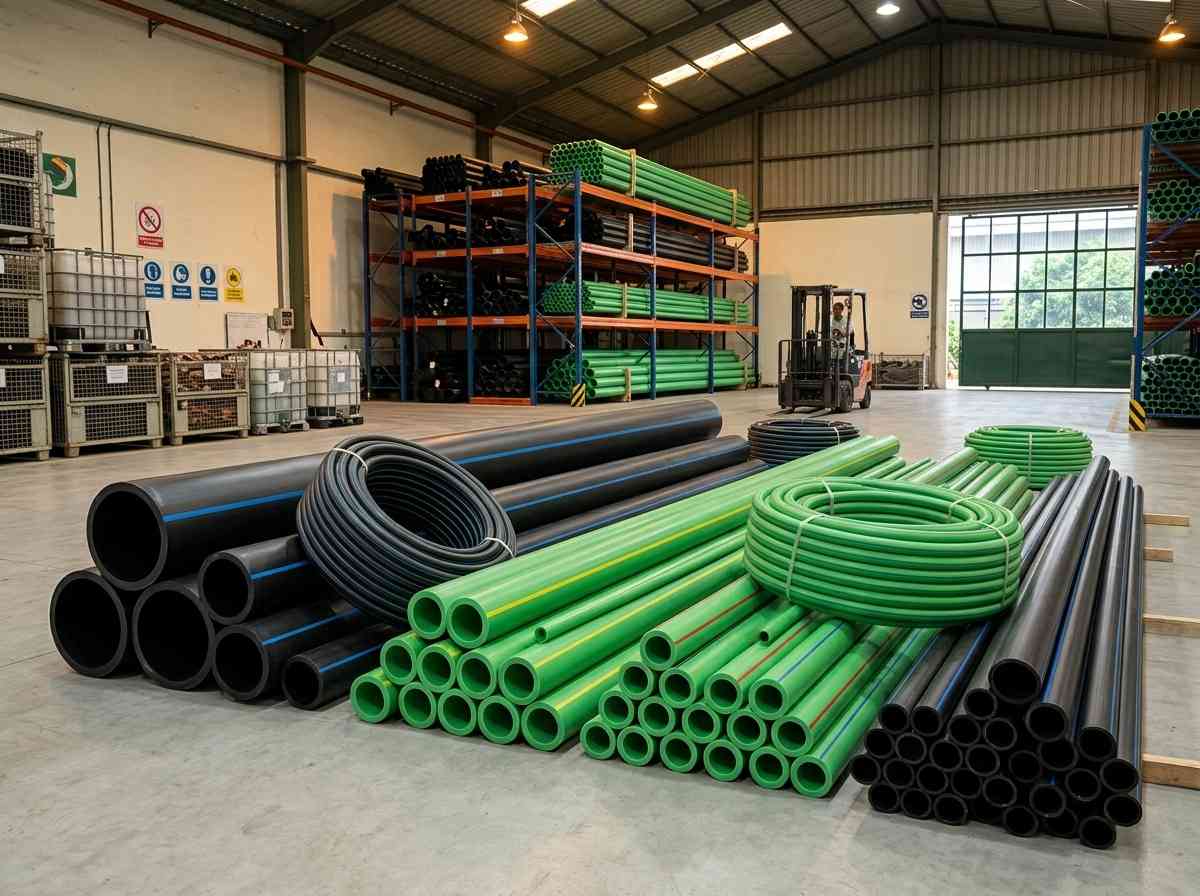
For clean water applications, HDPE and PPR pipes have functions that can complement each other. HDPE is suitable for main distribution networks outdoors and underground, as well as in buildings, due to its flexibility and resistance to corrosion. Meanwhile, PPR can be used for hot and cold water distribution lines inside buildings. Choosing the right material from the beginning can help reduce the risk of leaks, damage, and long-term maintenance costs.
Important Criteria for Choosing Clean Water Pipes for Buildings
Good clean water pipes should have materials and specifications that are suitable for their installation functions. For homeowners, plumbing contractors, property developers, and building managers, the decision to choose pipes should consider water pressure, temperature, installation location, pipe size, joining method, and product standards.
The type of household clean water pipe does not always have to be the same throughout the building. Underground pipelines are exposed to soil loads and changing environmental conditions. Pipelines inside buildings may face different temperature requirements, especially when used for hot water. Therefore, the characteristics of the material need to be matched to the location and function of the network.
HDPE pipes are an option for various outdoor and indoor networks because they offer good flexibility and are not easily affected by corrosion. These properties make them suitable for water networks installed underground, distribution lines, and buildings that require the ability to accommodate changes in environmental conditions.
PPR has different characteristics and is widely used for hot and cold water installations inside buildings. With the proper joining system, PPR lines can form a neat installation with strong joints.
The Importance of Food Grade Standard Materials
Raw material quality is one aspect that needs to be considered when pipes are used to carry clean water. Materials with unclear origins and quality may raise questions regarding the consistency of the pipe’s characteristics and its suitability for water applications.
For water intended for human consumption, the use of food grade drinking water HDPE pipes should be accompanied by clear specifications and supporting documentation. The term food grade should not be used merely as a marketing claim. Users need to consider the manufacturer, product standards, certifications, and intended application of the pipe before making a choice.
Suitable materials also help maintain pipe stability during use. Pipes made with high-quality materials and controlled production processes can provide more consistent performance when exposed to water pressure and environmental conditions.
The concept of non-recycled clean water pipes also needs to be properly understood. The main concern is the use of materials that meet product specifications and have traceable origins. For clean water networks, raw material quality is an important part of quality control because the pipes serve as pathways that carry water every day.
ALVApipe Water uses HDPE material intended for water applications and is manufactured with quality control at the ALVApipe manufacturing facility. This approach provides a clearer basis for contractors, developers, and building owners when determining piping materials.
Information about the manufacturer’s profile and piping solutions can be explored through ALVApipe as an official reference before determining product specifications.
Advantages of ALVApipe Water as a Hygienic Piping Solution
ALVApipe Water is developed for clean water distribution needs, featuring HDPE characteristics that are corrosion-resistant, flexible, and have a smooth inner surface. These characteristics help the pipe perform under various installation conditions, including outdoor and underground networks.
One of the advantages of HDPE is that it does not easily rust because the material is non-metallic. This provides an added benefit when pipes are installed in environments with certain soil conditions or exposed to long-term moisture.
The flexibility of HDPE also helps the pipe follow small changes in ground contours. With proper network design and installation techniques, this characteristic can reduce the number of joints along certain routes, thereby minimizing potential leak-prone points.
Using Pure Virgin Grade Material Resistant to Corrosion and Algae
ALVApipe Water uses pure HDPE material to maintain consistent product characteristics. For clean water pipelines, material consistency is important because the pipes operate continuously within the water distribution system.
HDPE is also resistant to corrosion and abrasion. Its smooth inner surface helps maintain water flow while reducing the potential for material buildup on the inner wall compared to materials that are prone to corrosion.
ALVApipe states an estimated service life of up to 50 years for HDPE Water pipes under normal usage conditions. This figure still depends on the design, working pressure, temperature, environmental conditions, and installation quality in the field.
For projects requiring Recommendations for Long-Lasting Clean Water Pipes, service life should be considered together with technical specifications and installation methods. A good pipe still requires proper installation so that the material’s capabilities can be utilized optimally.
Complete ALVApipe HDPE and PPR Pipe Solutions for Various Needs
ALVApipe Water and ALVApipe PPR pipes can be used for different functions within a single water distribution system. ALVApipe Water can be an option for main outdoor or underground networks, while ALVApipe PPR can be used for distribution lines inside buildings that require both hot and cold water.
This division of functions makes piping planning more structured. Contractors can determine the material based on field conditions, property developers can design distribution networks more efficiently, and building owners can obtain a system that suits their usage needs.
The pipe size should also be adjusted to the flow rate and working pressure. Using pipes that are too small can increase flow resistance, while pipes that are too large can make procurement less efficient. Therefore, specifications should be determined based on system calculations rather than simply following the pipe price.
SNI Certification and Water Pressure Resistance for Decades
Certification is one of the important indicators when choosing pipes for clean water systems. ALVApipe Water has SNI 4829.2:2015 certification for polyethylene pipes used in drinking water supply systems. PT Alpha Cikupa Makmur also implements an ISO 9001:2015 quality management system.
ALVApipe Water products are available in several size and pressure class options, allowing users to adjust them to their network requirements. To determine the appropriate pressure class, planners still need to consider working pressure, diameter, flow rate, temperature, soil conditions, and installation methods.
Therefore, searching for wholesale clean water pipe prices per meter should not be the only basis for decision-making. Price is important for budget control, but material quality, certification, product availability, specification suitability, and manufacturer support also provide significant economic value throughout the system’s service life.
Investing in a Hygienic Clean Water System with ALVApipe Water
Choosing clean water pipes is essentially a decision to maintain system reliability in the long term. Pipes installed underground or walls are not always easy to repair when problems occur. Therefore, selecting the right material from the beginning can help reduce the potential for dismantling, reinstallation, and maintenance costs in the future.
ALVApipe Water offers pipe options for outdoor and underground clean water networks, as well as ALVApipe PPR solutions for hot and cold water distribution inside buildings. This approach allows piping requirements to be adjusted based on the function of each line.
The support of ALVApipe’s production facility in Tangerang also provides added value for projects requiring large-volume supplies. Requirements for diameter, pressure class, material quantity, and delivery schedule can be discussed from the planning stage so that procurement can be more organized.
For homeowners, pipe quality means peace of mind when using water every day. For contractors and property developers, material quality means a system that is better prepared for long-term use. Meanwhile, for building material store owners, products with clear specifications and documentation provide a stronger basis for meeting customer needs.
Ultimately, Recommended Pipes for Safe and Long-Lasting Clean Water should consider more than just price. Suitable materials, product standards, environmental resistance, installation methods, and manufacturer support form an integrated whole that determines system quality.
If you are looking for food grade drinking water HDPE pipes, HDPE pipes for main networks, or PPR pipes resistant to hot and cold water, these requirements can be discussed with the ALVApipe team to ensure that the selected specifications are truly suitable for the installation conditions.
Come and consult your water pipe requirements with the ALVApipe team via WhatsApp +6287726663295 or the [Contact Us] button below for consultation and the best price offer according to your needs!