In the Indonesian construction material market, not every product sold under the label “HDPE pipe” truly meets the required quality standards.
Some products are manufactured using low-quality raw materials, dimensions that do not match specifications, or without undergoing any proper testing process before reaching buyers.
The risks of using fake or low-quality HDPE pipes in a project should not be underestimated. Materials that fail to meet technical standards create weak points within the piping system that often only become apparent after the system is operational. Hidden leaks, unstable system pressure, and even total failure of the water distribution network are real scenarios that can occur.
Characteristics of Genuine HDPE Pipes You Should Know
1. Clear Standards and Certifications
Officially manufactured high-quality HDPE pipes are always supported by verifiable certifications. In Indonesia, the main standard to look for is SNI 4829.2:2015 for HDPE pipes used in drinking water supply systems.
In addition to SNI certification, reputable HDPE pipe manufacturers also typically hold certifications such as ISO, which ensure proper production quality management standards.
2. Consistent Surface and Finishing
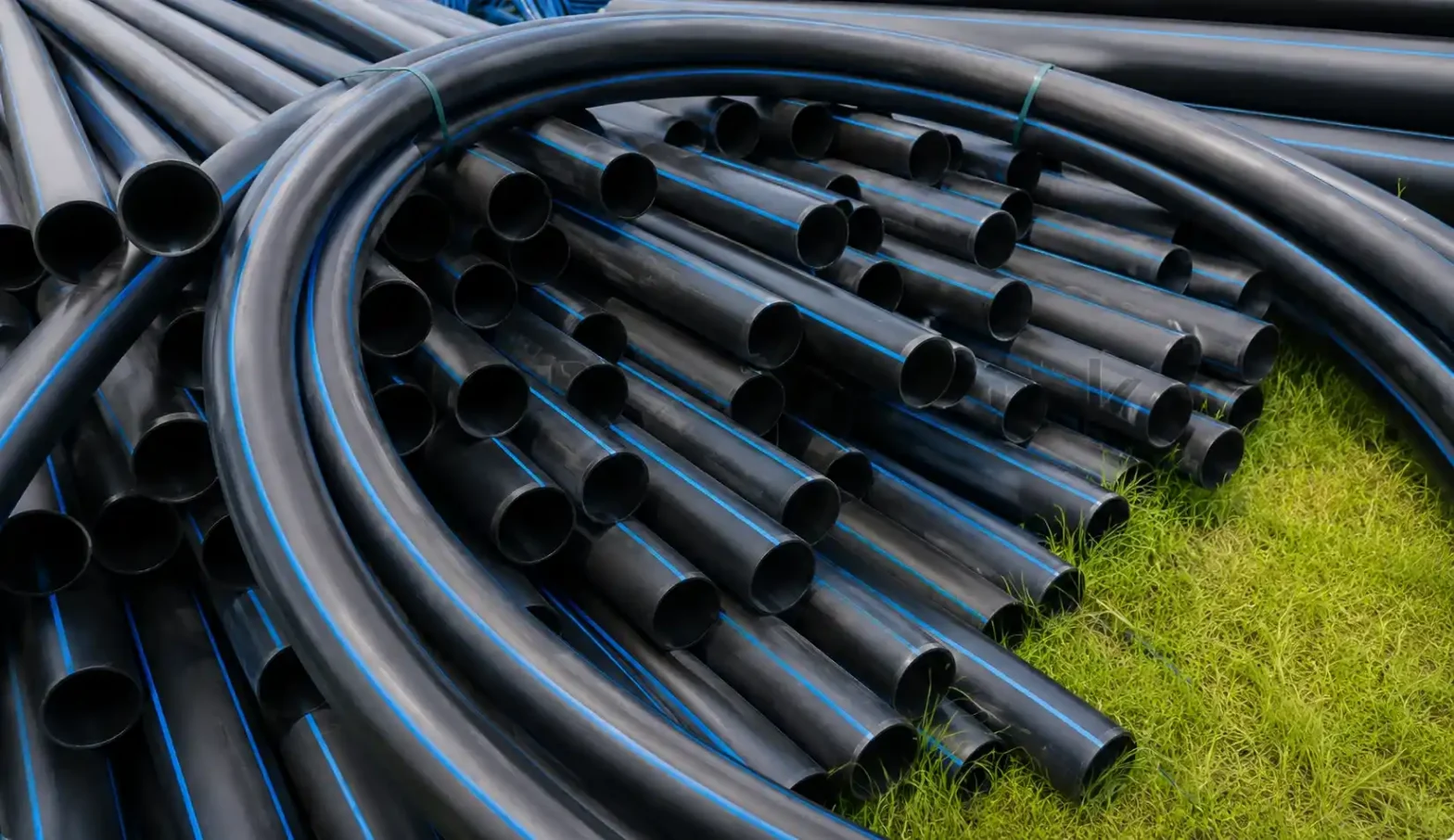
Genuine HDPE pipes have a smooth, even, and consistent outer surface throughout the entire pipe length. There should be no bubbles, micro-cracks, or visible irregularities.
The black color with blue stripes commonly found on HDPE water pipes should also appear clean and consistent, not faded or uneven between sections.
The inner surface of the pipe should also be inspected. High-quality HDPE pipes have very smooth inner walls that minimize flow resistance and help maintain optimal water pressure throughout the network.
3. Thickness and Dimensions Match Specifications
Every HDPE pipe class has measurable wall thickness standards based on outer diameter (OD) and SDR values. Genuine pipes always have consistent wall thickness that matches the stated technical specifications across the entire cross-section and pipe length.
Low-quality pipes often have uneven wall thickness or thinner walls than the required standard, even when the outer diameter appears similar.
4. Clear Product Markings and Codes
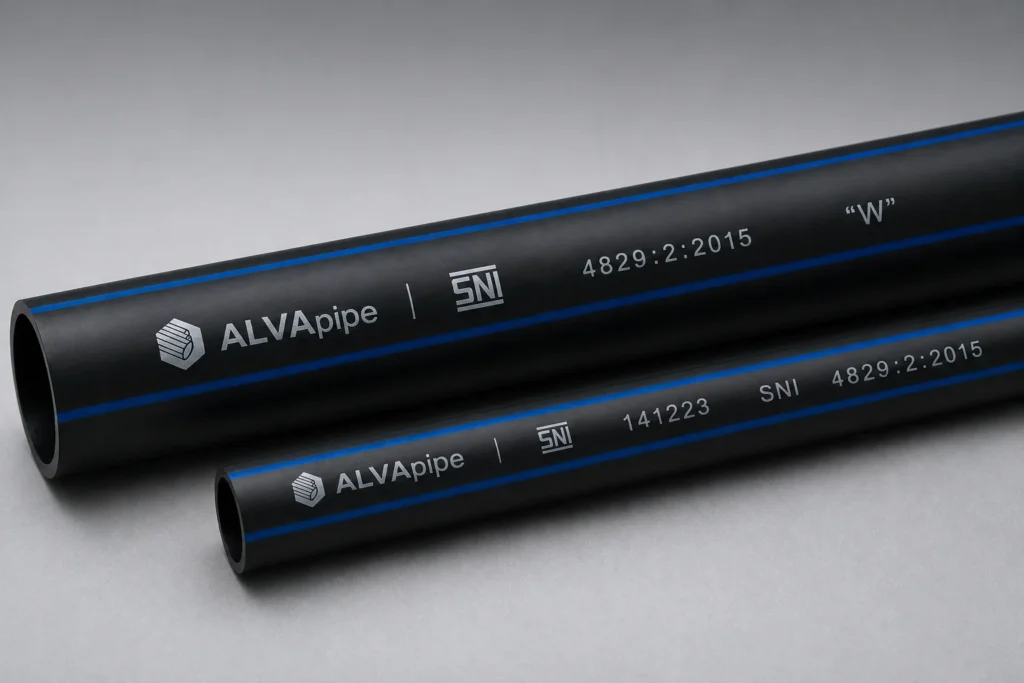
HDPE pipes manufactured according to standards always feature clearly printed markings on the pipe body.
These markings generally include the manufacturer or brand name, nominal and outer diameter, SDR or PN class, applicable standards (such as SNI), and production year.
The markings are permanently printed onto the pipe surface, not attached using removable stickers. Complete and clearly readable markings are one of the easiest ways to distinguish products from official manufacturers from products with unclear accountability.
5. Good Pressure Resistance
Genuine HDPE pipes are designed and tested to withstand operational pressure according to their class, ranging from PN 6.3 to PN 16 depending on the SDR used. Properly manufactured products provide consistent and predictable pressure performance throughout their service life.
Characteristics of Fake or Low-Quality HDPE Pipes
1. Prices That Are Too Cheap
Price is often the easiest indicator to identify. HDPE pipes manufactured using quality raw materials, standardized production processes, and strict quality control systems have production costs that cannot realistically fall far below normal market prices.
In this context, the term “cheap pipes” should be considered carefully, because low upfront costs can lead to extremely high costs later on.
2. No Certification or Product Information
Pipes without clear certification are pipes without guaranteed quality. Pipe manufacturers or distributors who cannot provide product certification documents upon request should be considered a serious warning sign.
In addition to certifications, pay attention to the completeness of product information provided: whether technical data sheets are available, whether raw material information is included, and whether there are references to applicable production standards.
The absence of such information indicates that the product was not manufactured with proper technical accountability.
3. Inconsistent Color and Texture
Low-quality HDPE pipes often show visible inconsistencies that can be detected through simple inspection: uneven color, rough or spotted surfaces, crooked or faded blue stripes, or sections that appear darker or lighter within the same pipe.
These inconsistencies reflect poor production quality control, which almost always affects the overall mechanical consistency of the material.
4. Easily Cracked or Brittle
Properly manufactured HDPE materials have high flexibility with elasticity that can exceed 700%. A pipe bent slightly should not immediately show cracks or excessive whitening (stress whitening).
If a pipe feels unusually rigid, cracks easily during minor bending, or shows signs of brittleness, it strongly indicates that the material composition does not meet genuine HDPE standards.
5. Unclear Manufacturer Origin
Products without clear information regarding the manufacturer, production location, or responsible company lack accountability. When problems occur in the field, there is no party available to provide technical clarification or material replacement.
Learn more about water pipe quality standards that should be used as references when evaluating products before purchase.
The Risks of Using Fake HDPE Pipes in Projects
The consequences of using fake or low-quality HDPE pipes can be extremely costly:
- Water system leaks. Materials that fail to meet thickness and mechanical strength standards are more prone to failure, especially at joints and high-pressure areas.
- Infrastructure failure. In large-scale projects, failure at a single point in the piping network can affect the entire water distribution system.
- High repair cost. Repairing pipes already installed within building structures requires expensive dismantling, in addition to replacement materials and reinstallation labor costs.
- Operational downtime. Water system disruptions in operational buildings or industrial areas directly impact tenants or occupants, resulting in real financial consequences.
Tips to Ensure You Get High-Quality HDPE Pipes
1. Buy from Official Suppliers or Distributors
Make sure you purchase from an official HDPE pipe distributor or directly from a manufacturer with a verifiable track record.
Official water pipe distributors will always be able to provide product certification documents and complete technical information about the products they sell.
PT Alpha Cikupa Makmur through the ALVApipe brand has operated since 1998 with manufacturing facilities in Tangerang and products certified with SNI and ISO standards.
ALVApipe serves various market segments, including water pipe stores, pipe distributors, project contractors, and industrial estate managers, with product lines including HDPE water pipes, HDPE gas pipes, PPR pipes, and HDPE telecommunication pipes.
2. Check Product Certifications and Specifications
Before making a purchase decision, request product certification documents and technical data sheets. Verify the listed SNI certification numbers and ensure the product specifications match your project’s technical requirements. Learn more about HDPE pipe specifications for projects as a guide during the evaluation process.
3. Ensure Technical Support Is Available
Credible HDPE pipe manufacturers or distributors provide technical support to help determine the most suitable product specifications for project conditions. If the party you contact cannot answer basic technical questions or refuses to provide specific recommendations, this should be considered a warning sign.
Also learn about the criteria for selecting a reliable HDPE water pipe supplier for your long-term project needs.
4. Avoid Unrealistic Prices
Set procurement budgets based on reasonable market prices for the specifications you require. If an offer is significantly below market price, evaluate it carefully before being tempted: Are the certifications complete? Do the dimensions and thickness meet standards? Can the manufacturer be clearly verified?
Choose the Best HDPE Pipes from ALVApipe!
Understanding how to distinguish genuine HDPE pipes from fake ones is essential, both for project decision-makers and for water pipe store owners who want to ensure the products they sell truly provide the best value to customers.
Consult your water pipe needs with us. As an SNI and ISO-certified piping manufacturer operating since 1998, PT Alpha Cikupa Makmur through the ALVApipe brand guarantees consistent quality in every product we manufacture.
Learn more about ALVApipe HDPE water pipes. Contact our team today via WhatsApp +6287726663295 to get product recommendations and pricing tailored to your project needs.