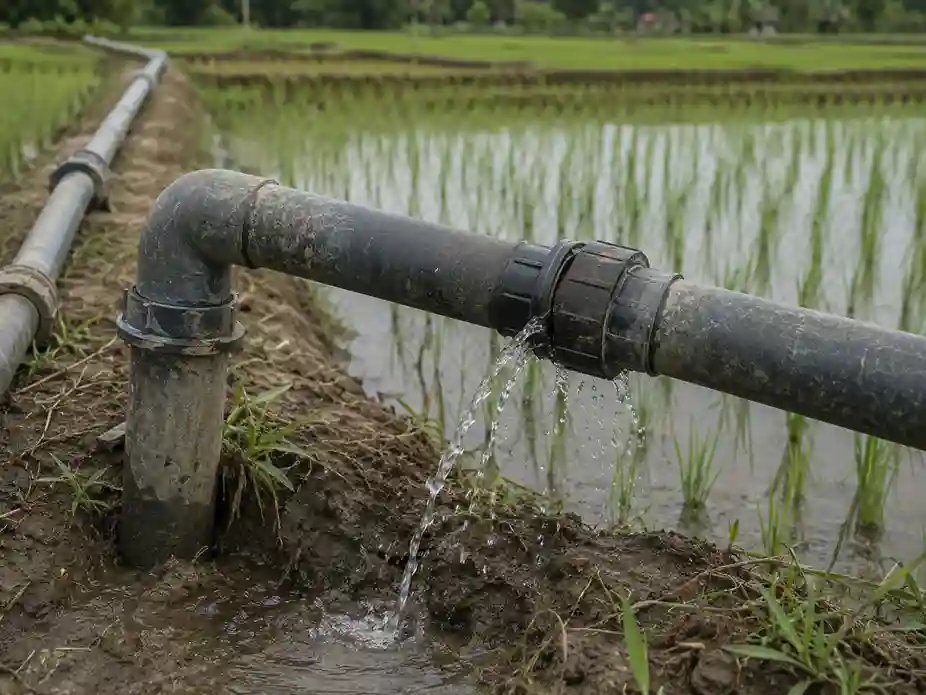
Smooth water distribution is a crucial factor during the planting season. Pipe leaks are often only noticed after they begin affecting irrigation performance across the farmland.
Although they may seem like a minor issue, leaks can impact operational efficiency and plant growth. Learn why leaking pipes become a major problem during the planting season and how to reduce the risks below!
Common Causes of Pipe Leaks During the Planting Season
Several common causes of pipe leaks that often occur during the planting season include:
1. Old Pipe Age
Every pipe material has a certain service life. The longer a pipe is used, the higher the risk of material degradation that can eventually lead to leaks, especially if the pipe has exceeded its recommended lifespan.
2. Loose or Damaged Pipe Connections
Pipe joints are one of the most vulnerable areas for leaks. Temperature changes, fluctuating water pressure, and soil movement can gradually loosen connections that were initially secure over time.
3. Water Pressure Exceeding Pipe Specifications
Every pipe is designed to operate within a specific pressure limit. When water pressure in the field exceeds this capacity, the pipe walls and connections may develop cracks, eventually resulting in leaks.
4. Damage Caused by Agricultural Equipment or Vehicles
Land cultivation activities using tractors or other heavy machinery can create physical impacts on pipes installed near the ground surface. Over time, repeated impacts may cause cracks or leaks, even if the damage is not immediately visible from the outside.
5. Improper Installation
Installation errors, such as inaccurate pipe connections or incorrect burial depth, can create weak points in the system that may cause leaks sooner than expected.
6. Using Pipe Materials Unsuitable for the Application
Pipe materials that are not specifically designed for agricultural irrigation are generally less resistant to pressure, temperature changes, and chemical exposure from fertilizers and pesticides. As a result, these pipes are more vulnerable to leaks during long-term use.
How to Detect Pipe Leaks Early
Here are several ways to detect pipe leaks before they become major problems:
1. Monitor Changes in Water Pressure
An unusual decrease in water pressure can be an early sign of a leak in the pipeline system.
For example, if a sprinkler at the far end of the field that normally sprays over a wide area suddenly becomes weaker, while the pump and water source are functioning normally, there may be a leak somewhere along the pipeline leading to that point.
Compare water pressure at several points regularly, such as the beginning, middle, and end of the pipeline route, to help identify the problem location before the damage becomes more severe.
2. Regularly Check the Area Around the Pipeline Route
Water puddles appearing in areas that should normally remain dry should be considered a potential sign of leakage, especially if they repeatedly occur in the same location.
For example, soil that remains consistently wet or moss growth at one point along an underground pipeline route, while the surrounding area stays dry, may indicate water seepage from a connection point or crack located directly beneath that area.
3. Monitor Water Consumption Regularly
An increase in water usage that is not proportional to the farmland area or irrigation schedule may indicate water loss caused by leaks that are not yet visible.
For example, if this month’s water usage records show a significant increase while the land area and watering frequency remain the same as usual, it is a strong indication to inspect the pipeline condition before additional water costs continue to rise.
4. Listen for Unusual Water Flow Sounds
The sound of flowing water or dripping in areas where exposed water channels should not exist can indicate a leak beneath the ground surface.
This condition is easier to detect when the farmland is quiet, such as early in the morning before activities begin, when the sound of water seeping underground is more noticeable compared to busy periods.
5. Perform Visual Inspections on Pipe Connections
Pipe joints should be inspected regularly, especially at points that experience high pressure, to ensure there are no signs of water seepage.
Connections installed in curved sections or branching points are among the most vulnerable areas because they receive greater pressure compared to straight pipeline sections. Therefore, these connection points should become a top priority during routine inspections.
Risks of Leaving Pipe Leaks Untreated
Several risks may occur if pipe leaks are not addressed immediately, including:
- Sudden Water Pressure Drops: Unresolved leaks can cause water pressure to continue decreasing, resulting in inefficient water distribution, especially to areas farther from the water source.
- Water Puddles Around the Pipeline Route: Water seepage from leak points can create puddles around the soil area and potentially damage the roots of nearby plants.
- Inconsistent Water Flow in Sprinklers or Drip Irrigation Systems: Leaks in the main pipeline can cause some areas of the farmland to receive less water compared to others.
- Unexplained Increase in Water Consumption: Water wasted due to leaks increases overall water usage, even when the irrigation schedule and duration remain unchanged.
- Continuous Water Flow Sounds in Certain Areas: Persistent water sounds in one location may indicate that the leak has been occurring for a long time and has the potential to become more severe.
How to Reduce the Risk of Pipe Leaks
Several steps can be implemented to minimize the risk of pipe leaks before the planting season, especially when irrigation demand reaches its peak:
- Conduct regular inspections before the planting season begins to detect potential leaks at an early stage.
- Check pipe joints and fittings regularly, as these components are among the most vulnerable areas for leaks.
- Use pipes according to the system’s working pressure requirements to prevent pipes from operating beyond their designed capacity.
- Avoid physical impacts during farming activities, especially around pipeline routes installed near the ground surface.
- Replace pipes that show signs of damage before leaks develop into larger and more costly problems.
Why Do Many Irrigation Systems Use HDPE Pipes?
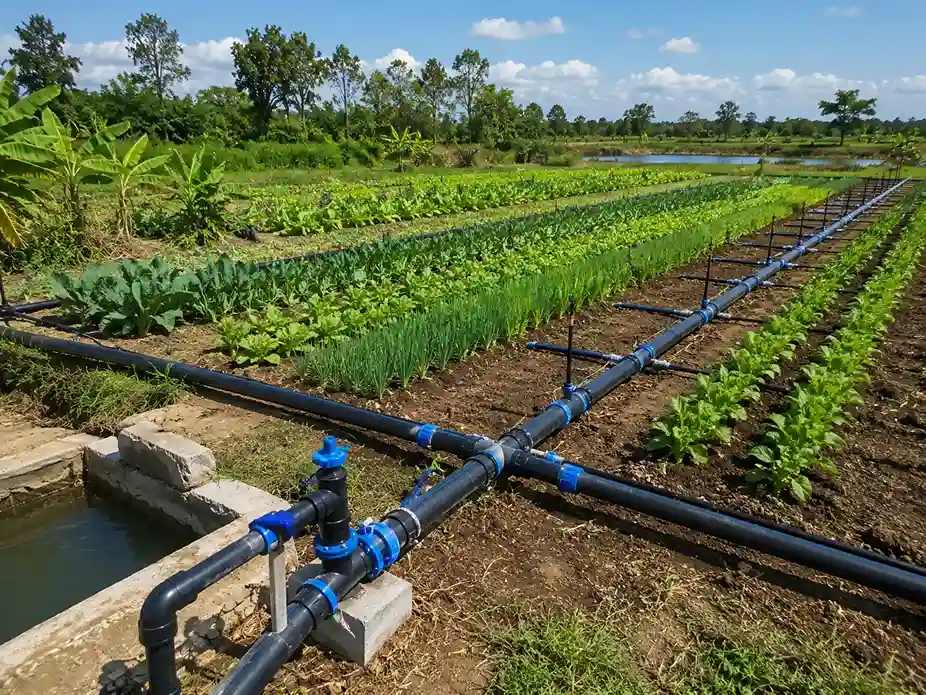
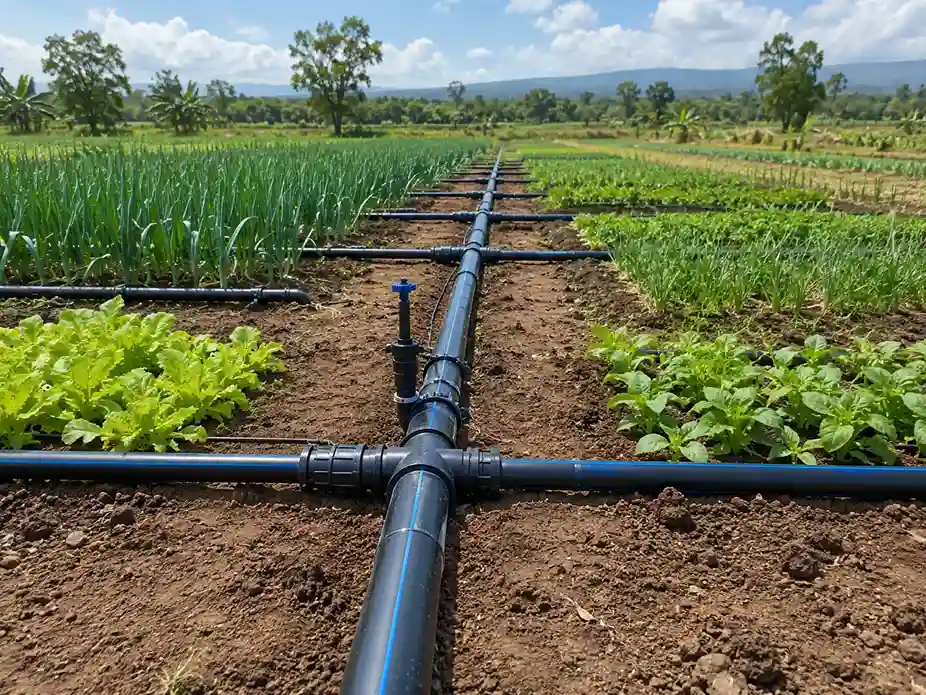
HDPE pipes are known for their flexibility, making them suitable for various land conditions, including uneven surfaces. This material is also resistant to corrosion, providing reliable long-term performance compared to metal-based piping materials.
HDPE pipe joints are highly durable when installed using proper procedures, helping minimize the risk of leaks at connection points from the beginning of installation.
These characteristics make HDPE pipes ideal for pressurized irrigation systems that require reliable and efficient water distribution.
With proper maintenance, HDPE pipes also support long-term use, reducing replacement frequency and repair costs.
When Should Pipes Be Replaced Instead of Repaired?
Not every pipe issue requires a complete replacement. However, several conditions indicate that repairs are no longer an efficient solution, including:
- Leaks occurring in multiple locations, indicating that the pipe material has started to weaken.
- Repairs becoming increasingly frequent, causing maintenance costs to exceed the actual benefits.
- Pipes developing cracks or deformation, showing that structural damage has become more serious.
- The irrigation system requiring increased capacity, which may require new pipe specifications.
- Repair costs approaching replacement costs, meaning repairs are no longer the most efficient option.
To better understand pipe service life and replacement considerations, you can read our guide on HDPE pipe lifespan as an additional reference.
Don’t Let Pipe Leaks Disrupt Your Planting Season!
Pipe leaks can disrupt water distribution when irrigation demand is at its highest. Early detection and regular maintenance can help reduce the risk of these problems during the planting season.
For example, even when an irrigation schedule has been properly arranged, crop yields can still be affected if the pipes being used begin to leak without being noticed. This condition can cause uneven water distribution and directly impact plant growth across the farmland.
Therefore, choosing irrigation pipes from a manufacturer that consistently maintains material quality is essential to minimize the risk of early leaks from the beginning of installation.
As an SNI-certified water pipe manufacturer in Tangerang, PT Alpha Cikupa Makmur through its ALVApipe brand provides HDPE pipes that are corrosion-resistant, flexible enough to adapt to land contours, and equipped with strong connections that minimize the risk of leaks.
With standardized production processes and SNI certification, every ALVApipe HDPE water pipe used for your agricultural irrigation system is guaranteed to deliver reliable quality and performance.
Consult your irrigation pipe requirements with the ALVApipe team today via WhatsApp +6287793102838 to receive expert consultation and the best price offer tailored to your farmland needs!