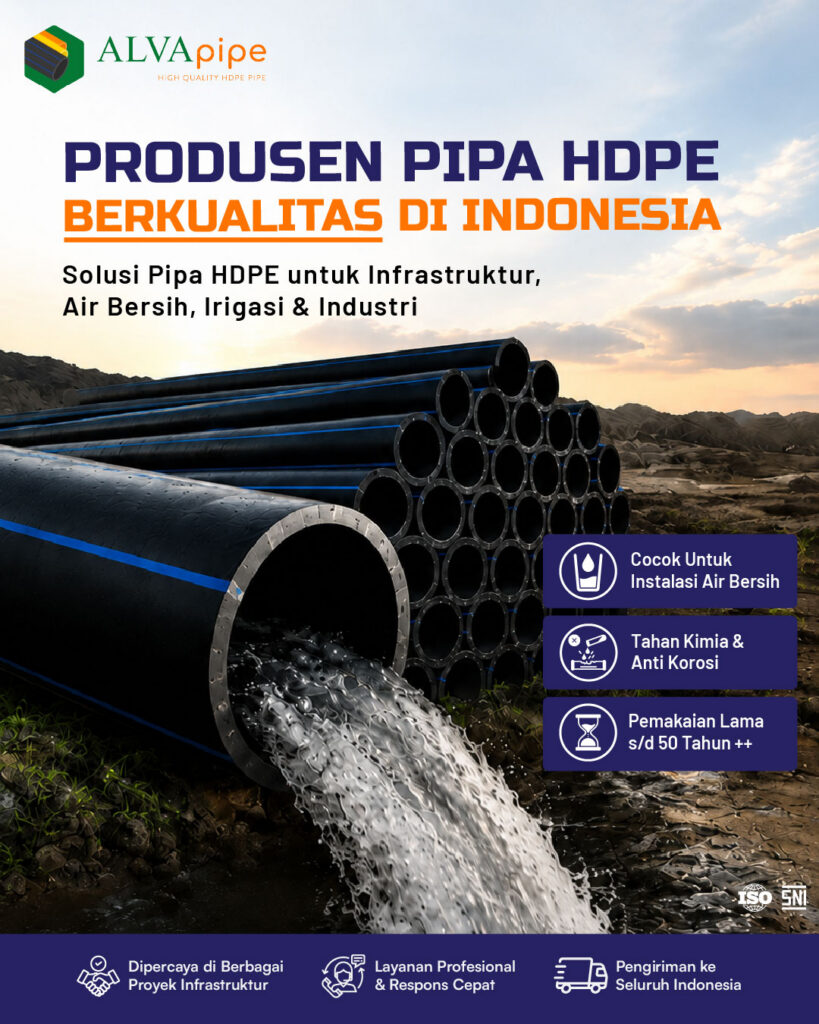
When purchasing HDPE pipes, most people immediately compare the price per meter and the available diameter sizes.
While these two factors are important, they only represent the surface of the technical specifications that actually determine whether the pipe is suitable for your project requirements.
To avoid making the wrong purchase decision, review the following HDPE pipe specification checklist before buying.
Essential HDPE Pipe Technical Specifications Checklist
Pipe Diameter and Size
The pipe diameter must match the flow capacity required by the system. A diameter that is too small can significantly reduce water pressure and limit distribution capacity, while a diameter that is too large results in unnecessary material usage and costs.
Make sure the units used are consistent, typically outside diameter (OD) measured in millimeters.
HDPE pipes are generally available in OD sizes ranging from 20 mm to 250 mm, and each size should be matched to the system flow requirements calculated by the project’s technical team.
Wall Thickness (SDR)
SDR, or Standard Dimension Ratio, is the ratio between the pipe’s outside diameter and its wall thickness. The lower the SDR value, the thicker the pipe wall and the higher the pressure it can withstand.
HDPE pipes are commonly available in SDR classes ranging from SDR 11 to SDR 26. SDR 11 has the thickest walls for high-pressure applications, while SDR 26 has thinner walls for lower-pressure systems.
Choosing the correct SDR ensures that the pipe wall thickness is appropriate for the system’s operating pressure neither insufficient nor excessive.
Operating Pressure (PN Rating)
PN, or Pressure Nominal, indicates the maximum operating pressure a pipe can withstand under normal operating conditions, expressed in bars. HDPE pipes are generally available in PN ratings from PN 6.3 to PN 16.
Check your system’s actual operating pressure, including any peak pressure conditions that may occur, and select a PN rating that provides a sufficient safety margin.
Avoid choosing a PN rating that only matches the normal operating pressure, as temporary pressure surges can occur and potentially damage the pipe if there is no safety buffer.
HDPE Material and Grade (PE 80 / PE 100)
The material grade determines the pipe’s fundamental strength. PE 100 offers higher density and tensile strength than PE 80, as well as better resistance to slow crack growth, making it more suitable for long-term infrastructure projects.
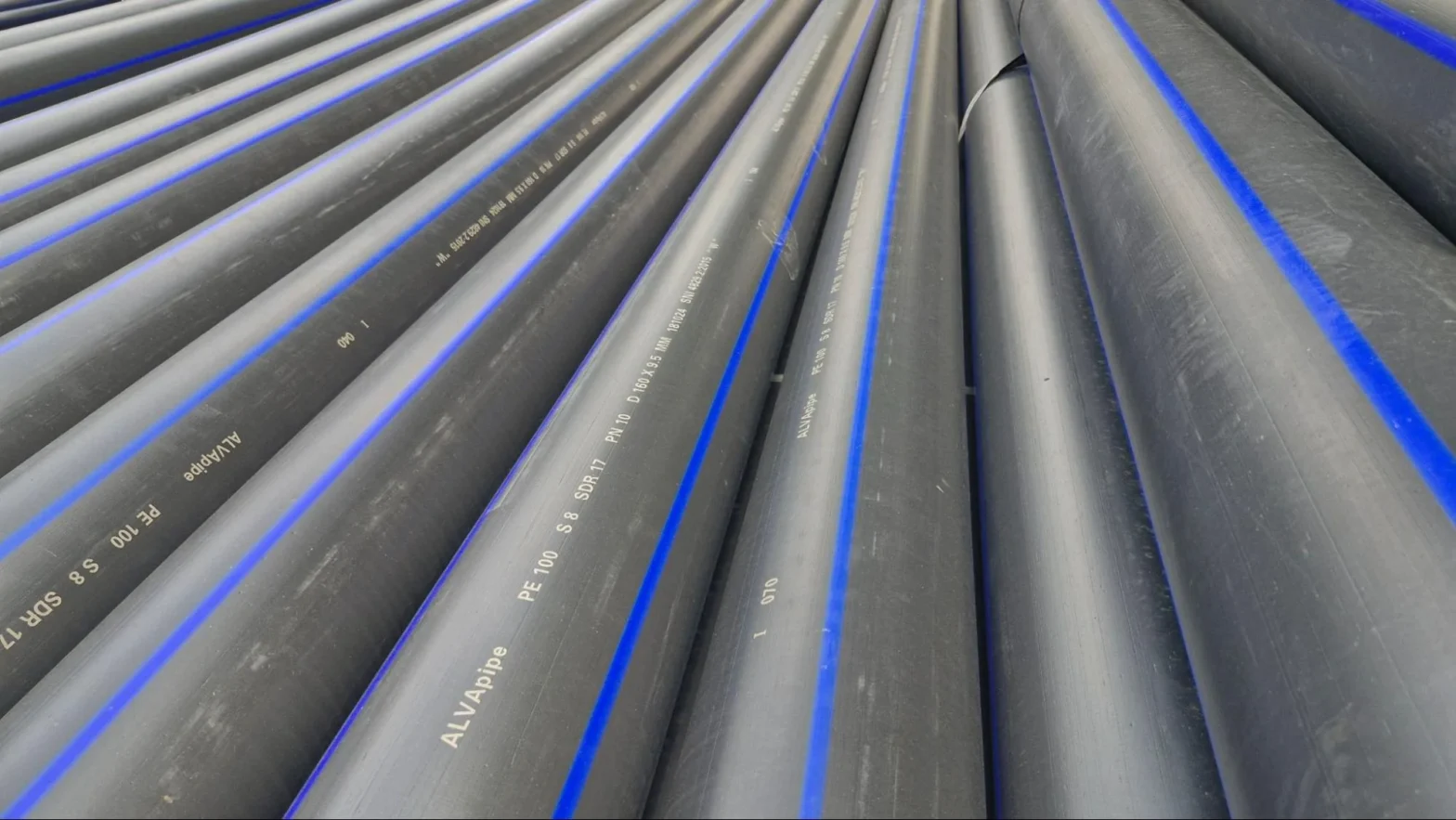
Ensure that the material grade stated in the quotation matches the grade printed on the pipe marking.
Grade discrepancies are among the most common specification mismatches and are often difficult to detect visually.
Material Density
Material density is directly related to the grade discussed above, but it should be checked separately because density values verify whether the material truly meets the claimed grade standards.
PE 100 materials generally have a density ranging from 0.955 to 0.965 g/cm³.
Whenever possible, request density test documentation from the supplier as part of the specification verification process, especially for large-volume infrastructure projects.
Certifications and Standards (SNI)
SNI 4829.2:2015 certification is the mandatory standard for HDPE pipes used in drinking water supply systems in Indonesia.
This certification verifies that the product has passed testing for dimensions, pressure resistance, density, crack resistance, and environmental durability according to standards established by the National Standardization Agency of Indonesia (BSN).
Check the pipe marking for the SNI standard number and request official certification documents from the supplier for further verification.
Learn more about water pipe quality standards used as benchmarks when evaluating product suitability before procurement.
Physical Condition of the Pipe
In addition to technical specifications on paper, the actual physical condition of the pipe should also be inspected.
The pipe surface should be smooth and free from deep scratches, bubbles, or cracks. The color should be consistent throughout the entire surface, with no discoloration that may indicate inconsistent material composition.
Also check the pipe’s roundness by ensuring that the pipe ends form a perfect circle without deformation.
Pipes that appear oval upon delivery may indicate manufacturing or storage issues before reaching your site.
Mistakes to Avoid When Reviewing Specifications
1. Ignoring Technical Details
Rushed procurement processes often result in SDR, PN ratings, or material grades not being thoroughly verified. However, these details determine whether the pipe is compatible with the system design.
2. Failing to Verify the Product Directly
Relying solely on product descriptions from catalogs or quotations without checking the physical pipe markings or requesting certification documents poses significant risks, especially for large-volume purchases.
3. Focusing Too Much on Low Prices Without Considering Specifications
Prices that are significantly lower than market averages for the same specifications almost always indicate compromises in material grade, wall thickness, or certification status.
Make Sure Your Pipe Specifications Are Correct, Get Free Consultation from the ALVApipe Team!
The technical specification checklist above is a practical tool you can use whenever evaluating HDPE pipe quotations.
However, translating system requirements into the correct specifications from diameter and SDR to PN ratings and material grades requires in-depth technical discussions with professionals who truly understand the product.
PT Alpha Cikupa Makmur, through its ALVApipe brand manufactures HDPE water pipes made from high-density PE 100 material, available in OD diameters ranging from 20 mm to 250 mm and SDR pressure classes from SDR 11 to SDR 26, certified to SNI 4829.2:2015 and ISO standards.
The ALVApipe technical team is ready to help determine the most suitable specifications for your project while providing certification documentation that can be independently verified.
Consult with the ALVApipe team via WhatsApp at +62 877-2666-3295 for specification recommendations and the best pricing tailored to your project needs!