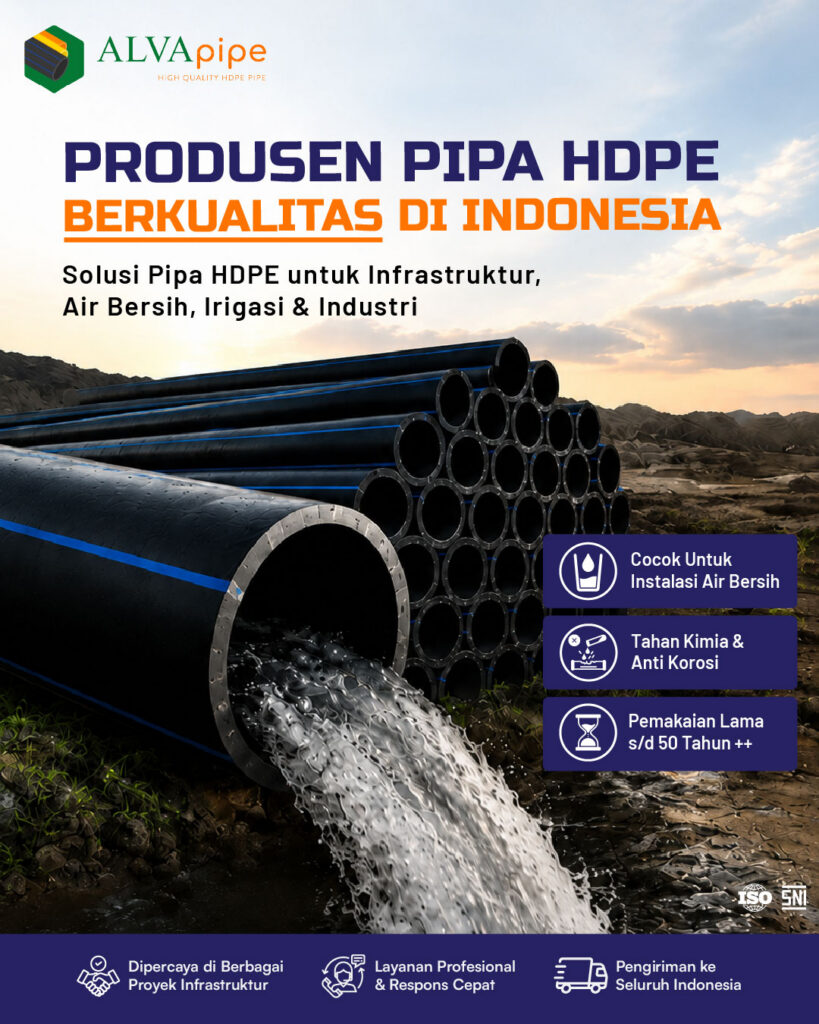
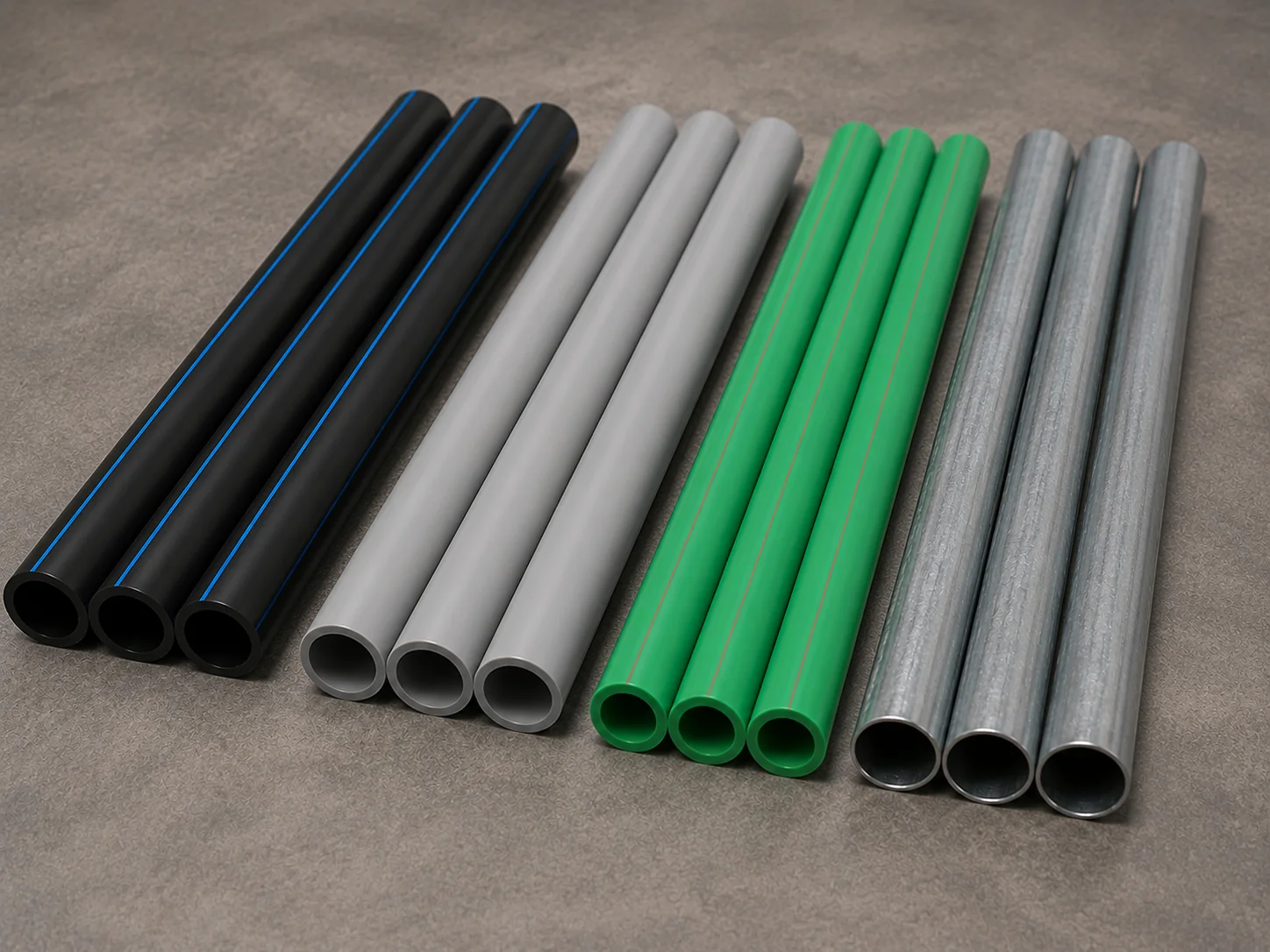
The material of a pipe determines the overall performance of a water distribution system. Choosing the right material ensures system reliability, lower maintenance costs, and longer operational life without major issues.
Conversely, selecting the wrong material—even seemingly minor during planning—can cause significant problems once the system is installed. Pipes that do not match pressure conditions, environmental factors, or the type of fluid being transported can lead to long-term issues and high repair costs.
Therefore, to make the right choice, familiarize yourself with the following types of water pipe materials!
Types of Water Pipe Materials and Their Characteristics
1. HDPE Pipes (High-Density Polyethylene)
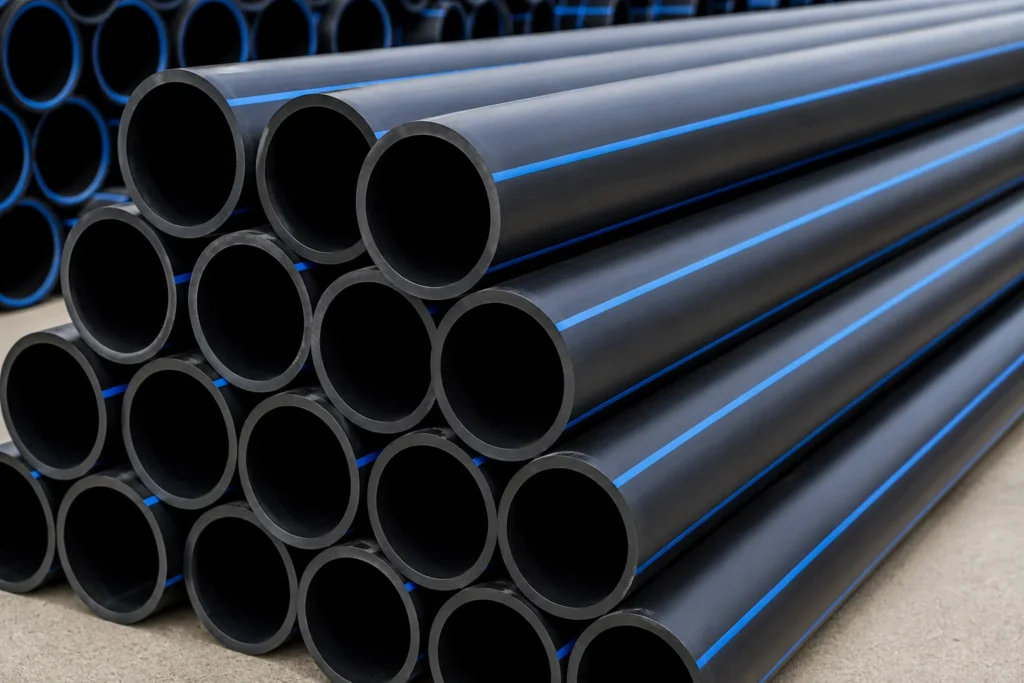
HDPE pipes are made from High-Density Polyethylene, a high-density polyethylene-based plastic increasingly used in modern water infrastructure projects. They are known for their high flexibility, corrosion resistance, and long service life.
Key advantages of HDPE pipes include:
- Elasticity exceeding 700%, allowing the pipe to adapt to ground movement without cracking.
- Chemically inert to substances commonly found in water distribution systems.
- Fusion-welded joints create connections with integrity equal to the pipe body.
- Smooth inner surfaces reduce flow resistance and minimize pressure loss.
- Estimated service life of up to 50 years with minimal maintenance requirements.
- Lightweight, with a density of 0.94 g/cm³, making installation easier.
HDPE pipes are ideal for pressurized clean water distribution, underground installations, areas with shifting soils, and environments exposed to chemicals.
2. PVC Pipes (Polyvinyl Chloride)
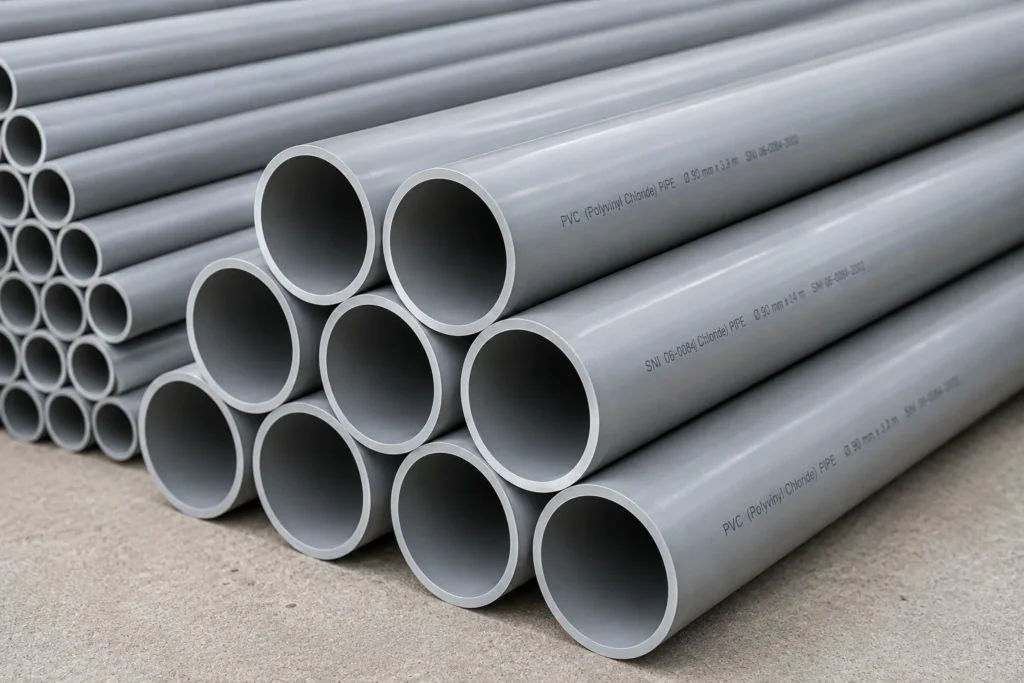
PVC pipes are made from Polyvinyl Chloride, a chlorine-based polymer that has long been a popular choice in construction due to its affordability and widespread availability at hardware stores and pipe distributors in Indonesia.
PVC is valued for its low cost, ease of installation, and corrosion resistance under standard usage conditions. It has higher rigidity compared to HDPE, making it suitable for drainage systems, wastewater channels, and installations that do not require high-pressure tolerance.
3. PPR Pipes (Polypropylene Random Copolymer)
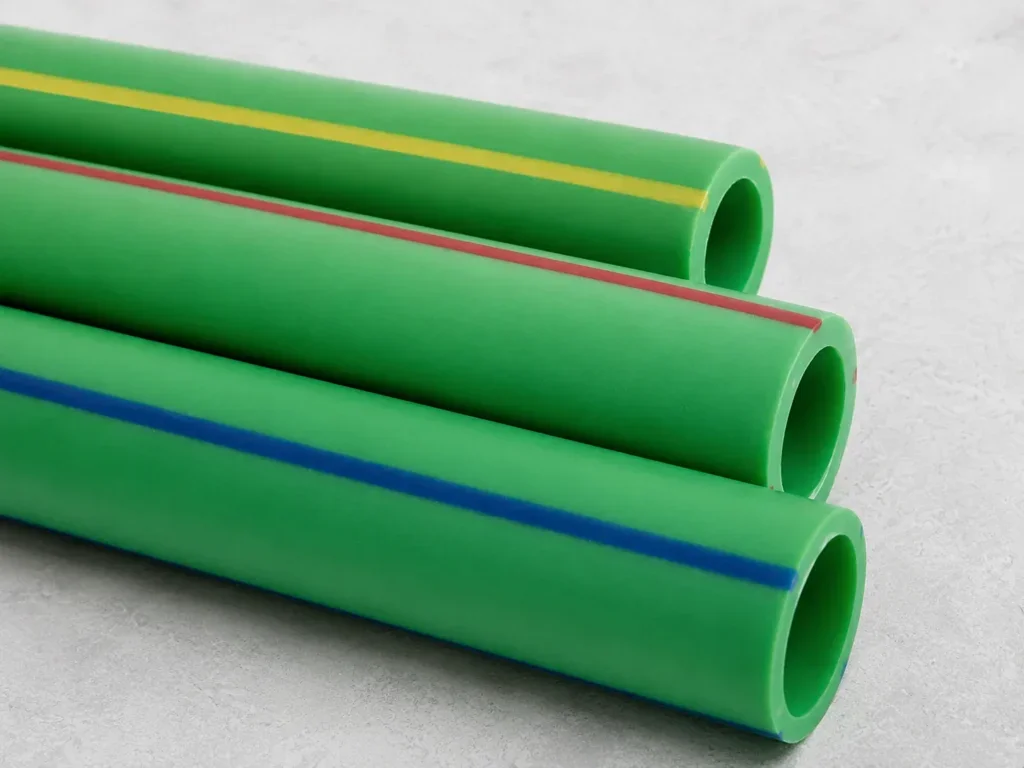
PPR pipes are the preferred choice for hot and cold water installations within buildings. This material can withstand high temperatures up to approximately 95°C, is corrosion-free, and has an extremely smooth inner surface, ensuring the quality of the water it carries.
PPR pipes are joined using heat fusion, creating permanent, leak-free connections. These advantages make PPR highly popular for water distribution systems in apartments, hotels, hospitals, and commercial buildings that require both hot and cold water supply.
However, the main limitations of PPR are its unsuitability for long-term underground installations and the limited availability of large-diameter pipes for main distribution networks.
4. Steel or Galvanized Pipes
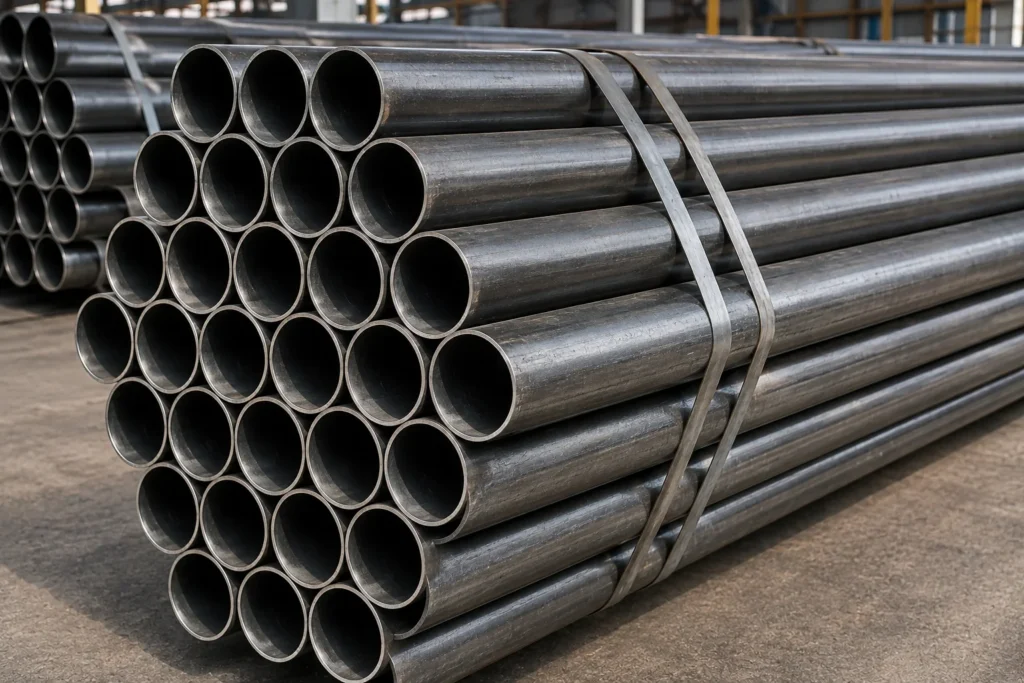
Steel or galvanized pipes are made of steel coated with zinc to protect against corrosion. This material offers high structural strength and has been used for decades in building piping systems.
Over time, the protective zinc layer can degrade, especially in environments with acidic water or high mineral content. Once the coating wears off, the steel can rust, potentially contaminating the water. Their heavy weight also makes installation labor-intensive and time-consuming.
5. Ductile Iron Pipes
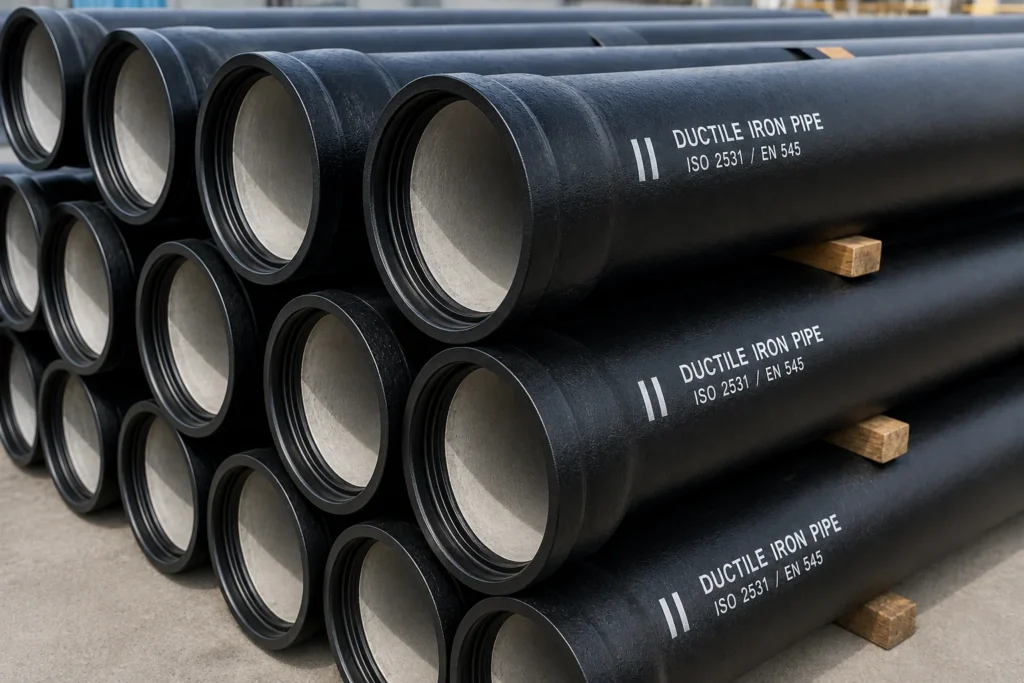
Ductile iron pipes are made from specially processed nodular cast iron, offering high structural strength and better impact resistance than ordinary cast iron. They are commonly used for municipal main water distribution networks, long-distance water transmission systems, and public infrastructure.
However, their extremely heavy weight, high material cost, and the need for specialized installation skills make ductile iron less practical for medium- or small-scale projects.
6. Steel Pipes
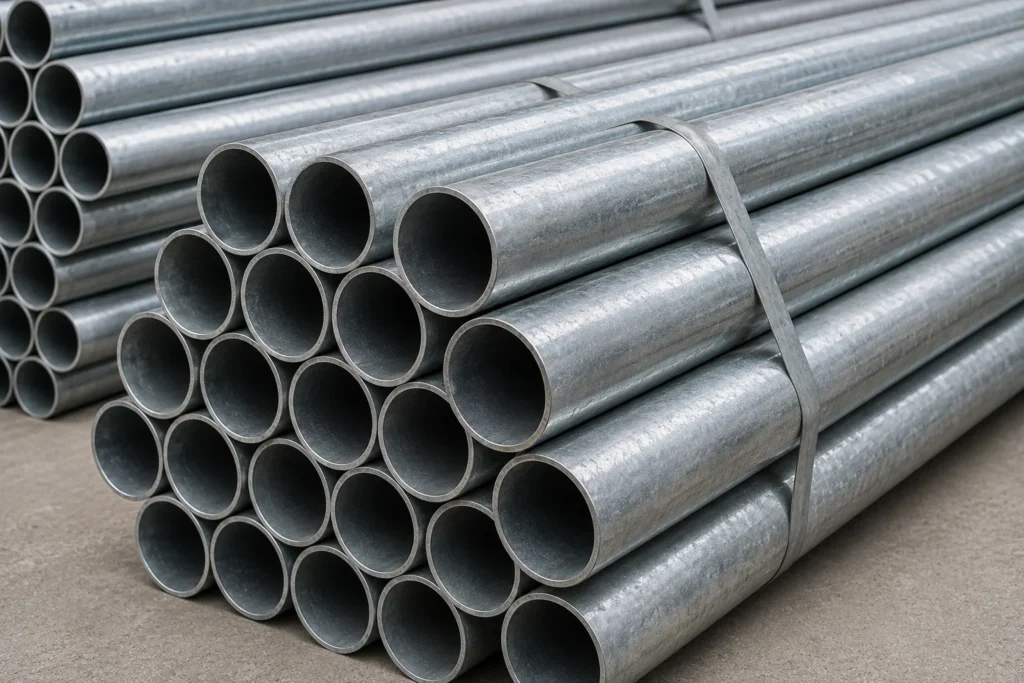
Steel pipes are made from iron with a specific carbon content that provides very high structural strength. They are used in applications requiring extremely high operational pressure or extreme temperatures, such as high-pressure gas distribution, chemical industry systems, and energy generation facilities.
The drawbacks include very high costs, susceptibility to corrosion, and installation that requires skilled welding. Therefore, for medium-scale clean water distribution systems, steel pipes are generally not the most cost-efficient option.
Quick Comparison of Water Pipe Materials
| Aspect | HDPE | PVC | PPR | Galvanized Steel | Ductile Iron |
| Flexibility | Very high | Low | Medium | Low | Very low |
| Corrosion Resistance | Excellent | Good | Good | Moderate | Good (with coating) |
| Service Life | Up to 50 years | 25–40 years | 25–50 years | 15–25 years | 50+ years |
| Initial Cost | Medium | Low | Medium | Low–Medium | High |
| Long-Term Cost | Low | Medium | Low | High | Low |
| Ease of Installation | Easy | Easy | Easy | Moderate | Difficult |
| Primary Applications | Pressurized water distribution, underground | Drainage, wastewater | Hot/cold water in buildings | Structural installations | Municipal water networks |
Why HDPE Pipes Are the Top Choice for Modern Projects
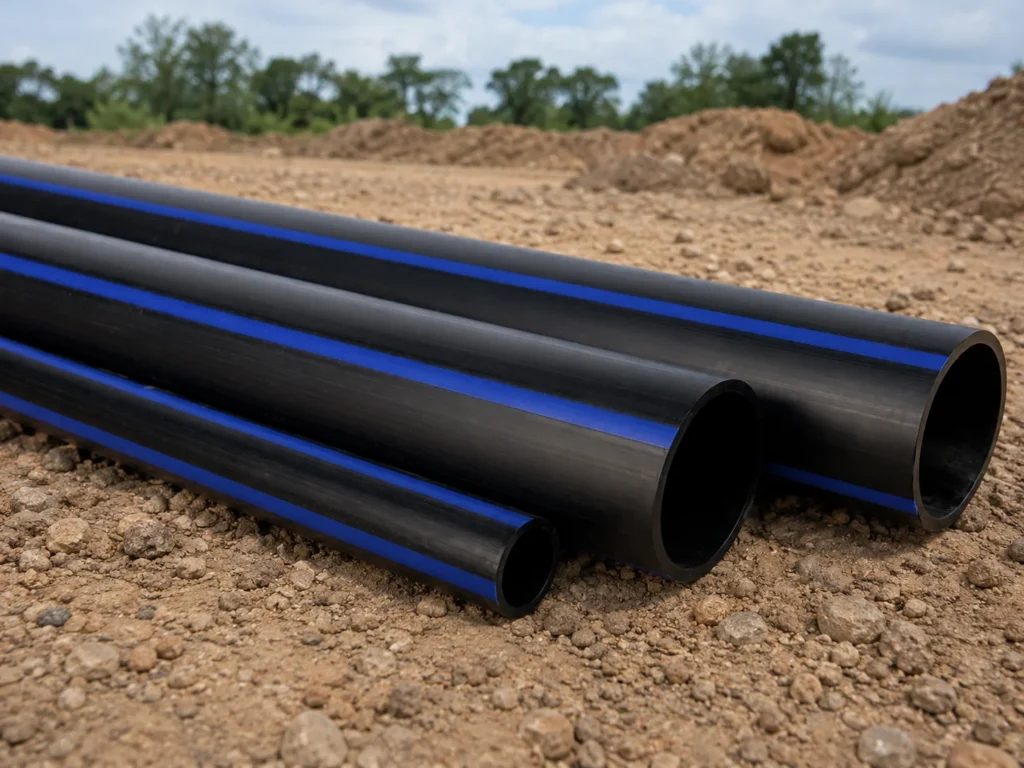
Among all the pipe materials discussed, HDPE pipes are increasingly dominating modern water infrastructure projects. This is not without reason—HDPE pipes offer high flexibility, excellent corrosion resistance, a service life of up to 50 years, easy installation, and low total cost of ownership, making them the most comprehensive choice for most water distribution applications.
PT Alpha Cikupa Makmur, through its brand ALVApipe, provides SNI 4829.2:2015 and ISO-certified HDPE water pipes in various diameters ranging from OD 20 mm to 250 mm, with pressure classes from SDR 11 to SDR 26.
All pipes are manufactured directly at their HDPE production facility in Tangerang and can be delivered across Indonesia.
In addition to HDPE water pipes, ALVApipe also offers PPR pipes for building installations and HDPE gas pipes for pressurized gas distribution systems.
Want to learn more about ALVApipe HDPE water pipe specifications?
Contact the ALVApipe team via WhatsApp at +6287726663295 for tailored recommendations and the best project-specific price quotes!