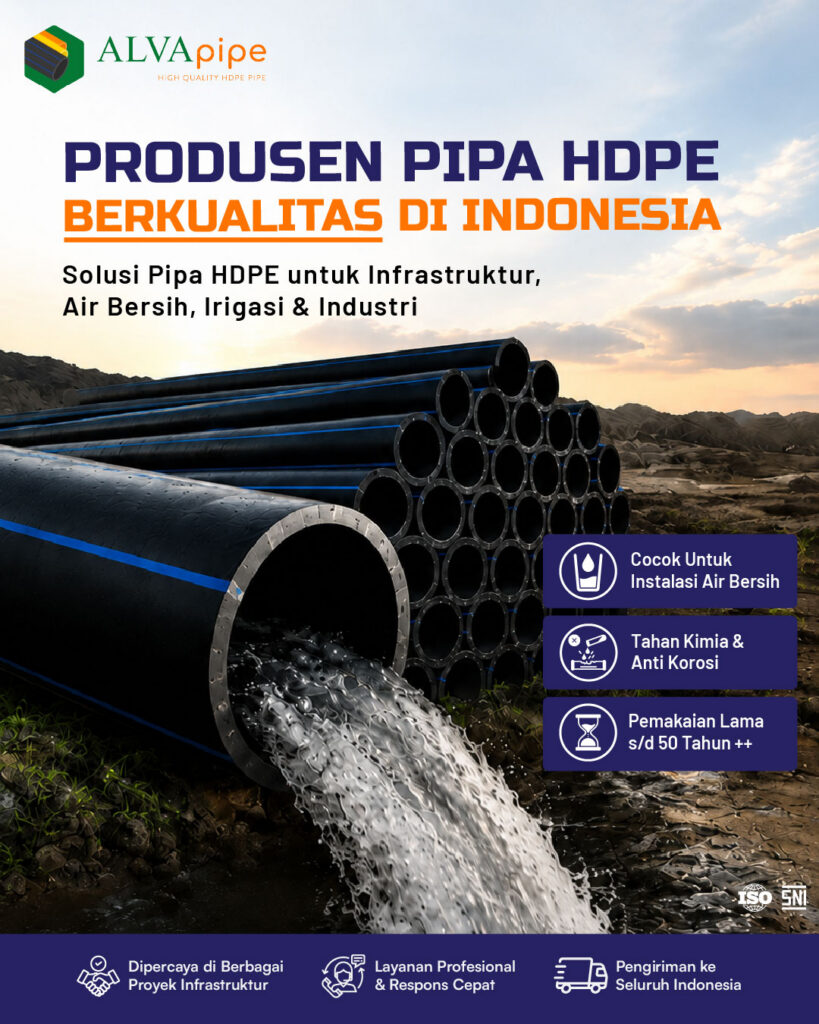
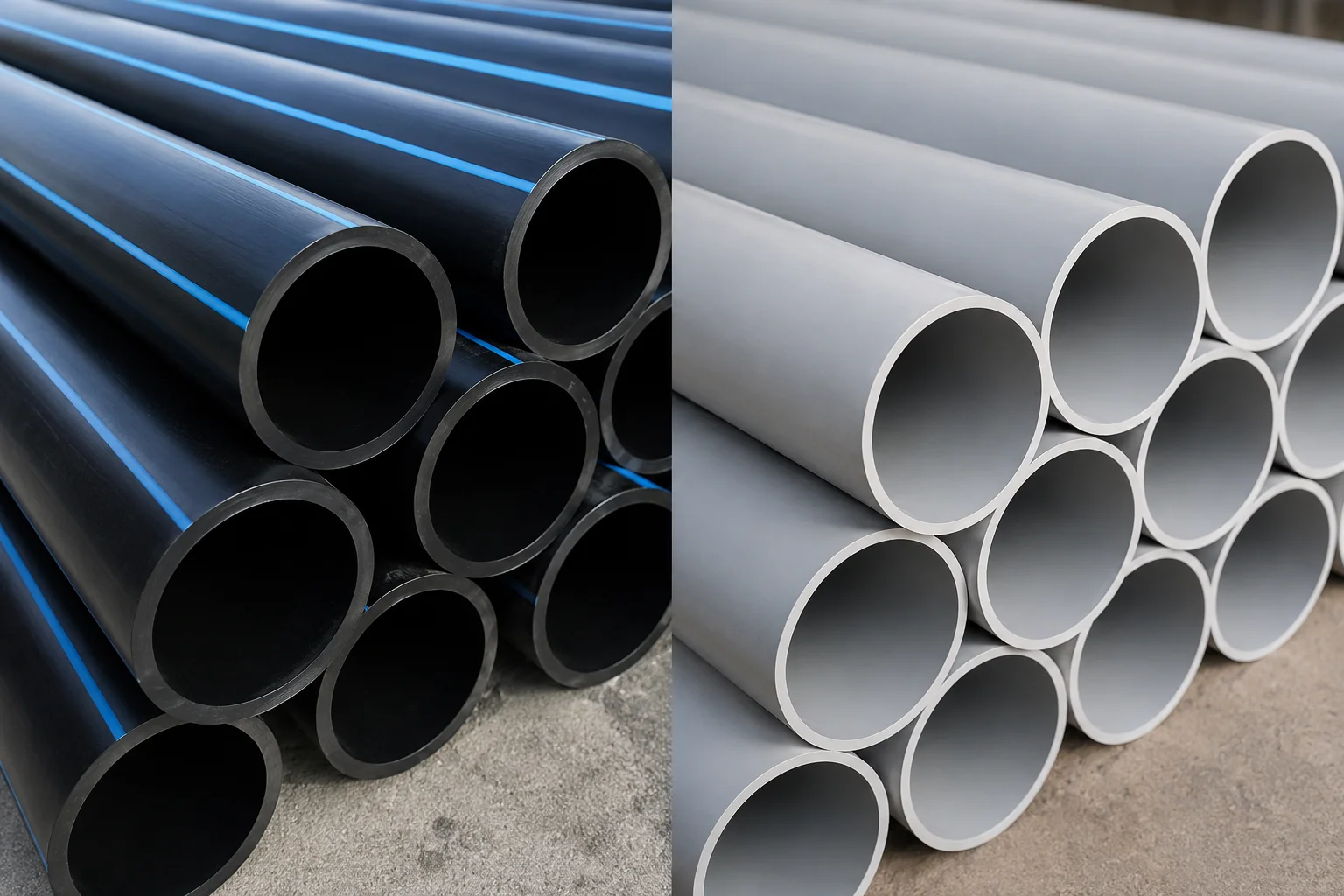
Choosing between HDPE pipes and PVC pipes is often seen as a simple technical decision. In reality, this choice directly affects long-term costs, piping system durability, and leakage risks that infrastructure projects must bear for decades ahead.
These two materials have different characteristics, making it essential to understand the advantages and limitations of each before making procurement decisions.
A Quick Overview of HDPE and PVC Pipes
What Is an HDPE Pipe?
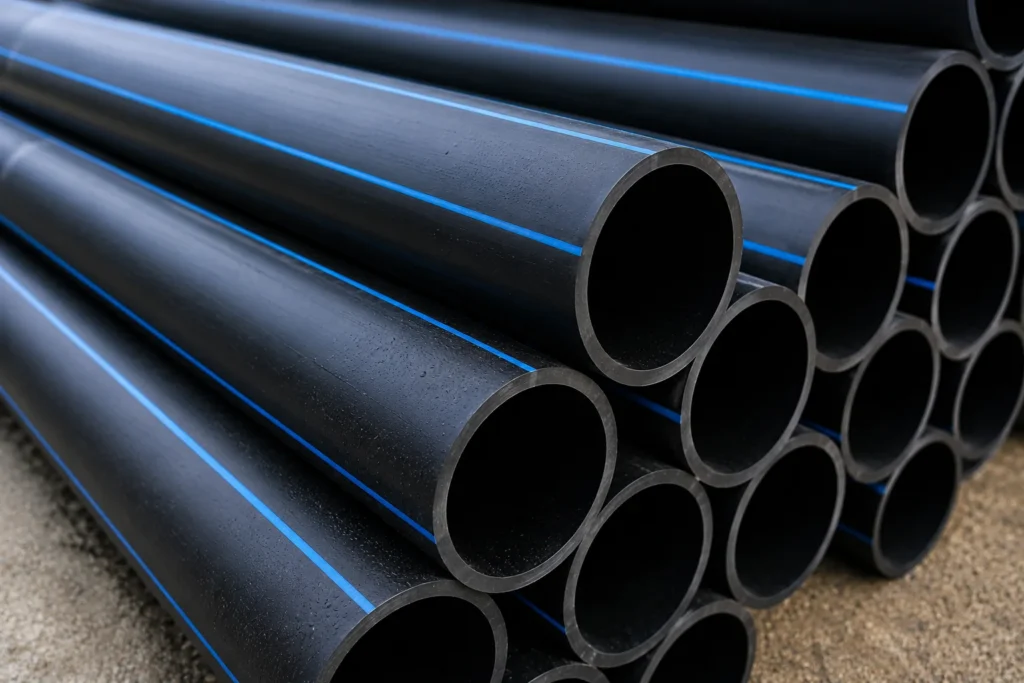
HDPE stands for High-Density Polyethylene, a thermoplastic material made from high-density polyethylene.
This material is well known for its high flexibility, impact resistance, and ability to maintain structural integrity under demanding operating conditions.
HDPE water pipes are widely used for clean water distribution, irrigation systems, drainage, and various industrial infrastructure applications that require long service life.
What Is a PVC Pipe?
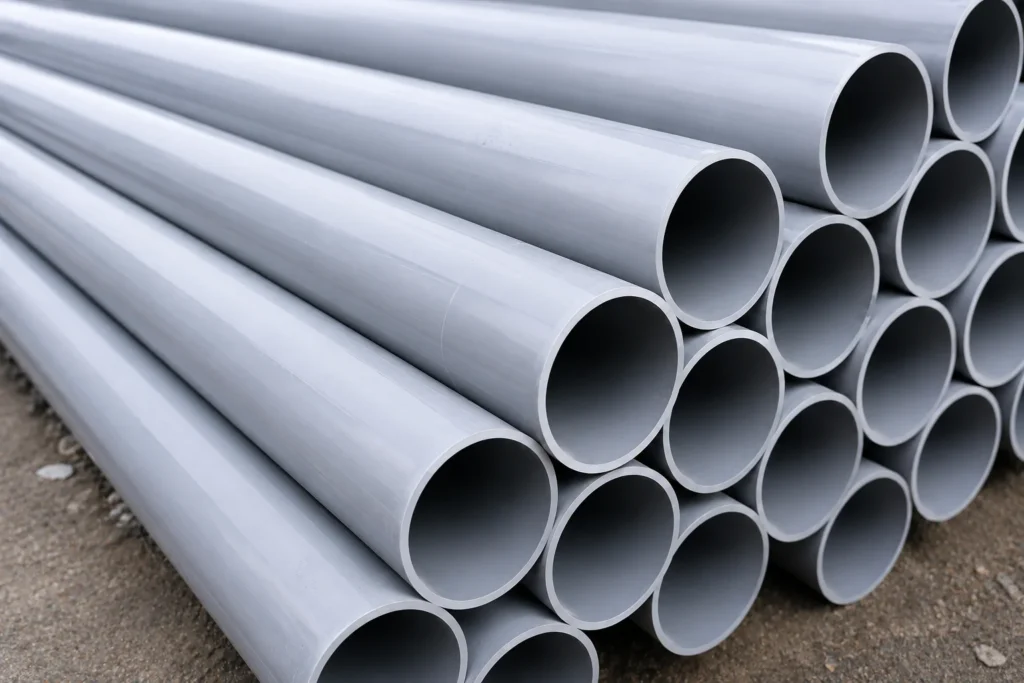
PVC, or Polyvinyl Chloride, is a rigid plastic material that has long been used in piping systems.
Its rigid structure, lightweight properties, and relatively affordable price make it popular for various applications, especially building installations, light drainage systems, and low-to-medium pressure water networks.
Unlike flexible HDPE pipes, PVC pipes are rigid and more prone to cracking when exposed to impacts or shifting soil conditions.
HDPE Pipe vs PVC Comparison
| Aspect | HDPE Pipe | PVC Pipe |
| Strength & Flexibility | Flexible, can bend without cracking | Rigid, not tolerant to bending |
| Pressure & Impact Resistance | High, able to absorb pressure surges | Lower, prone to sudden cracking |
| Jointing System | Fusion welding (seamless, no weak points) | Solvent cement or rubber ring (mechanical joints) |
| Corrosion & Chemical Resistance | Excellent, resistant to aggressive soil conditions | Good under standard conditions, vulnerable to organic solvents |
| Service Life | 50 years or more | 25 to 40 years |
| Installation Ease | Flexible for uneven terrain, available in coils | Easy to cut but requires fittings at every bend |
| Initial Cost | Higher | Lower |
| Total Cost of Ownership | More efficient long-term | Higher when calculated based on lifecycle cost |
Why Modern Infrastructure Increasingly Chooses HDPE Pipes
1. Demand for Longer Service Life
Modern infrastructure projects whether urban clean water networks, large-scale agricultural irrigation systems, or industrial infrastructure are designed to operate for decades.
Modern infrastructure planning standards can no longer rely on materials with only a 20-year lifespan that require replacement during the project’s operational cycle.
2. Increasingly Complex Field Conditions
Today’s infrastructure projects often face challenging conditions such as shifting soil, non-ideal installation routes, extreme temperature variations, and fluctuating load conditions.
In all these situations, the flexibility and durability of HDPE provide greater reliability and safety.
3. Lower Leakage Risk
The fusion jointing system used in HDPE pipes delivers higher joint integrity compared to the mechanical connection systems commonly used in PVC pipes.
In large-scale clean water distribution networks, the difference in leakage rates between these two systems can become financially and operationally significant.
According to applicable water pipe quality standards, joint integrity is one of the critical parameters that must be met.
4. Better Long-Term Cost Efficiency
As mentioned in the cost comparison section, the total cost of ownership for HDPE pipes is lower than PVC over the long term.
For this reason, HDPE pipes are increasingly relied upon as the primary material for large-scale infrastructure projects, clean water networks, and industrial installations.
HDPE or PVC? The Right Choice Depends on Your Project Needs
There is no absolute answer in the HDPE pipe vs PVC comparison. However, for infrastructure projects that require long service life and must handle varying field conditions, HDPE pipes provide significantly better long-term value.
As a direct manufacturer and distributor of SNI-certified HDPE pipes, ALVApipe is ready to help determine the most suitable HDPE water pipe specifications for your infrastructure project requirements and field conditions.
Consult your HDPE water pipe needs with the ALVApipe team today!