
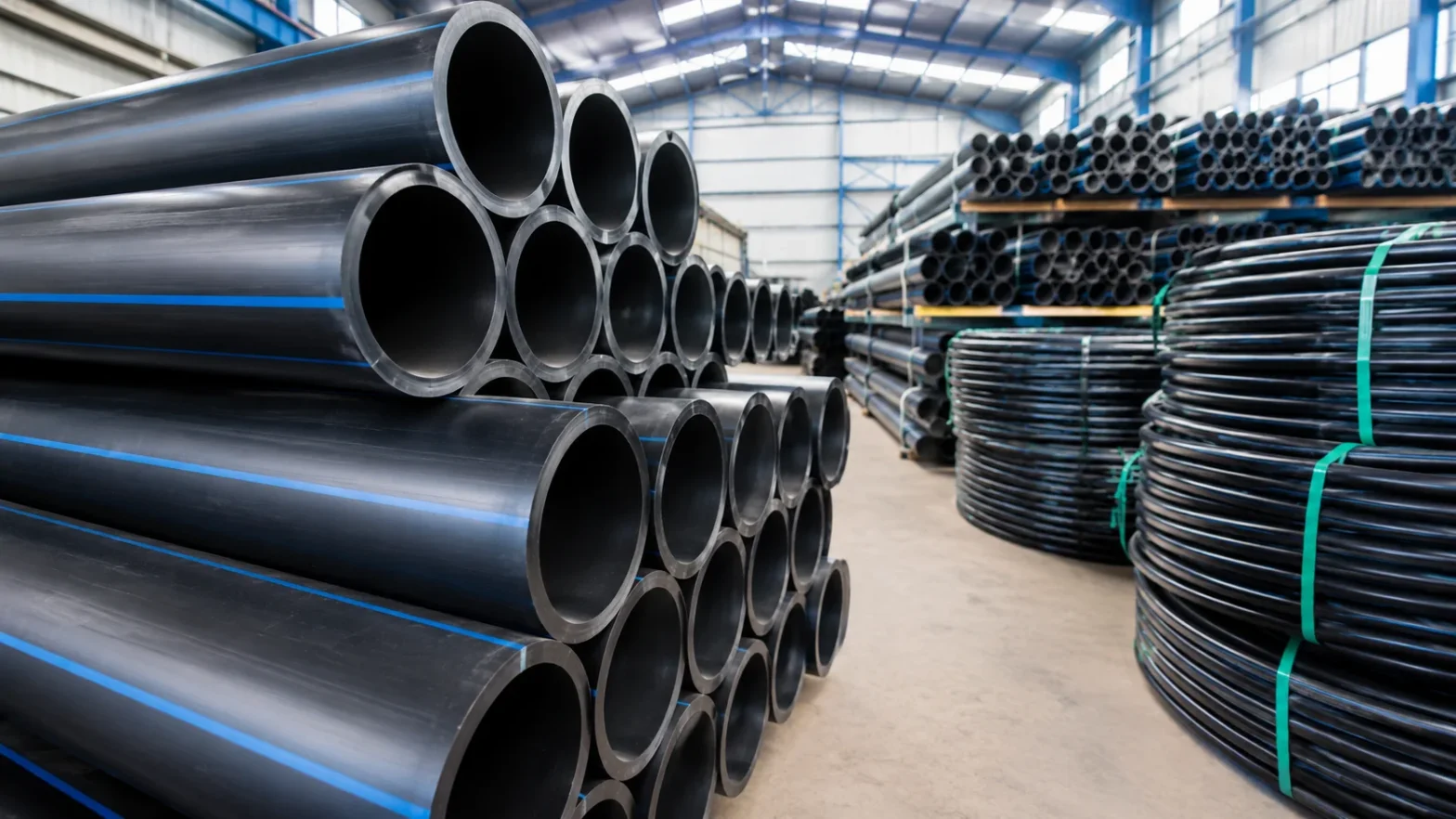
One of the biggest challenges for water pipe stores is inventory that never feels quite right.
Sometimes, the products customers look for most are out of stock at the wrong time. Other times, the warehouse is filled with products that do not move for weeks (slow-moving items), while capital that could have been rotated is instead tied up there.
The solution to this problem is maintaining the right inventory products that customers truly need, in quantities that match actual demand patterns.
And to do that, you need to start reading customer demand patterns more carefully.
Why Are Customer Demand Patterns Important for Pipe Inventory?
Every pipe store has different market characteristics.
Stores located near residential areas will receive more demand for small to medium-sized pipes used for clean water installations and sanitation systems.
Meanwhile, stores located near industrial areas or large construction projects are more likely to receive demand for large-diameter pipes or products with specific technical specifications.
Without understanding these market characteristics, your inventory decisions will only be based on habits or intuition, which may not accurately reflect customer needs.
There are two major risks when demand patterns are ignored:
- Stockouts. The products customers search for most are unavailable when needed. Customers move to competitors, and repeat orders that once formed the backbone of store revenue are lost as well.
- Dead stock. Capital gets tied up in products that do not move. Warehouse space is occupied, cash flow becomes constrained, and the store loses flexibility to allocate capital toward products that are more in demand.
Where Can Demand Data Be Obtained?
The good news is that you do not need a sophisticated system to start reading demand patterns. The data is already around you every day.
1. Historical Sales Data
Record which products are sold, how many are sold, and when.
Even simple manual records over one to three months are enough to begin identifying patterns.
Which products always sell out faster than expected? Which products barely move?
2. Customer Purchasing Patterns
Pay attention to who is buying what.
Project-based customers usually buy in large quantities on scheduled timelines, while retail customers tend to purchase in smaller quantities but more frequently.
By understanding these purchasing profiles, you can plan inventory more effectively according to the rhythm of each segment.
3. Unfulfilled Questions and Requests
Take note of products customers frequently ask for but that are unavailable in stock.
If customers repeatedly ask for the same product, it indicates an unmet demand pattern.
4. Project Trends in Surrounding Areas
Follow developments in construction, housing, or infrastructure projects around your store. New projects often create spikes in demand for certain products.
By identifying these trends early, you can prepare inventory before demand truly surges.
Practical Ways to Read Demand Patterns
1. Identify Fast-Moving Products
Start by identifying which products sell out most often and are reordered frequently.
These products are the backbone of your store’s sales. Make sure their inventory remains secure and avoid stock shortages in this category.
2. Recognize Slow-Moving Products
On the other hand, identify products with slow turnover.
Consider reducing order volumes for these products and only restocking based on actual demand or specific customer orders.
3. Analyze Seasonal Patterns
Some pipe products experience demand patterns tied to seasons or specific periods.
Demand for irrigation systems, for example, tends to increase during the dry season. Meanwhile, demand for construction materials usually rises when many projects are running simultaneously in a particular area.
By understanding these seasonal patterns, you can prepare inventory ahead of demand increases.
4. Apply the 80/20 Principle (Pareto Principle)
In many cases, around 80 percent of a pipe store’s sales come from only 20 percent of its product variations.
Identify those 20 percent of products and ensure the largest portion of your inventory allocation is directed toward them. The remaining 80 percent of products can be managed with lower stock volumes.
5. Conduct Regular Evaluations
Demand patterns can change over time. Large projects in your area may end, material trends may shift, or new products may begin gaining demand.
Evaluate your inventory composition at least every three months to ensure your stock strategy remains relevant to current market conditions.
Practical Tips to Optimize Pipe Inventory
After understanding demand patterns, here are several practical steps you can apply immediately:
- Start with simple recordkeeping. There is no need for expensive software. Simple spreadsheets or even notebooks are enough, as long as records are maintained consistently every day.
- Create fast-moving, medium-moving, and slow moving categories. Group products based on turnover speed and apply different inventory policies for each category.
- Maintain safety stock for fast-moving products. Always keep a stock buffer for best-selling items so your store never runs out at critical times.
- Communicate your needs to suppliers early. Do not wait until stock runs out before placing orders. Inform pipe distributors or manufacturers about procurement needs well before inventory reaches critical levels so lead times do not disrupt operations.
The Role of Suppliers in Supporting Inventory Planning
Suppliers should help your store make better inventory decisions. Some advantages of working with a reliable and trusted supplier include:
- Insights into products currently in high market demand, based on order data from various distribution partners.
- Stable inventory availability, so you do not need to keep excessive buffer stock in anticipation of delays.
- Flexible order volumes that help smaller stores order according to actual needs without being tied to large minimum order requirements.
- Access to information about product trends and the latest specifications relevant to the market you serve.
ALVApipe, as an HDPE water pipe manufacturer directly under PT Alpha Cikupa Makmur, serves partners ranging from small-scale water pipe stores to large-scale pipe distributors.
With a stable distribution system and predictable lead times, ALVApipe helps its store partners plan inventory accurately.
Learn more about the water pipe quality standards that should be considered when selecting water pipe products for your inventory, and how to choose an HDPE water pipe supplier that supports long-term operational efficiency.
Consult your water pipe needs with ALVApipe!
PT Alpha Cikupa Makmur, through the ALVApipe brand, is ready to become a supply partner that supports your store’s operational efficiency with certified products that meet guaranteed water pipe quality standards in every shipment.
View the complete specifications on the ALVApipe HDPE water pipe page. Contact the ALVApipe team immediately via WhatsApp at +62 877-2666-3295 to get product recommendations and pricing offers tailored to your needs!