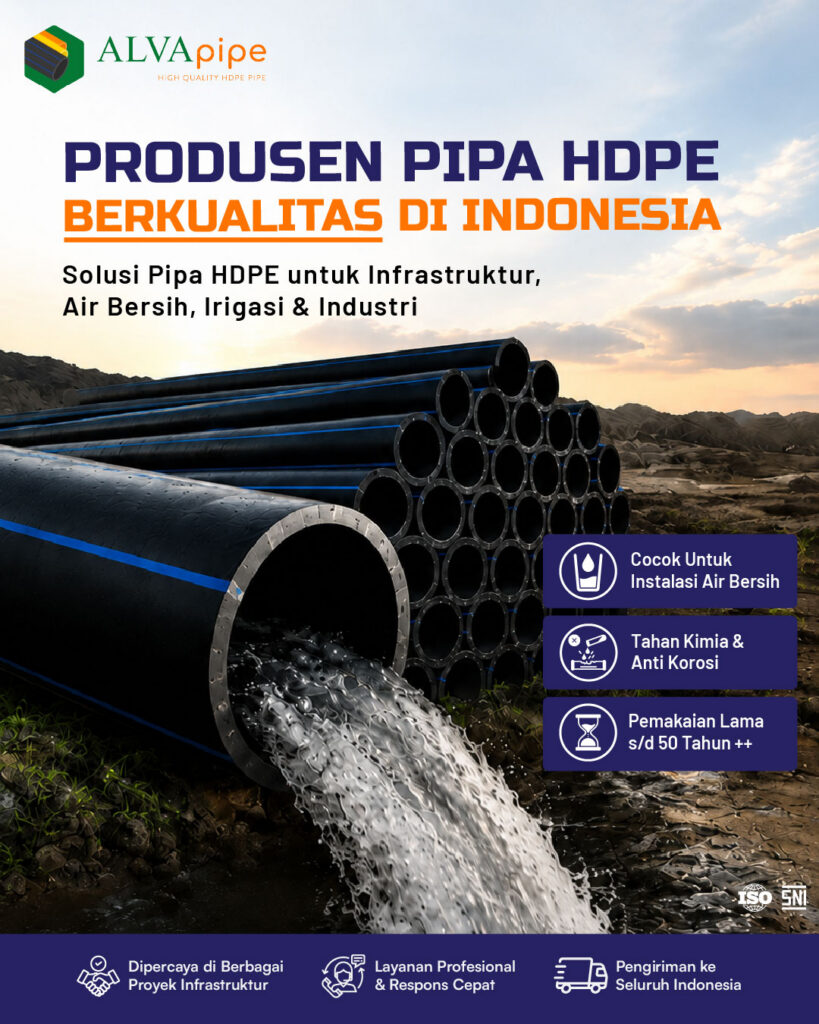
What is an HDPE pipe? An HDPE pipe is a pipe made from High-Density Polyethylene, a thermoplastic material known for its strength, flexibility, corrosion resistance, and suitability for various piping applications. For clean water applications, ALVApipe Water uses PE-100 material and is available with SNI standards to support water distribution, irrigation, and sanitation networks.
Understanding the Definition and Material of HDPE Pipes
The definition of an HDPE pipe can be understood from its material. HDPE stands for High-Density Polyethylene, a type of polyethylene with high-density characteristics that is used to manufacture various products, including pipes for water, telecommunications, and gas networks.
For those who are new to piping, the easiest way to distinguish them is by looking at their intended applications. HDPE pipes for water are not automatically the same in specification as HDPE used for cable protection or gas distribution. Each application requires the appropriate material, size, standard, and product design.
ALVApipe itself provides several product lines, namely ALVApipe Water, ALVApipe Telecommunication, ALVApipe Gas, and ALVApipe PPR. ALVApipe Water is used for clean water distribution, irrigation, and sanitation, while Sub-Duct is used to protect fiber optic cables, and Gas products are designed for gas distribution.
Pure High-Density Polyethylene (PE-100) Polymer
In ALVApipe Water products, PE-100 HDPE pipe material is used to produce pipes with a combination of strength and flexibility. This PE-100 material is one of the considerations when pipes are used in water networks that require resistance to pressure.
ALVApipe states that its products use pure plastic resin. For ALVApipe Water, PE-100 material is used in products intended for clean water distribution. These products have SNI 4829.2:2015 certification.
The term PE-100 also does not mean that all HDPE pipes on the market automatically have the same specifications. Diameter, SDR, nominal pressure, product standards, and installation methods still need to be checked before selecting a pipe for a particular application.
High Flexibility and a Service Life of Up to 50 Years
One characteristic that makes HDPE attractive for field installations is its flexibility. The pipe can adapt to certain routes and is easier to mobilize compared to more rigid piping materials.
ALVApipe states an estimated service life of up to 50 years under suitable usage conditions. Actual durability is still influenced by pressure, temperature, environmental conditions, system design, joint quality, and installation processes.
Advantages of HDPE Pipes Compared to Conventional Pipe Types
HDPE offers advantages in terms of flexibility, corrosion resistance, relatively light weight, and various available joining methods.
These characteristics make HDPE widely used in water networks, underground utilities, irrigation, and other infrastructure applications that require durable materials.
Corrosion, Rust-Free, and Resistant to Chemicals
HDPE is resistant to corrosion, so it does not rust like metal pipes. The material also offers resistance to various environmental conditions and certain chemicals.
This characteristic is beneficial when pipes are installed underground or in environments with high moisture levels. However, chemical resistance still needs to be assessed based on the type of chemical, concentration, temperature, and operating conditions.
Precise Fusion Joints Without Leakage Risk
One method of joining HDPE is heat fusion, which involves joining sections of pipe using heat according to the specified joining procedure. This technique can produce a permanent joint when the heating, alignment, pressure, and cooling time are carried out according to the proper procedure.
Because joint quality greatly affects network reliability, the installation process should be carried out by personnel who understand HDPE joining procedures. It is not accurate to state that pipes are automatically leak-free simply because they are made from HDPE.
Main Functions of HDPE Pipes Across Various Industrial Sectors
The functions and applications of HDPE pipes depend greatly on the type of product. HDPE is used not only for water but also for telecommunications and gas networks with different specifications.
Clean Water and Drinking Water Distribution Networks
ALVApipe Water is designed for clean water distribution, irrigation, and sanitation. The product uses PE-100 material and is available in OD 20 mm to 250 mm diameters with various pressure classes.
For drinking water networks, buyers should ensure that the selected pipe has the appropriate standards and intended application. ALVApipe Water has SNI 4829.2:2015 certification for products intended for these applications.
Fiber Optic Cable Protection and High-Pressure Gas Networks
In telecommunications, HDPE pipes are used in the form of Sub-Ducts to protect fiber optic cables installed underground. ALVApipe Telecommunication is available in sizes such as Ø32/27 mm, Ø32/28 mm, Ø40/33 mm, and Ø50/42 mm and has undergone the Telkom Indonesia Quality Assurance Test based on STEL L-039-2008 Version 2.2.
For gas applications, ALVApipe provides a yellow PE100 variant for pressurized gas distribution. Gas products should not be considered to have the same specifications as water pipes simply because both use HDPE material.
Classification of HDPE Pipe Types Based on Pressure Class (PN)
Pressure class or PN indicates nominal pressure, which is one of the important parameters when selecting a pipe. The higher the pressure requirements of the system, the more important it is to ensure that the pressure class and pipe specifications are suitable for the installation design.
Understanding PN 10 and PN 16 HDPE Pipes for Field Applications
For ALVApipe Water, PN 10 and PN 16 options are available for several sizes. PN 10 refers to a nominal pressure of up to 10 bar, while PN 16 refers to a nominal pressure of up to 16 bar under the applicable specifications.
This difference means that PN 10 and PN 16 should not be selected based solely on price. Operating pressure, diameter, flow rate, route conditions, potential pressure surges, and project requirements need to be considered before determining the pipe class.
Guide to Buying HDPE Pipes Directly from an Official Manufacturer
Choosing an HDPE pipe manufacturer requires considering more than just price. Material specifications, product standards, production capacity, size availability, and technical support are important parts of the procurement process.
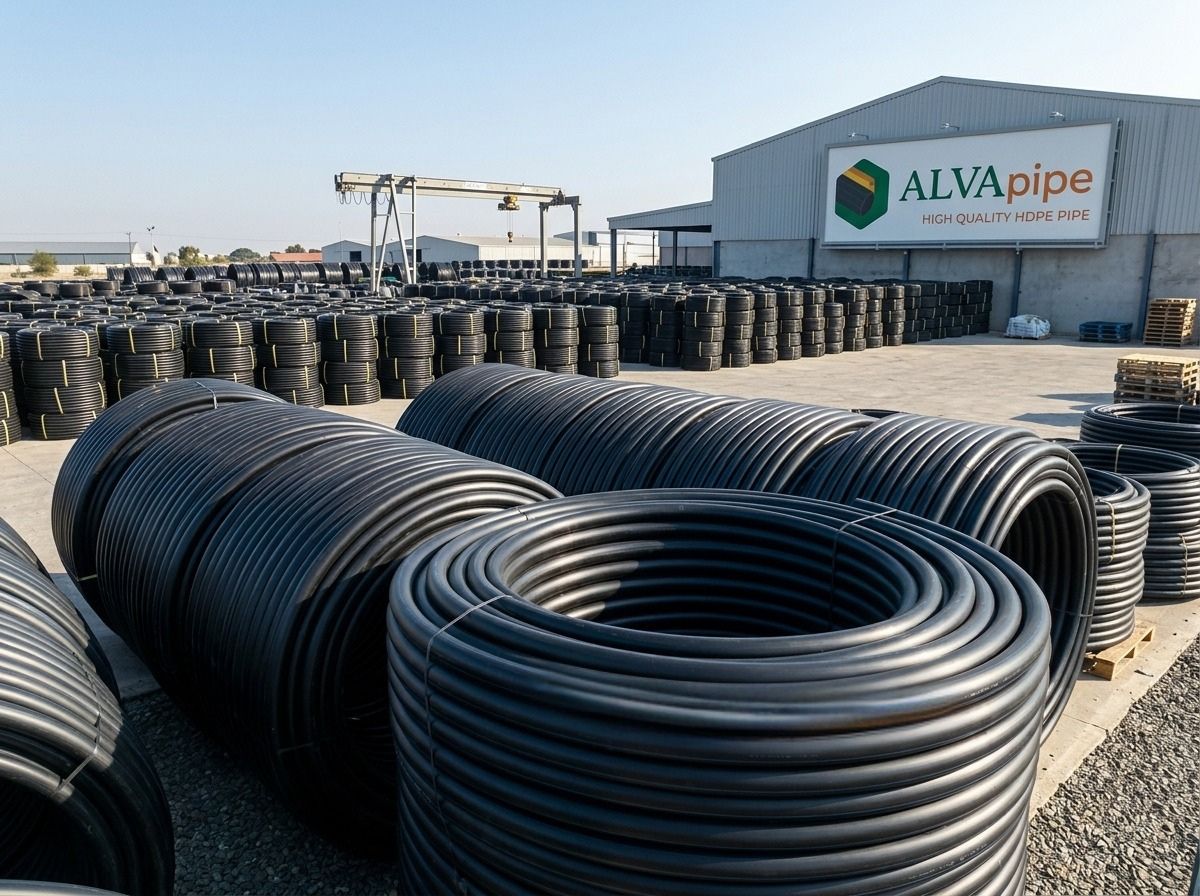
ALVApipe is a brand of PT Alpha Cikupa Makmur that manufactures HDPE pipes and other piping products in Tangerang. The company states that it has more than 20 years of experience and implements ISO 9001:2015, along with SNI certification for relevant products.
Large-Scale Project Orders Through Factory Sales Consultation
Project requirements can be discussed based on application type, diameter, pressure class, pipe length, fittings, installation methods, and delivery location. This approach helps installation contractors and procurement teams select specifications based on technical requirements rather than simply following the lowest price.
For custom requirements or large-volume orders, direct consultation also helps ensure production capacity and product availability before placing an order.
Retail Purchasing Convenience and Accessories via Shopee Official Store
For retail purchases, samples, or smaller material requirements, several ALVApipe Water products are available through the Shopee Official Store.
Currently, the ALVApipe Official Store features several HDPE water pipe variants, including 20 mm PN 10, 20 mm PN 16, 25 mm PN 10, 32 mm PN 10, 32 mm PN 16, 50 mm PN 10, and 63 mm PN 10. Prices and availability follow the marketplace listings and may change.
Ultimately, understanding what an HDPE pipe is will help buyers choose products based on their function and specifications, rather than simply looking at the material name. For water networks, consider the PE-100 material, SNI standards, diameter, and pressure class. For telecommunications or gas applications, use products specifically designed for those applications.
If you need recommendations on pipe specifications, project requirements, or procurement information directly from the manufacturer, you can contact WhatsApp +6287726663295 or click the [Contact Us] button below to consult with the ALVApipe team and get the best price quotation.