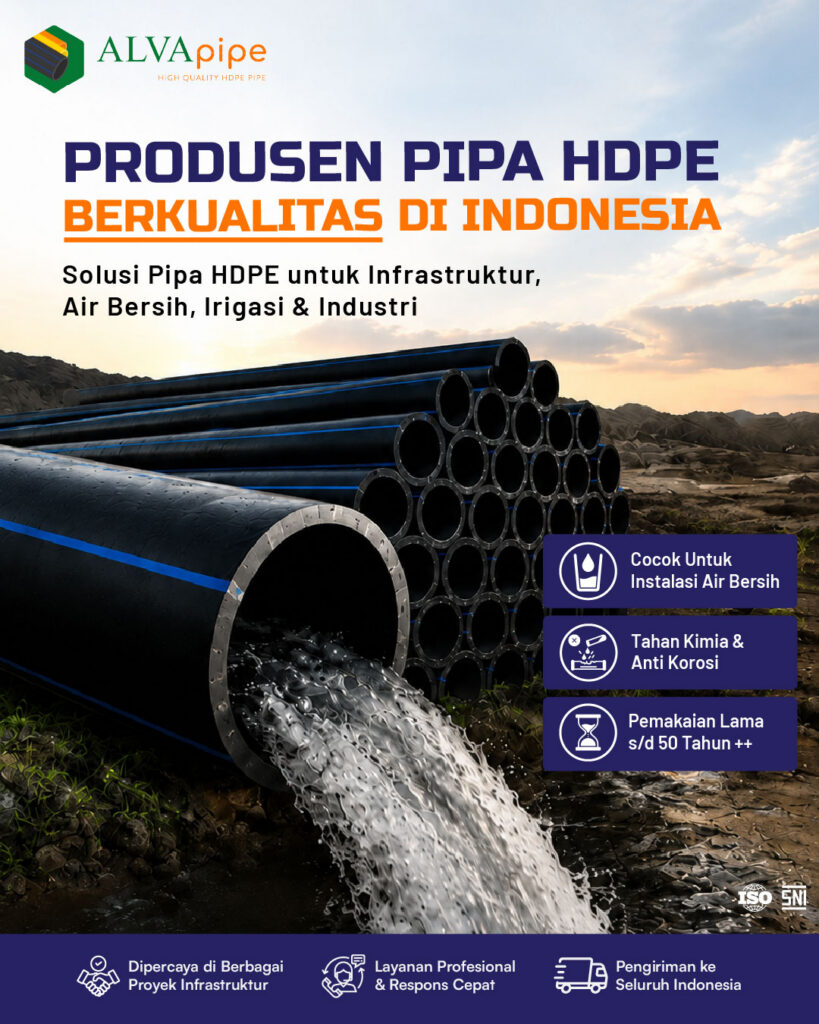
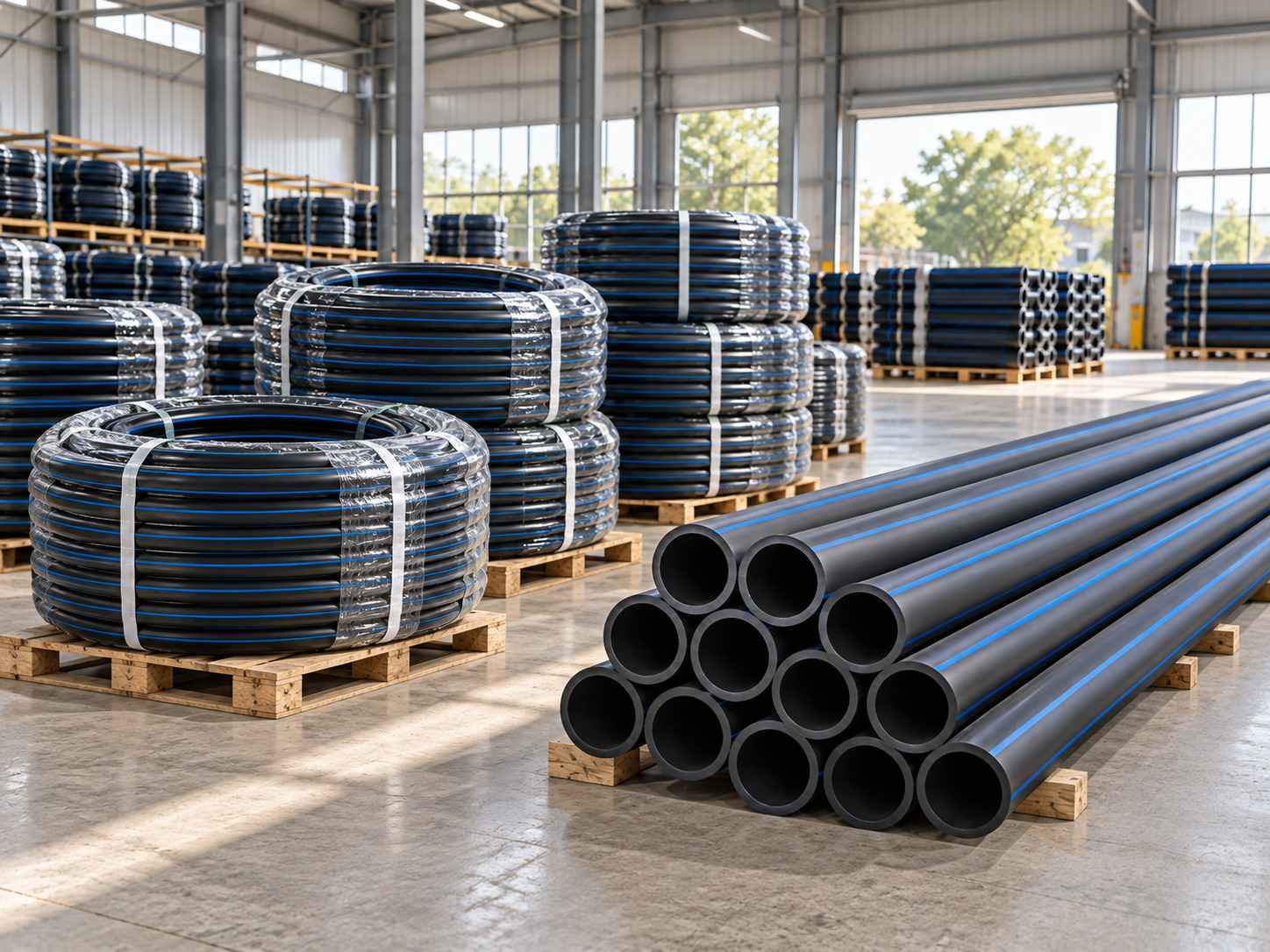
HDPE pipes are made from High-Density Polyethylene, a high-density thermoplastic polymer known for its strength, flexibility, and corrosion resistance. ALVApipe Water products use virgin-grade PE-100, a new polyethylene material without recycled plastic content. This material is designed to support water distribution networks with appropriate pressure specifications.
Why Is It Important to Understand Pipe Materials Before Buying?
When installing water supply lines in homes, gardens, or buildings, attention often focuses on pipe dimensions and prices. However, the material used to manufacture a pipe also determines how it performs under water pressure, temperature changes, and soil conditions.
Imagine a water supply line buried in a yard where the ground is not completely level. A pipe made from a suitable material can simplify installation while helping reduce the risk of damage under certain operating conditions.
This is why understanding the material used in HDPE pipes is important. Looking only at the black color or wall thickness is not enough. You also need to understand the material type, pressure rating, and applicable product standards.
Understanding the Materials Used to Manufacture ALVApipe HDPE Pipes
HDPE is a type of polyethylene with relatively limited branching in its molecular chains. This structure allows the polymer chains to pack more closely together, resulting in a material with good density and strength.
Although HDPE is a type of plastic, it is different from ordinary packaging plastics. Materials used in pressure pipes must meet specific requirements for long-term strength, resistance to cracking, and stability during service.
Understanding Virgin-Grade High-Density Polyethylene: PE-100
PE-100 is a polyethylene material classification used for pressure piping applications. The number 100 is associated with a Minimum Required Strength (MRS) value of 10 MPa under long-term reference testing conditions.
It is important to understand that an MRS of 10 MPa does not mean every PE-100 pipe can automatically be used at a water pressure of 10 MPa. The operating pressure of a pipe is still determined by its design, wall thickness, SDR, temperature, and safety factors.
ALVApipe uses virgin-grade PE-100 material in its HDPE pipe product range. This means the primary raw material is new resin without recycled plastic content, with a material formulation tailored to pipe manufacturing.
What Is the Difference Between PE-100 and PE-80 Materials?
The main difference between PE-100 and PE-80 lies in their long-term strength classifications. PE-80 has an MRS value of 8 MPa, while PE-100 has an MRS value of 10 MPa.
Under equivalent design and comparison conditions, PE-100 allows pressure pipes to be designed with higher material strength characteristics. However, this does not mean that all PE-80 pipes are automatically unsuitable for use. Product suitability still depends on the applicable standards and intended application.
ALVApipe’s HDPE pipe product range uses virgin-grade PE-100 rather than PE-80. This material selection forms part of the product specifications offered to customers.
Characteristics of ALVApipe HDPE Pipes Made from PE-100
Material quality is not determined by strength ratings alone. In everyday use, pipe materials must also be able to withstand varying field conditions.
One of the key characteristics of HDPE is its flexibility. Compared with more rigid piping materials, HDPE can accommodate certain changes in direction, provided that the bending radius and installation methods remain within the permitted limits.
Flexibility and Field Performance of ALVApipe HDPE Pipes
For water installations in plantations or areas with uneven terrain, pipe flexibility can help accommodate the installation route. This characteristic can also help the pipe accommodate certain types of ground movement, although appropriate burial design and pipe protection are still necessary.
HDPE pipes do not corrode like metal pipes. Their relatively smooth inner surfaces also help maintain water flow and reduce frictional resistance. However, deposits may still form depending on water quality and network conditions.
In black PE pipes with an appropriate formulation, carbon black helps improve resistance to ultraviolet (UV) exposure. Resistance to fertilizers, pesticides, and other chemicals should still be evaluated based on the substance involved, its concentration, and the exposure temperature.
Why Is ALVApipe PE-100 Material Suitable for Clean Water Supply Systems?
PE-100 material is one option for clean water piping systems because its mechanical properties support the requirements of pressurized water distribution. In addition to flexibility and corrosion resistance, HDPE pipes have relatively smooth inner surfaces that help maintain water flow.
ALVApipe Water uses PE-100 material to serve installation requirements with a range of pipe diameters and pressure ratings that can be selected according to network specifications. To achieve optimal pipe performance, product selection must still account for operating pressure, installation conditions, and compliance with the standards applicable to the intended use.
If you are looking for HDPE pipes for clean water installations in homes, plantations, or projects, make sure the pipe specifications match your system requirements. Visit the ALVApipe website to learn more about the products, or contact the ALVApipe team via WhatsApp to discuss suitable pipe options.
How to Choose ALVApipe HDPE Pipes with the Right Specifications
After understanding the materials used to manufacture HDPE pipes, the next step is to check the product specifications. PE-100 pipes are available in various diameters and pressure ratings, so not every variant is suitable for every installation.
ALVApipe Water products are available in outside diameters ranging from OD 20 mm to 250 mm, with pressure ratings from PN6.3 to PN16, depending on the variant. Before purchasing, make sure that the required flow rate, operating pressure, pipeline length, and joining method have been taken into account.
Understanding ALVApipe HDPE Pipe Markings and Quality Standards
Quality pipes should have traceable product information. Check the manufacturer’s name, material type, outside diameter, SDR, pressure rating, and relevant standards markings.
ALVApipe Water references SNI 4829.2:2015, with a Domestic Component Level (TKDN) of 69.42%, according to the supplied product data. PT Alpha Cikupa Makmur also implements an ISO 9001:2015 quality management system, which relates to the company’s quality management practices rather than product certification.
As an HDPE pipe manufacturer with production facilities in Cikupa and the Jatake Industrial Estate in Tangerang, ALVApipe provides product information through its official website. Technical documentation and product compliance should still be checked before procurement.
Choose ALVApipe Pipes Based on Your Installation Requirements
Understanding what HDPE pipes are made of helps you select materials based on technical requirements rather than price alone. Check the material type, diameter, SDR, PN pressure rating, wall thickness, and product standards before purchasing.
ALVApipe offers HDPE water pipes for various water distribution applications. To make an appropriate selection, first determine the intended operating conditions, working pressure, pipeline length, and planned installation method.
To explore available products, visit Shopee ALVApipe. If you need specification details, technical consultation, or a quotation for installation and project requirements, contact the ALVApipe team via WhatsApp at +6287726663295 or click the Contact Us button below to discuss your HDPE pipe requirements.