Water infrastructure failures rarely happen suddenly in the middle of a project. There are almost always early warning signs that are overlooked or planning-phase decisions that were not carefully considered. And when the issue finally appears on-site, the impact has usually already spread.
Project timelines are delayed because teams must stop work for repairs. Budgets that were carefully planned suddenly become insufficient due to unexpected rework costs.
Clients begin questioning the contractor’s competence. And if the problems continue after project completion, complaints from residents or tenants will start to emerge.
In reality, most water infrastructure failures can be prevented. The key is understanding where the problems originate and taking the right steps long before they have the chance to develop.
Main Causes of Water Infrastructure Failure in Projects
1. Incorrect Pipe Material Selection
One of the most common causes of failure is using pipe materials that are not suitable for the pressure, temperature, or environmental conditions of the installation.
For example, selecting materials with lower pressure ratings than the system actually requires, or choosing materials that are not resistant to chemicals present in the water being distributed.
Material selection should always be based on technical compatibility with project specifications. Whether using HDPE water pipes, PPR pipes, or other materials, each has characteristics suited for different applications
2. Poor Piping System Design
Examples include piping systems that fail to account for pressure requirements at every distribution point, pipe diameters that are not proportional to flow volume, or installation routes that do not consider building structure conditions.
A suboptimal design does not always mean the entire system is wrong. Sometimes, only one overlooked point can create major issues.
For example, weak water pressure on the top floor of a building or too many connection points that increase the risk of leakage.
3. Installation That Does Not Meet Standards
Even the best materials can fail if installation is not carried out properly. Every type of pipe material has specific connection methods and installation procedures.
HDPE pipes, for example, use butt fusion or electrofusion methods that require specialized equipment and expertise. If these processes are performed carelessly, the resulting joints will not achieve the required strength standards.
The same applies to PPR pipes that require precise temperature-controlled jointing processes, as well as PVC pipes that require proper solvent cement application.
4. Inconsistent Supplier and Material Quality
One of the most difficult risks to detect early is inconsistent material quality from suppliers. Samples provided during negotiations may meet standards, but actual quality in future deliveries may differ.
Inconsistent material quality creates weak points throughout the system. This is why it is important to choose reliable water pipe distributors or direct manufacturers with proven quality records.
Learn more about the criteria for selecting dependable HDPE water pipe supplier for your project needs.
5. Failure to Consider Environmental Conditions
Every project site has different environmental characteristics, including soil type, humidity level, chemical exposure, ground movement potential, and nearby vibration sources.
Materials and system designs that fail to consider these factors may degrade much faster than expected.
Corrosive soil conditions, for example, require pipe materials with higher corrosion resistance. Areas prone to ground movement require more flexible materials to prevent cracking caused by shifting.
The Often Underestimated Impact of Water Infrastructure Failure
Many parties only realize the true impact of water infrastructure failure after the issue actually occurs.
- Leaks damaging building structures. Undetected leaks can spread into walls, floors, and structural elements, causing material damage, mold growth, and reduced structural integrity.
- Costly operational downtime. Water distribution disruptions in operational commercial buildings, apartments, or industrial facilities mean productivity losses and unavoidable compensation for tenants or residents.
- Recurring repair costs. Poorly installed systems tend to fail repeatedly. Temporary repair costs often become more expensive in the long run than making the right investment from the beginning.
- Damaged contractor reputation. Water infrastructure failures that lead to client complaints or legal disputes become reputational damage that is extremely difficult to erase, regardless of previous project success.
How to Prevent Water Infrastructure Failure from the Start
1. Use Materials That Match Project Requirements
Start by defining technical system specifications, including required operating pressure, type of fluid distributed, environmental installation conditions, and expected service life.
From these specifications, select the material that is technically most suitable, not simply the cheapest option.
ALVApipe, under PT Alpha Cikupa Makmur, provides various piping material solutions tailored to project requirements, including HDPE water pipes for clean water distribution systems, HDPE gas pipes for pressurized gas networks, PPR pipes for hot and cold water installations, and HDPE telecommunication pipes for network infrastructure.
Each product is available in various sizes and technical specifications that can be directly discussed with the ALVApipe team.
2. Ensure the System Design Has Been Properly Tested
Involve piping system experts from the design phase. A good design includes pressure simulations at every distribution point, proportional diameter selection, and installation route planning that considers future maintenance accessibility.
Whenever possible, conduct an independent design review before construction begins. The cost of review is far lower than fixing design issues discovered after installation.
3. Choose the Right Installation Method
Ensure the installation team has the appropriate expertise and equipment for the material being used.
For projects using HDPE pipes, for example, make sure fusion machine operators are properly trained. Conduct pressure testing after installation is complete before the system becomes operational.
Document every installation stage, including joint photos and testing results. This documentation becomes valuable if future issues arise and helps identify failure points quickly.
4. Work with Trusted Suppliers
Choose HDPE pipe distributors or direct manufacturers with verified quality consistency.
Ask about product certifications, request references from similar completed projects, and ensure their quality control systems are standardized across every production batch.
Working directly with manufacturers such as ALVApipe provides the advantage of dealing with the party that best understands the products.
Learn more about water pipe quality standards that should become your reference in material evaluation.
5. Consider Long-Term Costs, Not Just Initial Prices
Material procurement decisions based solely on upfront pricing carry high risk for water infrastructure projects.
Instead, use the concept of total cost of ownership as an evaluation framework. Consider material purchase price, estimated maintenance costs, potential repair costs, and operational expenses throughout the system’s service life.
Learn more about HDPE pipe specifications for projects as a reference when selecting the most efficient materials for your project requirements.
Prevent Water Infrastructure Failure with HDPE Water Pipes from ALVApipe!
Water infrastructure failure impacts far more than technical performance, from budget overruns and project delays to contractor reputation risks.
Most failures can be traced back to early-stage decisions such as material selection, system design, installation quality, and supplier choice.
By understanding these risk points from the beginning, most failures can actually be prevented before they occur.
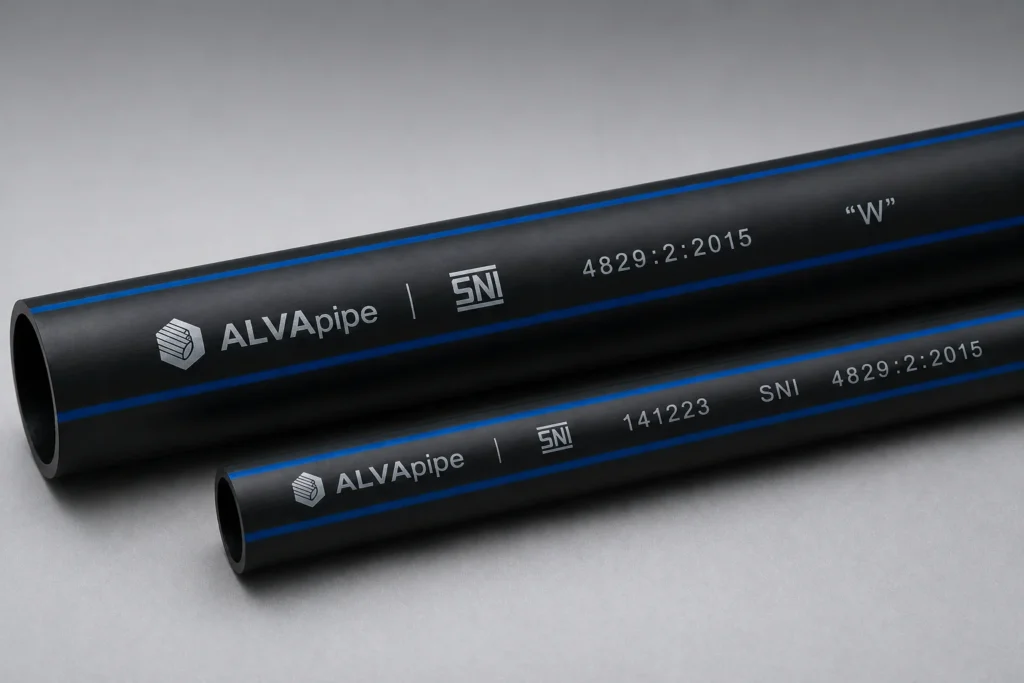
As a piping manufacturer operating since 1998, PT Alpha Cikupa Makmur through the ALVApipe brand is ready to help determine the most suitable material specifications for your project, supported by SNI and ISO certified products and experienced technical teams.
Learn more about ALVApipe HDPE water pipes. Contact the team via WhatsApp at +6287726663295 to receive recommendations and pricing tailored to your project needs!