Having enough water does not always mean plants get the right irrigation. How water is delivered, how much is given, and how evenly it reaches the root zone all affect how well a farm performs. That is the key difference between traditional and modern irrigation. Traditional methods rely on water flowing across the land surface, while modern systems such as drip irrigation and sprinklers use a more controlled distribution network.
The Land Irrigation Dilemma: From Traditional Methods to Precision Farming
On simply managed farms, water is often channeled through ditches or open channels until it reaches the plants. This method has been used for a long time and is still relevant for certain land conditions, especially when water is plentiful and the land contour supports gravity flow.
The challenge appears when the land gets larger or each plant needs a different amount of water. Water can collect in some areas while others receive less. If the flow is not controlled, some water may also be lost through runoff or seep too far from the root zone.
This is where modern irrigation systems start to attract farm managers. Water distribution can be controlled through a pipe network, so watering is easier to adjust to crop needs and land conditions.
Differences Between Modern and Traditional Irrigation in the Field
Water Distribution Patterns and Resource Efficiency
The most visible difference is how water reaches the plants. In surface irrigation, water flows along channels and follows the shape of the land. Managers need to consider slope, flow speed, and how well the soil absorbs water.
Meanwhile, modern irrigation offers two widely used options:
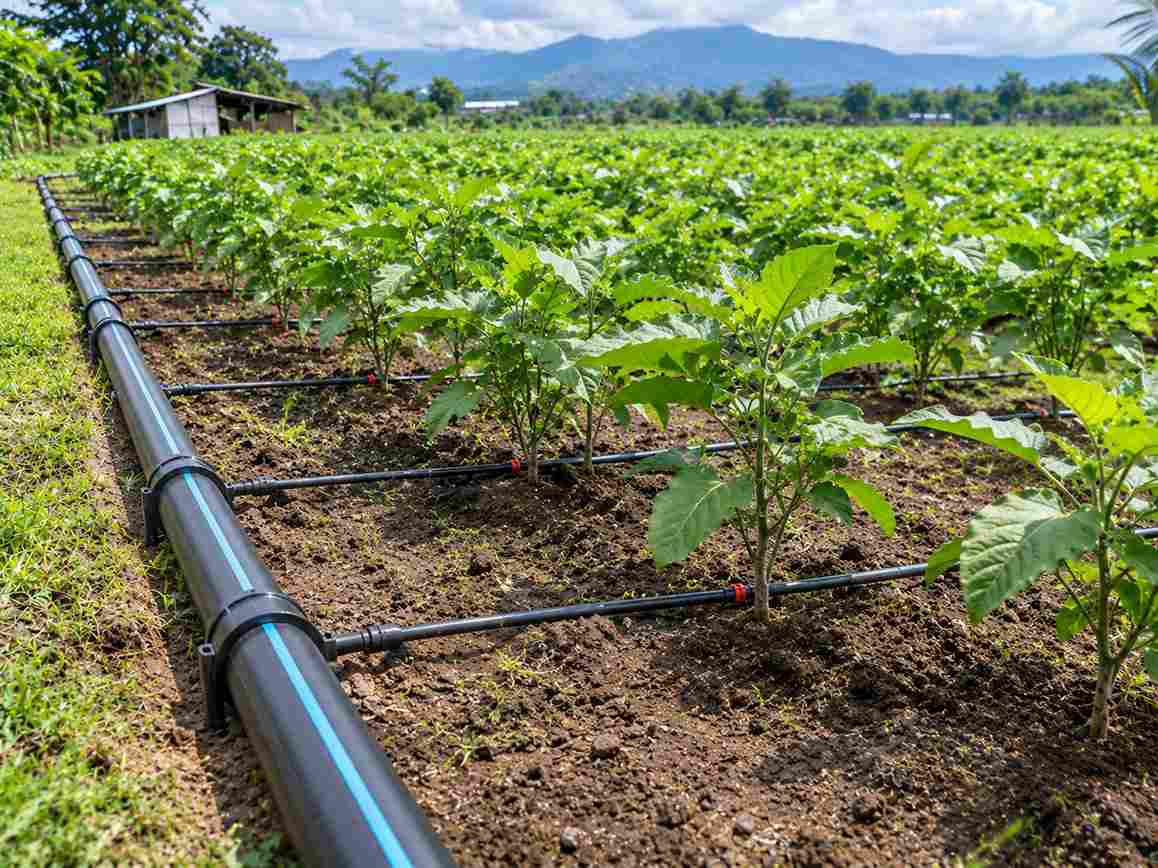
Drip irrigation (trickle irrigation) delivers water slowly through emitters to the root zone. This method suits fruit orchards, vegetables, and horticultural crops that need more targeted watering.
Sprinkler irrigation spreads water through sprinkler heads so it falls like rain. This system can cover larger planted areas, with the right pressure and sprinkler spacing.
Drip irrigation and sprinklers can improve water use efficiency compared with unmanaged surface irrigation. However, there is no single savings figure that applies to every farm. Results depend on design, soil type, weather, water quality, and consistent maintenance.
How Irrigation Affects Soil and Plant Conditions
Water that flows too fast can erode the soil surface, especially on sloping land or areas without proper flow control. On the other hand, overwatering can saturate the soil and disturb root conditions.
Modern systems help managers control the timing and volume of watering. Even so, drip irrigation still needs emitter checks to prevent clogging, while sprinklers need inspection to keep spray distribution even.
Why Does the Main Pipe Determine the Success of Modern Irrigation?
Before water reaches the emitters or sprinkler heads, it must pass through the main pipe (main line) from the source or pump to the branch network. That is why the quality and specifications of the main pipe are an important part of installation planning.
ALVApipe Water with PE-100 HDPE Material
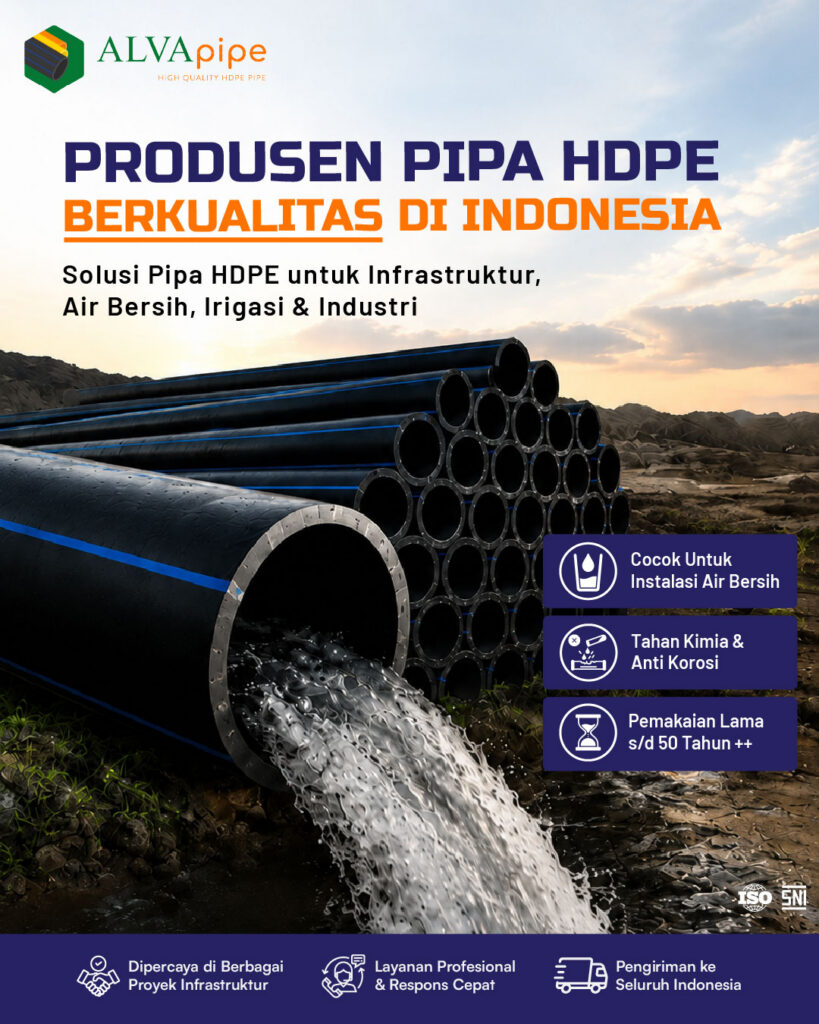
For water distribution, farm managers can consider ALVApipe Water from PT Alpha Cikupa Makmur. This product uses virgin-grade PE-100 material, known for being flexible, corrosion-resistant, and impact-resistant.
Its flexibility helps installation follow land routes with changing contours. A choice of diameters and pressure classes also lets the pipe be matched to network requirements. When looking for the best HDPE pipe for irrigation, do not look only at the material name. Also check the product standard, diameter, wall thickness, and required pressure class.
Matching Specifications to Pressure and Land Conditions
Pump pressure that does not match the pipe’s rating can cause problems in the network. That is why diameter and SDR selection should be based on working pressure, flow rate, line length, and potential pressure surges. Joints and fittings must also suit the system used.
Installation on open or buried land should follow the product’s technical guidelines and field conditions. With proper planning, the risk of installation problems can be reduced from the start.
Buying ALVApipe Irrigation Pipes with Delivery Across Indonesia
ALVApipe Water is manufactured by PT Alpha Cikupa Makmur in Tangerang. This product holds SNI 4829.2:2015 certification and a TKDN (local content) value of 69.42%. The company also applies the ISO 9001:2015 quality management system, which is a company management standard, not a product certification.
Specification information is available on the ALVApipe website. For farm needs, managers can discuss diameter, pressure class, and pipe quantity before requesting a quote. ALVApipe delivers across Indonesia, with costs and estimates confirmed based on the order and destination.
To check product options and retail purchases, visit ALVApipe on Shopee.
Practical Steps to Start Modernizing Your Irrigation System
Before building an irrigation system, first understand your farm’s needs, from land area, crop types, and water source to soil conditions. This information will help you choose the right watering method and the pipes needed to deliver water to every part of the farm.
If you want to switch to modern irrigation, you do not have to change the whole installation at once. Modernization can be done in stages, starting with the areas that need better water distribution. To support this, ALVApipe Water is a reliable solution as the HDPE pipe for main water distribution lines on plantations. You can consult directly with the ALVApipe team about diameter options, pressure classes, and pipe requirements for your installation plan.
Discuss your farm irrigation pipe needs with the ALVApipe team via WhatsApp +62 877-2666-3295 or click contact us below to get product information and a price quote!