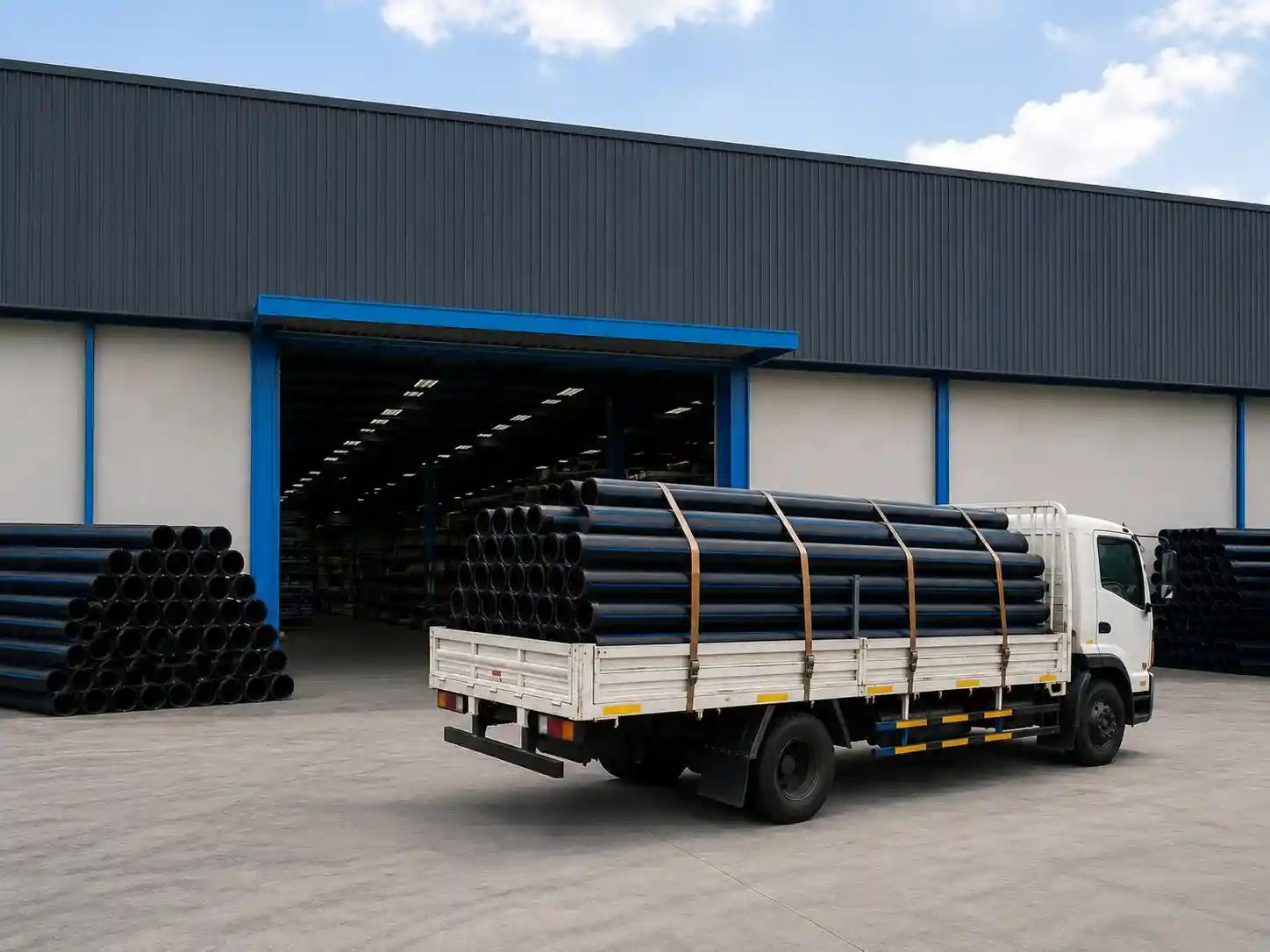
Many stores assume that the receiving process is complete once the pipes arrive and the delivery note has been signed. In fact, this stage is important to ensure that the received HDPE pipes match the order specifications.
Mistakes during the goods receiving process are often only discovered after the products have been sold, installed in projects, or mixed with other stock. Once this happens, handling the issue becomes more complicated and requires higher costs.
Therefore, it is important to carefully inspect every shipment. Learn about some common mistakes when receiving HDPE pipe stock and how to avoid them.
8 Common Mistakes When Receiving HDPE Pipe Stock
1. Storing Goods Immediately Without Initial Inspection
One of the most common mistakes is immediately storing pipes in the warehouse after signing the delivery note without conducting an inspection.
This method may be faster, but it carries risks because products that do not match the order may already enter the inventory. If the issue is discovered later, the claim process with the supplier can become more difficult.
Before storing the products, perform an initial inspection, even if it is only a visual check. This simple step helps ensure that the received products match the order.
2. Not Matching Products with the Purchase Order
Every goods receiving process must be matched with the purchase order (PO) that has been created. The diameter, SDR class, length, and quantity received must be identical to the ordered specifications.
Any mismatch, even a minor one, should be recorded before the receiving process is considered complete.
3. Not Checking the Marking on the Pipe Body
The marking on the pipe body helps verify that the received product matches its specifications. Ensure that information such as the manufacturer’s name, outer diameter, SDR class, material grade, and SNI 4829.2:2015 standard are clearly stated.
Learn more about water pipe quality standards that serve as references for product verification.
4. Ignoring the Physical Condition of the Pipe
Before storing pipes in the warehouse, conduct a visual physical inspection. Make sure there are no deep scratches, cracks, bubbles, or deformation on the pipe surface.
Also check the pipe ends to ensure they remain round and have not become oval due to the transportation process.
5. Not Counting the Quantity of Received Goods
Do not rely only on the quantity stated on the delivery note. Recount the received pipes, whether measured in units of sticks, rolls, or meters, before signing the documents.
If shortages are discovered several days later, the claim process with the supplier will usually become more difficult.
6. Not Checking Supporting Documents
Check the completeness of supporting documents, such as delivery notes and product certificates. Ensure the information matches the marking on the pipe body, then store these documents for future verification or claim purposes.
7. Not Documenting the Condition of Goods Upon Arrival
If damage or discrepancies are found when receiving the goods, immediately take photos and create records as evidence. This documentation will make the claim process with the supplier easier if needed.
Make it a habit to document every shipment, especially for large-volume purchases or from suppliers that you are working with for the first time.
8. Reporting Discrepancies to the Supplier Too Late
If discrepancies are found during goods receiving, immediately report them to the supplier. Ideally, this should be done before signing the delivery note or on the same day to make the claim process easier.
If reporting is delayed, the supplier may have difficulty determining when the damage or issue occurred.
What Should You Do If You Find a Discrepancy?
1. Document the Findings
Take photos of the product condition, then record the batch number, pipe diameter, and type of discrepancy found.
Complete documentation will make the claim process with the supplier easier.
2. Separate Problematic Goods
Do not mix problematic goods with existing warehouse stock. Separate them and provide clear labels to prevent them from being sold or used before the issue is resolved.
3. Contact the Supplier Immediately
Report the findings to the supplier on the same day by including photos and records that have been prepared.
The faster the issue is reported, the easier it will be for both parties to find a solution.
For example, if you receive ALVApipe products that do not match the ordered specifications, the ALVApipe team is ready to handle the report and process the solution, including product returns or replacements, as long as the discrepancy is reported immediately after receiving the goods and supported with complete documentation.
4. Do Not Immediately Add Goods into Stock
If a problem is found in one batch, do not immediately add it to inventory. Separate the products first until the supplier provides a decision, whether the goods will be replaced, returned, or resolved through another method.
This step prevents problematic products from being sold to customers.
5. Keep All Supporting Documents
Keep all related documents, such as delivery notes, photos, inspection records, and communication with suppliers until the issue is completely resolved.
These documents can serve as evidence if the claim process requires more time.
Reduce Risks from the Beginning, Choose an HDPE Pipe Manufacturer with Reliable QC!
Inspection during goods receiving remains important, but the process becomes easier when the pipes come from manufacturers that implement proper quality control systems.
With this approach, the risk of receiving products that do not meet specifications can also be reduced.
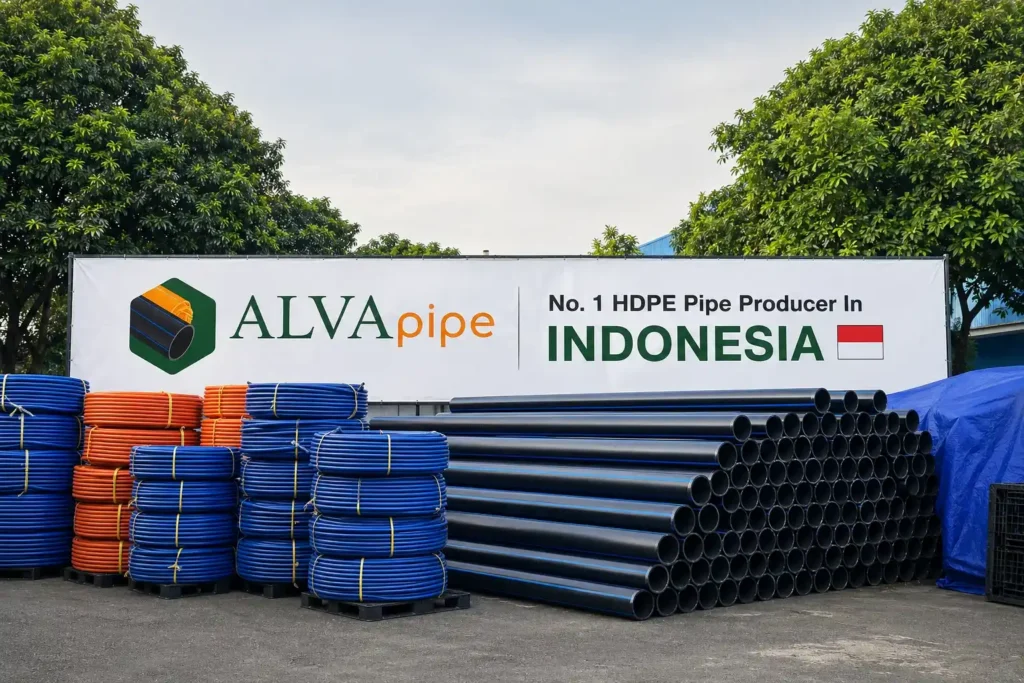
PT Alpha Cikupa Makmur through the ALVApipe brand produces PE 100 HDPE water pipes with SNI 4829.2:2015 certification under strict quality control standards for every production batch.
Each product has complete permanent markings and supporting documents that can be matched with the received goods.
For stores looking to establish more strategic partnerships, ALVApipe distributor partnership programs are available with complete and more structured support.
Also learn about the differences between HDPE pipe manufacturers and distributors and how choosing the right procurement partner affects the consistency of received product quality, as well as information about pipe MOQ for more efficient procurement planning.
Immediately consult your HDPE water pipe requirements with ALVApipe!
Contact the ALVApipe team via WhatsApp +6287726663295 for product recommendations and the best offers!