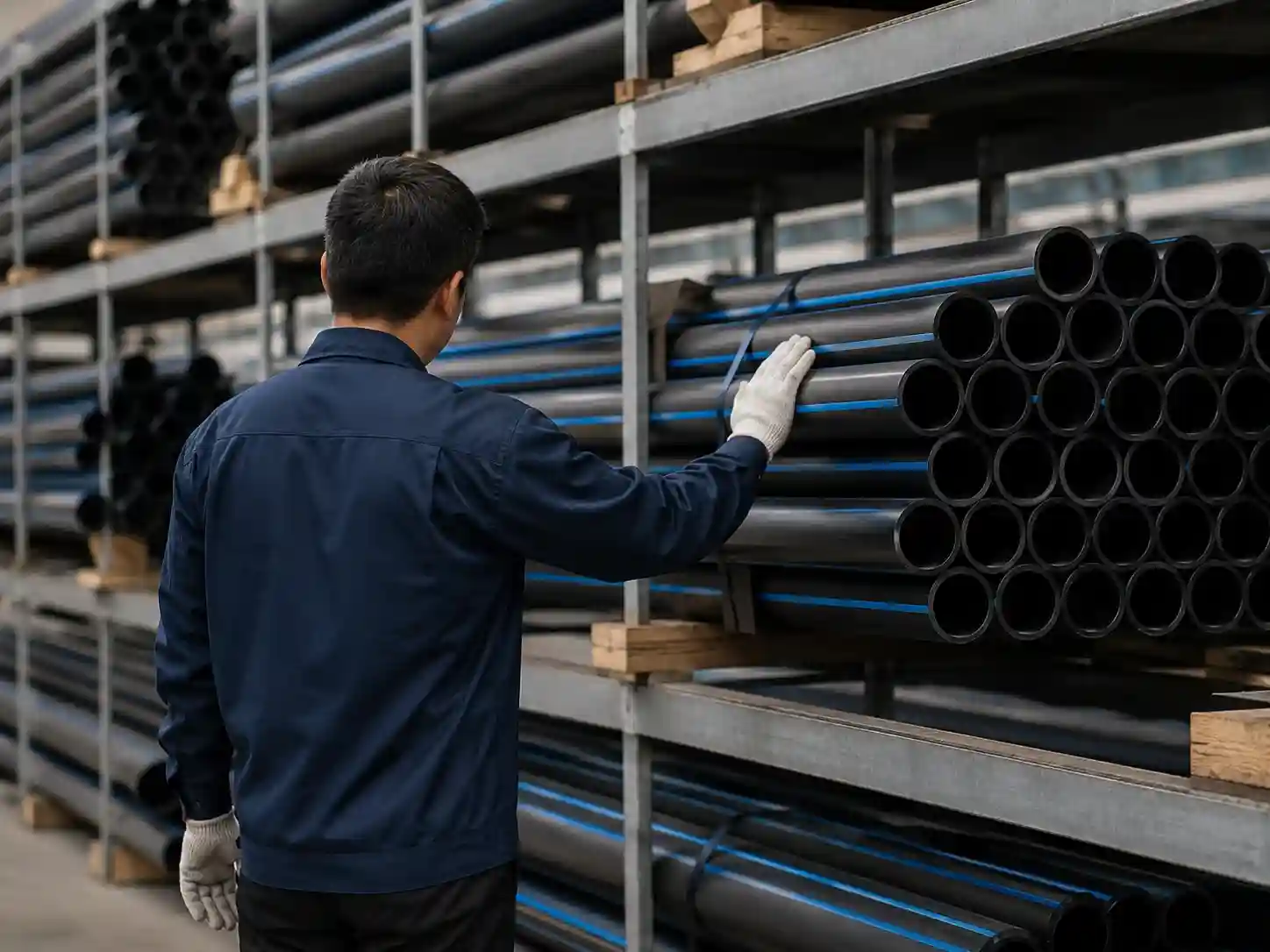
The goods receiving process is often considered complete once the shipment arrives and the quantity matches the delivery note. However, this stage is actually the most important opportunity to verify whether the products received truly meet the ordered specifications.
A proper incoming inspection helps identify product inconsistencies before HDPE pipes enter your warehouse, reach customers, or develop into costly complaints and return issues.
By performing quality checks during receiving, distributors and retailers can maintain product reliability, protect customer trust, and minimize potential losses caused by defective materials.
8 Things to Check When Receiving HDPE Pipes from Manufacturers
1. Check the Physical Surface Condition of the Pipe
Start by visually inspecting the entire external surface of the HDPE pipe. High-quality HDPE pipes should have a smooth, uniform surface without deep scratches, air bubbles, cracks, or visible holes.
Significant surface defects may indicate problems during the extrusion process or improper handling during transportation. These defects can potentially affect the pipe’s performance and durability during field installation.
2. Verify Pipe Diameter and Wall Thickness
Use a caliper or appropriate measuring tools to verify the outside diameter (OD) and wall thickness at several points along the pipe length.
For example, an SDR 11 HDPE pipe with an outside diameter of 110 mm should have a minimum wall thickness of approximately 10 mm according to its specification.
Large variations from the required dimensions may indicate inconsistent production control. Therefore, dimensional verification is essential to ensure the pipe complies with technical requirements and quality standards.
3. Inspect Pipe Marking Information
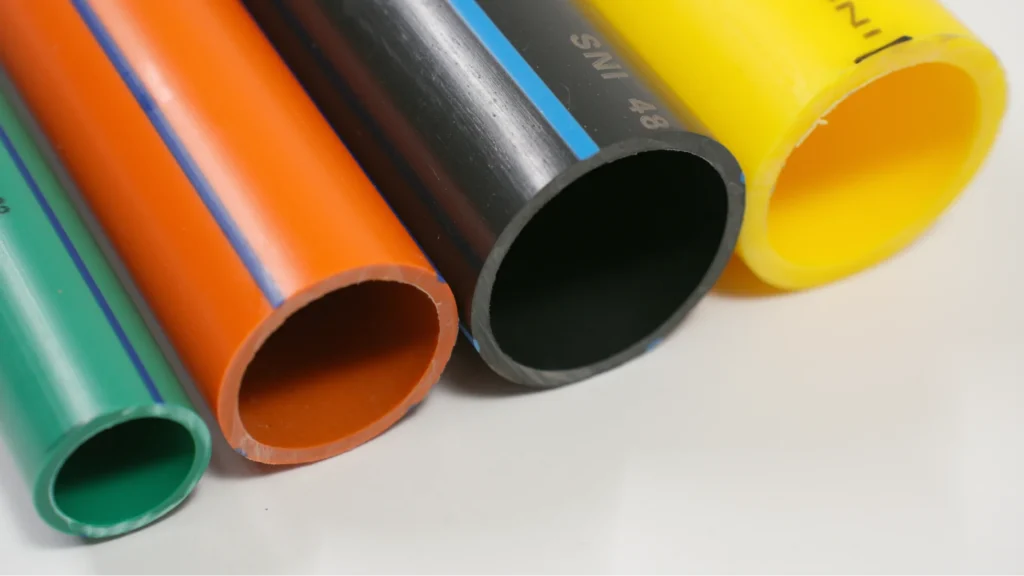
High-quality HDPE pipes should have permanent and clearly readable markings printed along the pipe body.
The marking should include important product information such as:
- Manufacturer name
- Outside diameter
- SDR classification
- Material grade (PE 80 or PE 100)
- Applicable standards (such as SNI 4829.2:2015)
- Production year
Incomplete markings, easily erased printing, or inconsistent information should be considered warning signs before accepting the products into inventory.
4. Check Color Consistency and Surface Uniformity
The pipe color should be consistent throughout the entire surface without visible discoloration, uneven shades, or abnormal patterns.
For HDPE water pipes such as ALVApipe Water, the standard appearance is black with blue stripes.
Inconsistent coloring may indicate an uneven material mixture during manufacturing, which can affect product consistency and reliability.
5. Check Pipe Straightness and Shape Condition
HDPE pipes supplied in straight lengths should maintain a straight shape without visible bending or deformation.
A pipe that arrives already curved may indicate improper cooling during production or unsuitable storage conditions before shipment.
Bent or deformed pipes can create difficulties during installation and may cause uneven stress distribution, especially at pipe joints and connection points.
6. Verify Supporting Documents
Request relevant supporting documents from the supplier before or during the receiving process.
Ensure that all information stated in the documents matches the actual products received, including:
- Product specifications
- Material grade
- Pipe dimensions
- Quality certificates
- Production information
Complete documentation helps ensure traceability and simplifies verification when quality issues occur.
7. Confirm Quantity and Product Specifications Match the Order
Verify that the received products match the purchase order and delivery documents.
Important details to check include:
- Quantity of pipes
- Pipe diameter
- SDR class
- Pipe length
- Material specification
Even minor differences should be documented and communicated to the manufacturer or supplier before the receiving process is finalized.
8. Inspect Packaging and Transportation Condition
Examine the packaging or protective materials used during transportation.
Look for signs of:
- Heavy impact damage
- Improper pipe bundling
- Damaged protective caps
- Poor handling during delivery
Transportation-related damage can affect pipe condition and may reduce product reliability if not identified early.
Warning Signs to Watch Before Accepting HDPE Pipes
If you find any of the following conditions, it is recommended to temporarily hold the products and clarify with the manufacturer or HDPE pipe supplier before adding them to your inventory:
- Incomplete, unclear, or easily removable markings
- Pipe dimensions that do not match ordered specifications
- Significant surface defects such as cracks, bubbles, or deep scratches
- Supporting documents that do not match the delivered products
- Color inconsistency compared with standard product appearance
- Pipes showing bending or deformation immediately after unpacking
Early detection prevents quality problems from reaching customers and protects your business reputation.
Ensure Your HDPE Pipe Inventory Quality with ALVApipe
Incoming inspection becomes easier and more reliable when the selected manufacturer already applies strict quality control throughout the production process.
Most quality issues discovered during receiving inspections can be traced back to manufacturing consistency, material control, and production monitoring.
PT Alpha Cikupa Makmur, through its ALVApipe brand, manufactures HDPE water pipes using PE 100 material certified under SNI 4829.2:2015, supported by consistent quality control standards for every production batch.
Each ALVApipe product is manufactured with:
- Permanent and complete product marking
- Verified pipe dimensions
- Reliable material specifications
- Supporting quality documentation
For stores, distributors, and business partners looking for consistent HDPE pipe supply, understanding the difference between manufacturers and distributors is essential to maintaining product quality and customer satisfaction.
Learn more about ALVApipe distributor partnership programs, product availability, MOQ requirements, and purchasing policies to support your inventory planning.
Need Reliable HDPE Water Pipe Solutions?
Consult your HDPE water pipe requirements with ALVApipe and get professional product recommendations and the best supply solutions.
Contact ALVApipe via WhatsApp:
+62 877 2666 3295