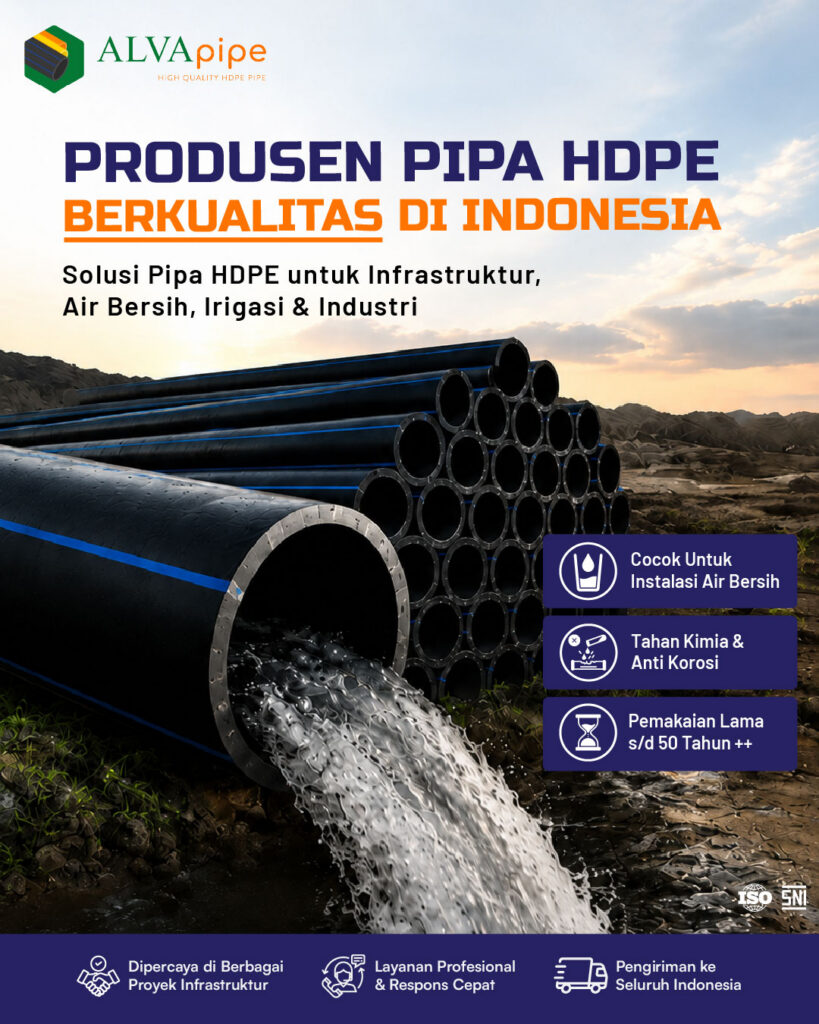
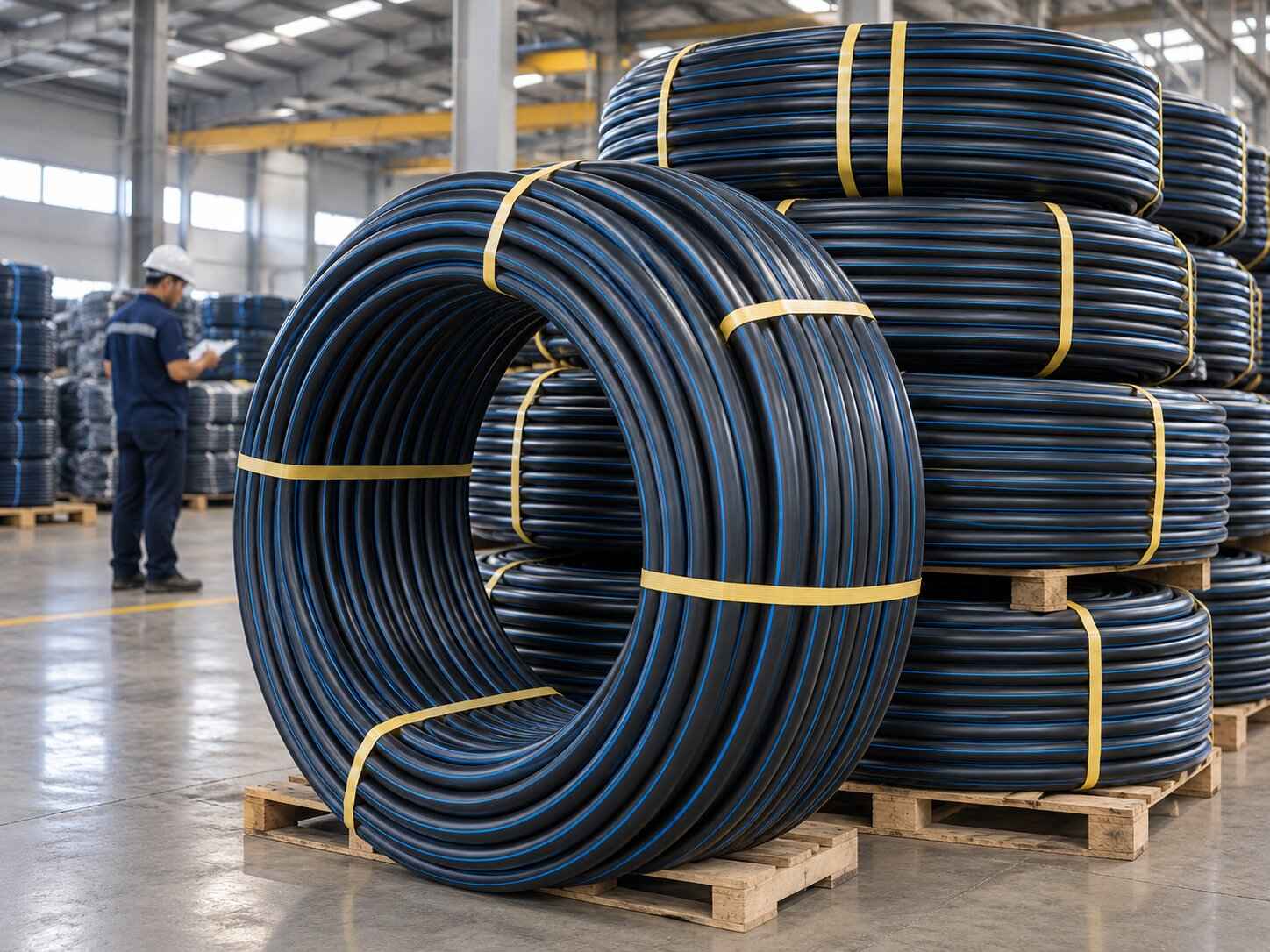
Choosing HDPE pipes for a project is not enough by simply looking at the diameter. HDPE pipe PN sizes also need to be considered because they indicate the nominal pressure class related to the pipe’s ability to withstand internal pressure. In the ALVApipe Water product line, the available options include PN 6.3, PN 8, PN 10, PN 12.5, and PN 16, with different combinations of diameter and SDR.
What Is PN in HDPE Pipes?
PN stands for Pressure Nominal, which refers to the nominal pressure class expressed in bar under certain reference conditions. In HDPE pipe specifications, PN is used together with other parameters such as material, outer diameter or OD, SDR, and product standards.
For example, PN 10 in an HDPE pipe indicates a nominal pressure class of 10 bar under the reference conditions used to establish the rating. However, the PN number should not be understood as the operating pressure that can continuously approach this limit without considering system conditions.
Actual working pressure, transient pressure, temperature, material, and installation conditions still need to be considered when determining specifications. ALVApipe also explains that pressure ratings need to be considered together with operational factors and pipe characteristics.
What HDPE Pipe PN Sizes Are Available from ALVApipe?
For ALVApipe Water, the pressure class options listed on the product page are:
- PN 6,3, using SDR 26
- PN 8, using SDR 21
- PN 10, using SDR 17
- PN 12,5, using SDR 13.6
- PN 16, using SDR 11
The smaller the SDR number, the thicker the pipe wall is relative to its outer diameter. Therefore, SDR 11 has a relatively thicker wall than SDR 17 at the same diameter and is used for a higher pressure class.
It is important to note that not all diameters are available for every PN option. For example, the ALVApipe product page lists OD 40 mm under SDR 17 PN 10, while SDR 26 PN 6.3 starts from OD 90 mm. Therefore, when preparing specifications or making a purchase, the diameter and PN should be checked as a single unit.
Relationship Between PN and SDR in HDPE Pipes
PN and SDR often appear together in HDPE pipe specifications. Simply put, the relationship used in the ALVApipe Water product line is:
SDR 11 → PN 16
SDR 13.6 → PN 12.5
SDR 17 → PN 10
SDR 21 → PN 8
SDR 26 → PN 6.3
SDR itself is the ratio between the pipe’s outer diameter and wall thickness. A smaller SDR number means a relatively thicker wall.
However, the relationship between PN and SDR must be considered together with the material grade and applicable standard. Do not assume that one SDR value always has the same PN across all types of materials and pipe specifications.
How to Choose the Right HDPE Pipe PN?
Determining the PN is not simply a matter of choosing the largest number. Several factors need to be checked before preparing the specifications.
1. Determine the system working pressure
Start with the pressure that the pipe will actually experience when the system is operating. A network using a pump needs to be evaluated differently from a network that relies on gravity.
2. Consider peak pressure
Changes in pump or valve operation can cause surge pressure or water hammer. This temporary pressure needs to be considered in the design, especially in pressurized networks.
3. Match PN with SDR and diameter
PN does not stand alone. Outer diameter, wall thickness, SDR, and material are interconnected. The selected specification must match the system design, rather than being based only on the price per meter.
4. Check installation conditions
Pipes installed underground beneath roads, in areas with certain soil conditions, or across terrain with external loads require different technical evaluations. For projects, working drawings and technical specifications are the primary references.
Is a Higher PN Always Better?
Not always.
A higher PN is not automatically the most appropriate choice for every installation. The specification should follow the working pressure and system conditions.
If the actual system pressure is low, using a pipe with a much higher pressure class without a technical reason can increase material costs. Conversely, selecting a PN that is too low can cause the pipe to operate beyond its designed capacity.
Therefore, a more appropriate approach is to choose a PN that matches the design requirements and provides an adequate margin, rather than simply choosing the largest PN.
Why Don’t Telecommunication Pipes Use PN?
This question often arises because HDPE water pipes have markings such as PN 10 or PN 16, while Telecommunication Sub-Duct pipes have specifications such as 32/27 mm, 32/28 mm, 40/33 mm, and 50/42 mm.
The difference comes from the function of the product.
HDPE water pipes are used to carry fluids. Therefore, internal pressure is one of the important parameters in the design, making PN and SDR part of the specifications.
Meanwhile, HDPE Sub-Duct for telecommunications functions as protection for fiber optic cables installed along underground routes. Its specification focus is not on the ability to carry pressurized fluids, but on dimensions, wall thickness, mechanical characteristics, cable protection, and telecommunications technical requirements.
At ALVApipe Telecommunication, for example, Sub-Duct products use sizes 32/27, 32/28, 40/33, and 50/42 mm and have a Quality Assurance Test from Telecommunication Indonesia referring to STEL L-039-2008 Version 2.2.
Therefore, this does not mean that the Sub-Duct lacks mechanical strength. PN is simply not the primary parameter used to describe the function of the product. Its selection follows telecommunications specifications and cable protection requirements.
Recommended HDPE Pipe PN Based on Requirements
There is no single PN that applies to every project. As an initial reference:
- PN 6,3: can be considered for systems with lower pressure requirements if the design allows it.
- PN 8: used for pressure requirements that correspond to this class.
- PN 10: one of the options for water distribution systems with medium pressure requirements.
- PN 12,5: can be considered when the system pressure requirement is higher.
- PN 16: used for higher pressure class requirements according to design calculations.
The final choice still needs to be adjusted to the maximum operating pressure, potential surge, diameter, temperature, installation conditions, and project specifications. ALVApipe itself provides these PN options in specific diameter and SDR configurations.
Choose HDPE Pipe PN Sizes According to Your Requirements
Understanding HDPE pipe PN sizes helps determine materials based on technical requirements, rather than simply based on diameter or price.
Check the OD, material, SDR, PN, wall thickness, standards, and working pressure before making a purchase.
ALVApipe provides HDPE Water Pipes with various diameter and SDR class options for water distribution needs. For specification information, pricing, procurement in certain quantities, or technical consultation, contact the ALVApipe team via WhatsApp +6287726663295 or the [Contact Us] button below for consultation and the best price offer according to your requirements!