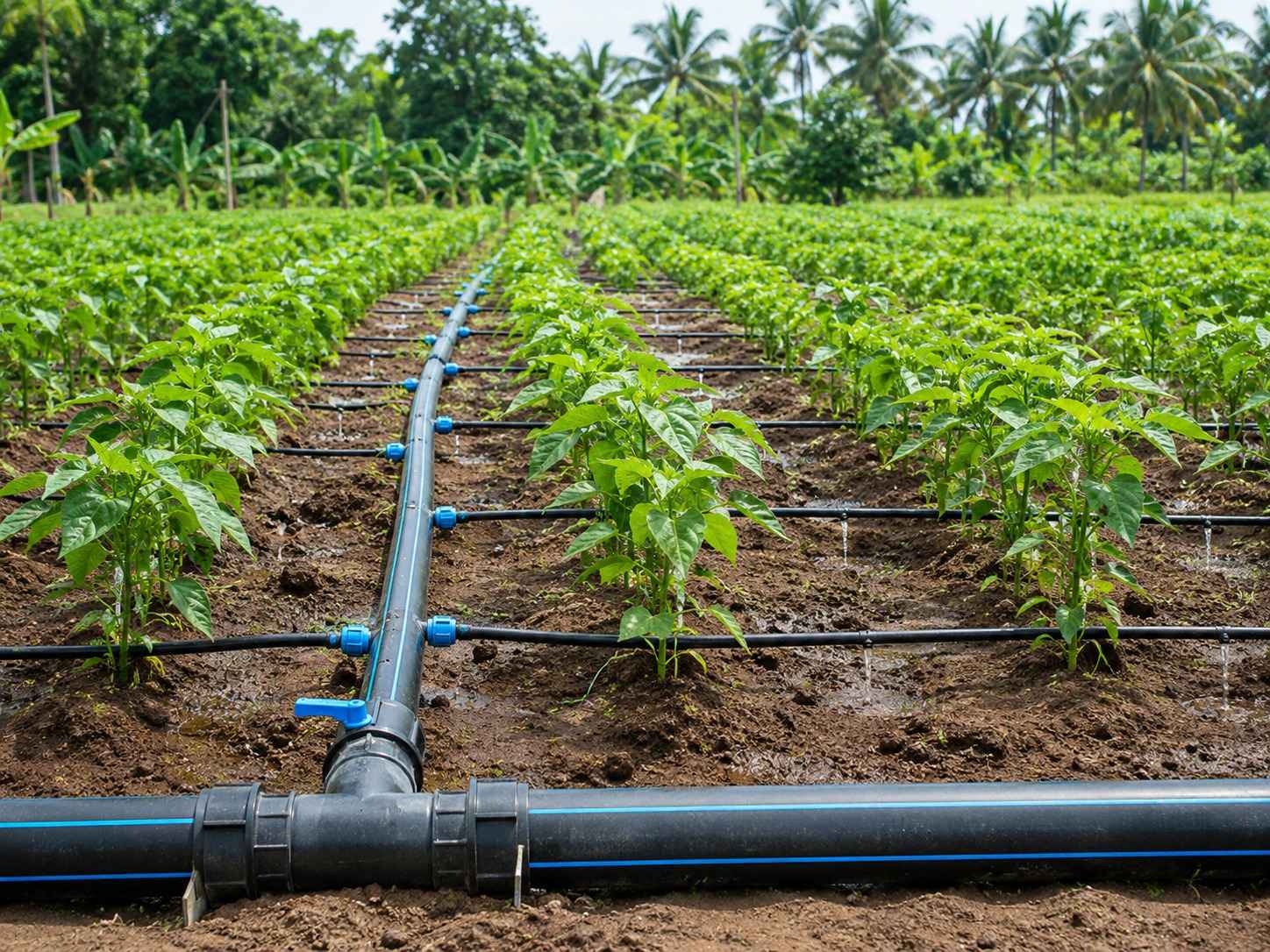
Modern plantation irrigation systems help farm managers distribute water more efficiently and in line with crop needs. Two widely used methods are drip irrigation and sprinklers. Both need a well-designed distribution network, including a main pipe that can deliver water according to the system’s flow and pressure requirements.
The Secret to Farm Productivity: Why Is Manual Watering Being Left Behind?
Imagine managing a fruit orchard with dozens or even hundreds of plants. Every plant needs water, while soil conditions, weather, and growth needs are not always the same. If all watering is done by hand, the work can take a lot of time and water distribution risks being uneven.
An irrigation system helps plan how water is delivered. Farm managers can adjust the watering method based on crop type, land area, water source, and soil conditions. As a result, labor is used more efficiently and water delivery can be controlled.
Types of Modern Irrigation Systems to Maximize Harvests
Drip Irrigation to Save Water and Plant Nutrients
Drip irrigation, also known as trickle irrigation, delivers water slowly through emitters or drippers to the plant root zone. This method suits fruit orchards, vegetables, and horticultural crops that need more targeted water control.
Because water is delivered close to the root zone, evaporation and unnecessary runoff can be reduced. The system also lets farm managers set watering schedules and volumes according to crop needs. Its efficiency still depends on design, emitter maintenance, soil conditions, and watering times.
Sprinkler Systems for Wider Watering Coverage
Unlike drip irrigation, sprinklers spread water through sprinkler heads that spray water like rain. This system can be used for larger farm areas, especially when crops need relatively even wetting of the soil surface.
However, choosing sprinklers requires considering water pressure, the spacing between sprinkler heads, wind direction, and flow requirements. The wrong pressure can make spray coverage less than optimal.
The Main Line Pipe: The Key to a Successful Irrigation System
Whatever the watering method, water must first flow from the source into the distribution network. This is where the main pipe, or main line, comes in. This line receives the flow from the pump and delivers it to the branches of the irrigation network.
Why Choose PE-100 HDPE Pipes?
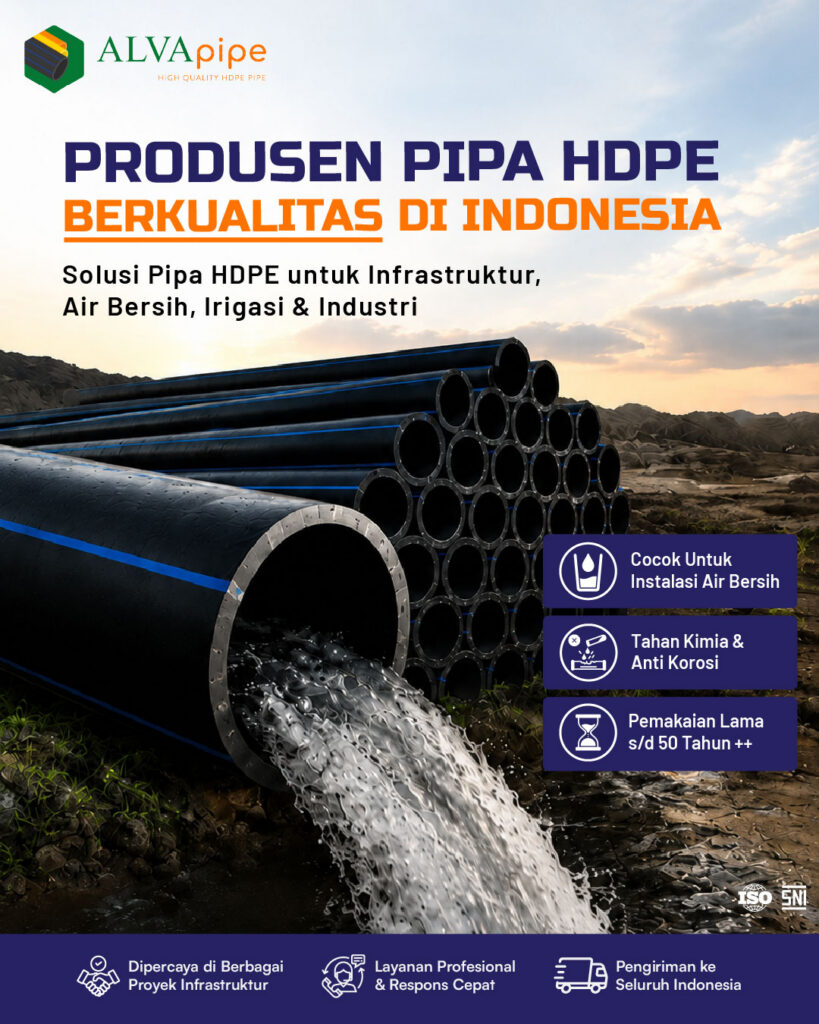
For water distribution lines, the best HDPE pipe should be chosen based on material, diameter, pressure class, and installation conditions. One option worth considering is ALVApipe Water from PT Alpha Cikupa Makmur.
ALVApipe Water uses virgin-grade PE-100 material. HDPE is flexible and corrosion-resistant, making it a good choice for water distribution networks that cross land with varied contours. In certain sizes, products supplied in rolls also make handling and installation in farm areas easier.
Consider Land Conditions and Water Pressure During Installation
Installing a pipe network in a plantation requires attention to ground surface conditions, distribution routes, and pipe position. Land with rolling contours or changes in elevation can affect route planning and water pressure requirements.
Besides land conditions, pump pressure and possible pressure surges also need to be calculated. Pipe diameter and pressure class must follow flow calculations and network design, not be chosen based on estimates alone. Make sure the joints and fittings used match the pipe specifications so water distribution runs well.
Buying ALVApipe Water Irrigation Pipes with Delivery Across Indonesia
ALVApipe Water is manufactured by PT Alpha Cikupa Makmur in Tangerang. This product holds SNI 4829.2:2015 certification and a TKDN (local content) value of 69.42%. Meanwhile, ISO 9001:2015 is applied as the company’s quality management system.
Product information is available on the ALVApipe website. For farm procurement, land managers can consult on pipe size, pressure class, and quantity before requesting a quote. ALVApipe also delivers across Indonesia, with shipping costs and estimates confirmed based on the order and destination.
For retail purchases or to check the products available, visit ALVApipe on Shopee. Both channels let buyers choose the way to buy that suits them.
Practical Steps to Start Modernizing Farm Irrigation
Before installing a new network, map out the land area, crop types, water source, and flow requirements. Decide whether drip irrigation or sprinklers are a better fit, then calculate the pressure requirements and main pipe diameter. Also make sure the materials, joints, and installation method suit field conditions.
With this planning, material recommendations can be made more accurately. ALVApipe Water can be a choice for water distribution lines that need PE-100 HDPE pipes with clear product specifications.
Planning an irrigation system for your farm or plantation? Discuss your main pipe needs, size options, and product quotes with the ALVApipe team via WhatsApp +62 877-2666-3295 or click Contact Us for more information. The ALVApipe team is ready to help!