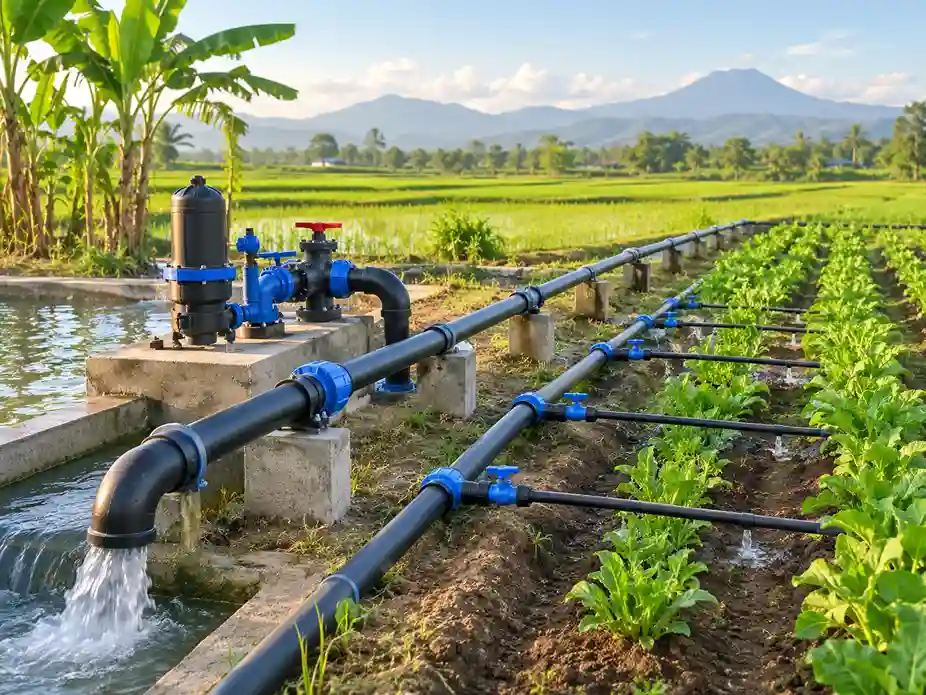
A smooth and efficient water distribution system across farmland highly depends on the condition of the irrigation pipes being used. Unfortunately, pipe damage is not always visible and is often only noticed after it begins to impact crop yields.
Identifying early signs of damage can help reduce the risk of water distribution problems and prevent higher repair costs. Here are several indicators that your irrigation pipes may need to be replaced.
7 Signs Your Agricultural Pipes Are Damaged
Here are some common signs that your agricultural irrigation pipes may already be damaged and need replacement.
1. Water Pressure Starts to Decrease
An unusual drop in water pressure is often one of the earliest indicators of a problem with the piping system. The causes may include blockages, hidden leaks, or deformation of the pipe walls that disrupt water flow.
If the pressure continues to decrease even after checking the pump system, the pipe itself is likely the main source of the problem.
2. Multiple Leakage Points Appear
Leaks occurring in multiple areas usually indicate that the overall condition of the pipes has started to deteriorate.
This issue commonly occurs in pipes that have been exposed to continuous pressure, temperature changes, or chemical substances from fertilizers over a long period.
3. Water Flow Is No Longer Evenly Distributed
Uneven water distribution across the farmland indicates a disruption somewhere along the irrigation pipeline. Possible causes include partial blockages, small cracks, or loose pipe connections.
As a result, some plants receive less water than others, causing inconsistent growth and reduced crop performance.
4. Pipe Connections Frequently Experience Problems
Pipe joints that repeatedly become loose, leak, or require resealing are signs that the connection system is no longer functioning optimally.
This problem often occurs in pipes with improper installation methods from the beginning or in materials that have lost their flexibility and durability over time.
5. Pipes Develop Cracks or Deformation
Fine cracks, surface bubbles, or changes in the pipe shape are signs of structural damage that should not be ignored.
Such deformation usually occurs due to excessive pressure, physical impact, or pipe materials becoming brittle because of prolonged use.
6. Repairs Are Required More Frequently
If repairs need to be carried out repeatedly in the same areas within a short period, it is a sign that the pipes are approaching the end of their service life.
Continuous repairs can increase operational costs significantly, while only providing temporary solutions.
7. The Pipe Age Is Nearing or Exceeding Its Service Life
Each pipe material has a different service life depending on its quality, installation method, and operating conditions. As pipes approach or exceed their expected lifespan, the risk of structural failure increases.
For more detailed information about the service life of HDPE pipes, you can read our guide on HDPE pipe lifespan as a reference.
How to Choose the Right Replacement Pipe?
After determining that your old irrigation pipes need to be replaced, the next step is ensuring that the new pipes are truly suitable for your farmland requirements.
Choosing the wrong pipe at this stage can cause the same problems to occur again in a short period. Here are several important factors to consider.
1. Irrigation System Type
Each irrigation system operates differently, which affects the type of pipe required.
Drip irrigation systems typically use smaller-diameter pipes with multiple water outlets, while sprinkler irrigation systems require pipes that can withstand higher pressure to distribute water across a wider area.
Matching the pipe type with the irrigation system helps improve water distribution efficiency and reduces the risk of future damage.
2. Required Working Pressure
Every pipe is designed to operate within a specific pressure limit, commonly known as Pressure Nominal (PN).
If the water pressure in the field exceeds this limit, the pipe becomes more vulnerable to cracks or leaks, even if the material quality is still good.
On the other hand, selecting a pipe with a PN rating far above the actual requirement only increases costs without providing significant additional benefits. Therefore, calculate the required working pressure before choosing the pipe specifications.
3. Pipe Diameter
Pipe diameter determines the amount of water that can flow through the system at a given time.
For large agricultural areas or high water demand, small-diameter pipes may cause slow water flow and uneven distribution, especially at the far ends of the field.
Conversely, using a pipe diameter that is too large for a small-scale application can unnecessarily increase installation costs.
The ideal diameter should be selected based on land size, distribution distance, and required water flow capacity.
4. Land Conditions
Land contours, soil conditions, and potential ground movement during the rainy season should be considered before installing new irrigation pipes.
Farmland with uneven terrain is generally better suited for flexible pipes that can follow the shape of the land without requiring too many joints.
5. Pipe Material
Material is one of the most important factors determining pipe durability. Agricultural irrigation pipes must be resistant to water pressure, temperature changes caused by weather conditions, and exposure to chemicals from fertilizers and pesticides commonly used by farmers.
Using unsuitable materials can cause pipes to deteriorate faster and require frequent replacement.
Why Do Many Modern Irrigation Systems Use HDPE Pipes?
HDPE pipes are known for their flexibility in adapting to various land conditions, including areas with uneven terrain. This material is also resistant to corrosion, making it a reliable choice for long-term use compared to metal-based piping materials.
HDPE pipe joints are highly durable when installed using the proper methods, helping minimize the risk of leaks at connection points. These characteristics make HDPE pipes suitable for pressurized irrigation systems that require reliable and efficient water distribution.
With proper usage and installation, HDPE pipes also offer a long service life, reducing the frequency of replacements and lowering long-term maintenance costs.
When Is the Best Time to Replace Irrigation Pipes?
There are several recommended times to replace irrigation pipes, including:
- Before the planting season begins, ensuring that the irrigation system is ready to operate without disruptions.
- During irrigation system upgrades or replacements.
- When repair costs become repetitive and are no longer considered efficient.
- When increasing production capacity requires a larger and more reliable water distribution system.
Identify Pipe Damage Signs Before They Affect Crop Yields!
A good irrigation system does not only rely on a regular watering schedule. The condition of the pipes supporting the entire water distribution network must also be continuously maintained to ensure optimal performance.
For example, even when an irrigation schedule has been properly arranged, crop yields can still be affected if the pipes begin to leak, crack, or experience unnoticed pressure loss. These issues can lead to uneven water distribution and directly impact plant growth across the farmland.
Therefore, choosing irrigation pipes from a manufacturer that consistently maintains material quality is essential to minimize the risk of premature damage from the beginning of installation.
As an SNI-certified water pipe manufacturer in Tangerang, PT Alpha Cikupa Makmur through its ALVApipe brand provides high-quality HDPE pipes with consistent product standards in every production batch.
With standardized manufacturing processes and SNI certification, every ALVApipe HDPE water pipe used for your agricultural irrigation system is guaranteed to deliver reliable quality and performance.
Contact the ALVApipe team today via WhatsApp +6287793102838 for consultation and the best price offer tailored to your farmland irrigation needs!