For pipe and building material stores, there is usually a minimum order requirement that must be met when purchasing from suppliers, commonly known as the Minimum Order Quantity (MOQ).
For some stores, MOQ can feel burdensome. For example, you may only need to purchase 50 HDPE pipes, but the supplier requires a minimum order of 200 pipes.
As a result, you are forced to buy more than you actually need. Your capital gets tied up in inventory, and unsold products may eventually become dead stock.
However, is MOQ always a disadvantage? Or are there benefits that many store owners have yet to realize?
Let’s explore the complete explanation below!
What Is MOQ in the Pipe Business?
MOQ (Minimum Order Quantity) refers to the minimum number of units required by a supplier in a single purchase transaction.
Suppliers will only process an order once the quantity ordered meets their predetermined minimum requirement.
In the context of pipe purchases, MOQ can be defined in several ways:
- Unit-based: For example, a minimum order of 100 pieces of HDPE pipes with an OD of 110 mm per purchase.
- Value-based: A minimum purchase value requirement. For example, custom pipe orders at ALVApipe require a minimum order value of approximately IDR 40–45 million per pipe type/specification.
- Weight- or volume-based: Commonly applied to bulk materials or large-sized products.
For instance, if a pipe distributor sets an MOQ of 150 pieces for 3-inch HDPE pipes, a store cannot order only 50 pieces, even if that is all they currently need. The order must meet the minimum of 150 pieces for the supplier to process it.
Why Do Pipe Suppliers Implement MOQ?
Every order processed by a supplier involves fixed costs, regardless of the order quantity. These include administrative costs, production preparation costs, packaging expenses, and shipping fees.
If the order quantity is too small, these costs cannot be covered, making the transaction unprofitable for the supplier.
By implementing MOQ, suppliers aim to:
1. Improve Production and Distribution Efficiency
Producing pipes in larger quantities reduces the cost per unit. The greater the production volume, the more efficient the overall costs become, including the manufacturing of HDPE pipes.
2. Reduce Logistics Costs
Shipping large quantities of pipes is more efficient than handling multiple small shipments. Logistics costs per unit decrease as shipment volumes increase. Buyers can also benefit from these savings through more competitive pricing.
3. Maintain Price Stability
Suppliers can plan production schedules and procure raw materials more accurately. Better planning leads to more stable production costs and helps maintain consistent selling prices for buyers.
4. Optimize Factory Operations
For direct manufacturers such as HDPE pipe factories, MOQ helps schedule production capacity more efficiently. Without MOQ, production schedules become unpredictable, and machine capacity may not be utilized optimally.
How Pipe Stores Can Manage MOQ Effectively
1. Plan Purchases Accurately
Before deciding to fulfill an MOQ requirement, analyze whether the purchase volume aligns with your estimated sales within a reasonable period.Use historical sales data as the basis for your calculations.
For example, if average weekly sales of a specific HDPE pipe size are 30 pieces and the supplier’s MOQ is 200 pieces, the inventory would be depleted in less than seven weeks. This is still considered reasonable.
However, if the same product only sells an average of 10 pieces per month, an MOQ of 200 pieces means inventory will remain in stock for nearly 20 months. In such cases, it is better to avoid the purchase.
2. Manage Inventory with the Right System
Implement an inventory recording system for every product. Categorize products based on their turnover rates into fast-moving, medium-moving, and slow moving.
The right MOQ strategy differs for each category. Fast-moving products can consistently meet MOQ requirements, while slow-moving products should either have their MOQ negotiated or only be purchased when there is a specific customer demand.
It is also important to understand the role of HDPE pipe manufacturers in maintaining stock stability, as choosing the right manufacturing partner significantly affects your store’s MOQ management.
3. Collaborate or Make Joint Purchases
If a supplier’s MOQ is too high to fulfill independently, consider collaborating with other pipe stores that have similar needs.
Several stores can share a single order that meets the MOQ requirement, allowing each business to obtain the products they need without bearing the entire financial burden alone.
4. Negotiate with Suppliers
MOQ is not always fixed. Many suppliers are open to negotiation. Some approaches you can try include:
- Offering long-term purchasing commitments in exchange for a lower MOQ.
- Requesting staggered deliveries, where the total order meets the MOQ, but shipments are divided into multiple stages.
- Asking about alternative products with lower MOQs but equivalent specifications.
How to Determine Whether a Supplier’s MOQ Is Worth It
Before agreeing to a supplier’s MOQ, compare the average sales volume of the product with the required MOQ, then estimate how long it will take for the stock to sell out.
Formula :
Estimated Stock Depletion Period = MOQ ÷ Average Daily Sales
Example:
- Average sales of HDPE pipe OD 110 mm: 10 pieces per day
- Supplier’s MOQ: 200 pieces
- Estimated depletion period : 200 ÷ 10 = 20 days
Twenty days is still considered a reasonable timeframe. Inventory turnover is relatively fast, capital is not tied up for too long, and the risk of dead stock remains low. This MOQ is worth fulfilling.
Now compare it with another scenario:
- Average sales of HDPE pipe OD 250 mm: 5 pieces per month
- Supplier’s MOQ: 200 pieces
- Estimated depletion period: 200 ÷ 5 = 40 months
Forty months is quite concerning. Inventory would remain in storage for more than three years, capital would be tied up for an extended period, and the risk of dead stock would be extremely high. This MOQ should either be negotiated or avoided.
As a general guideline, MOQs that result in an estimated stock depletion period of less than 60 days are still considered safe for most pipe stores. Beyond that, more careful consideration is needed before making a decision.
When Is MOQ Beneficial and When Should It Be Avoided?
Not every MOQ should be accepted, and not every MOQ should be rejected. Understanding the right circumstances is key.
MOQ Is Worth Fulfilling When:
- The product is classified as fast-moving, with rapid inventory turnover and consistent demand.
- The unit price after meeting the MOQ provides better margins than purchasing smaller quantities.
- Warehouse capacity is sufficient, and there are no significant additional storage costs.
- You already have regular customers or upcoming projects requiring large quantities of the product.
MOQ Should Be Negotiated or Avoided When:
- The product falls into the slow-moving category, with low turnover and unpredictable demand.
- The capital required to meet the MOQ would disrupt the store’s operational cash flow.
- There is no certainty that the inventory will be sold within a reasonable timeframe.
- The supplier offers no flexibility regarding delivery schedules or installment payment options.
If your current supplier’s MOQ does not suit your store’s situation, there are two possible steps you can take:
- Negotiate directly with the supplier; or
- Consider partnering with a first-hand manufacturer that offers greater flexibility in MOQ structures due to the absence of intermediary layers.
ALVApipe: The Best HDPE Pipe Manufacturer and Distributor with Flexible MOQ for Stores of All Sizes!
One of the biggest challenges pipe stores face in managing MOQ is finding suppliers willing to accommodate flexible purchase quantities.
ALVApipe is here to provide the solution!
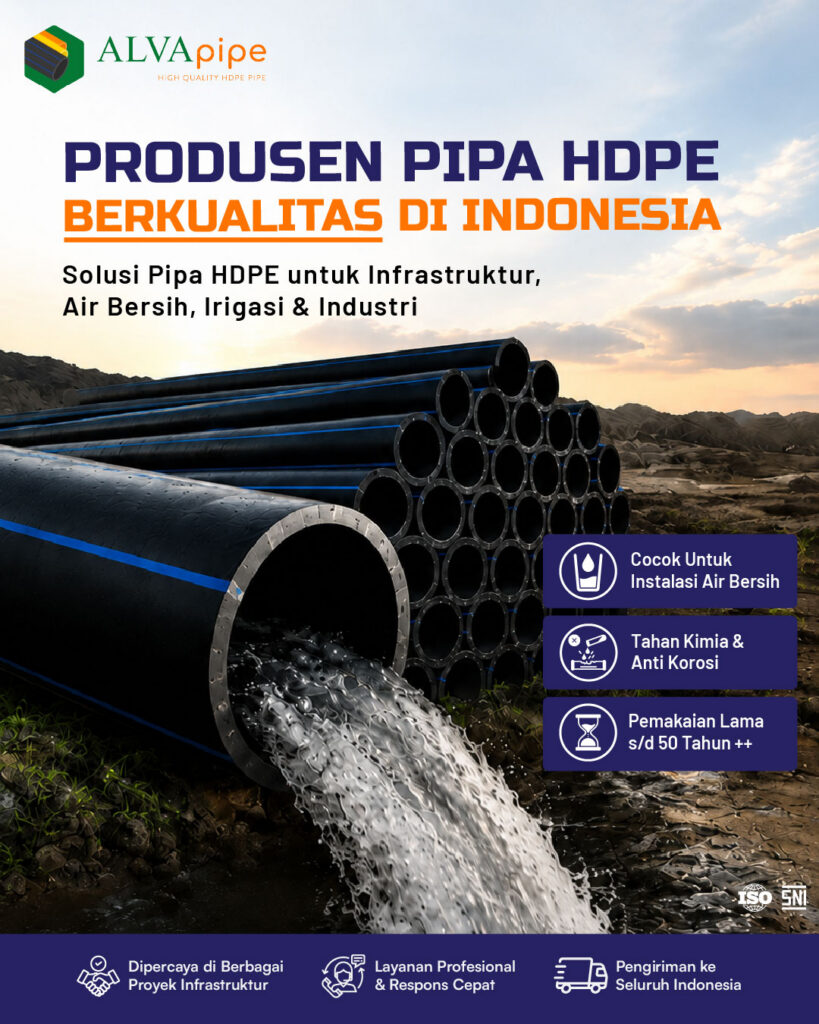
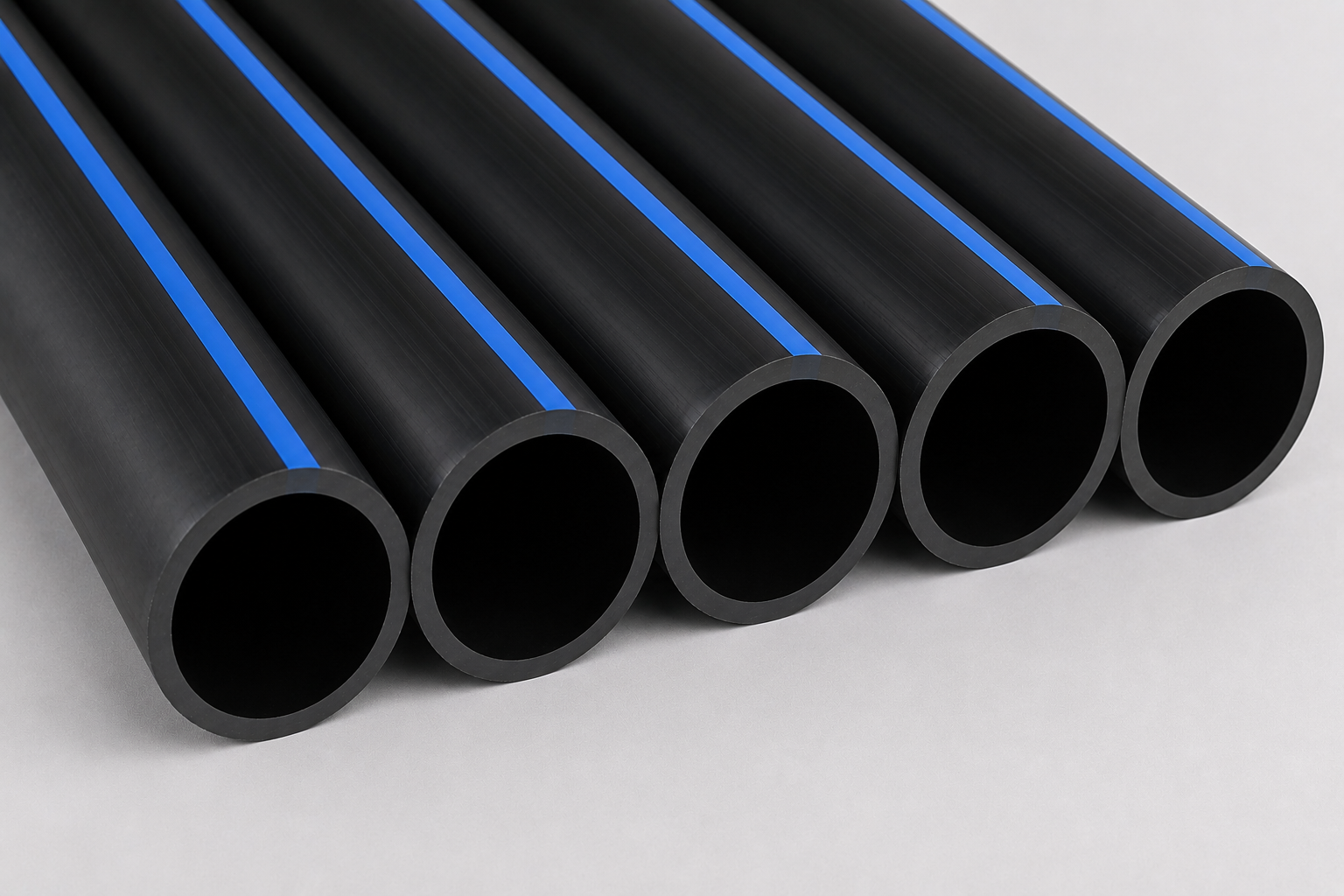
Through the ALVApipe Water product line, high-quality PE 100 HDPE water pipes featuring their signature black color with blue stripes are now available starting from retail purchases by the meter to wholesale purchases in 250-meter rolls.
Available in various sizes ranging from OD 20 mm to OD 90 mm, with pressure class options of SDR 11 PN 16 and SDR 17 PN 10, every ALVApipe Water product complies with SNI and ISO standards, making them suitable for clean water distribution systems across various industries.
Product Advantages You Will Enjoy:
- Non-toxic and free from heavy metals, making them safe for drinking water distribution.
- Resistant to corrosion caused by chemicals and electrolytic reactions that damage metal pipes.
- Smooth inner surfaces for maximum flow capacity.
- Flexible and bendable, allowing convenient installation and roll packaging.
- Resistant to UV exposure and high pressure.
- Estimated service life of more than 50 years when used properly.
Would you like to consult first or request a quotation for bulk purchases?
Contact the ALVApipe team via WhatsApp at +62 877-2666-3295 to get more information and the best wholesale pricing offers today!