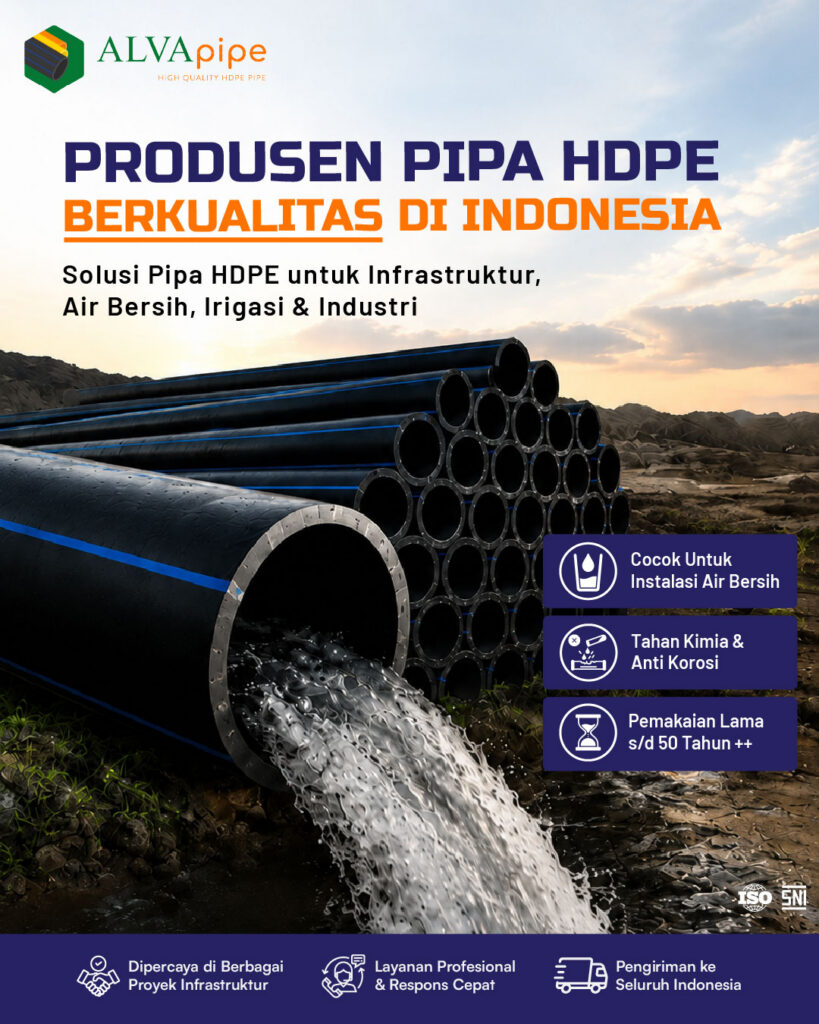
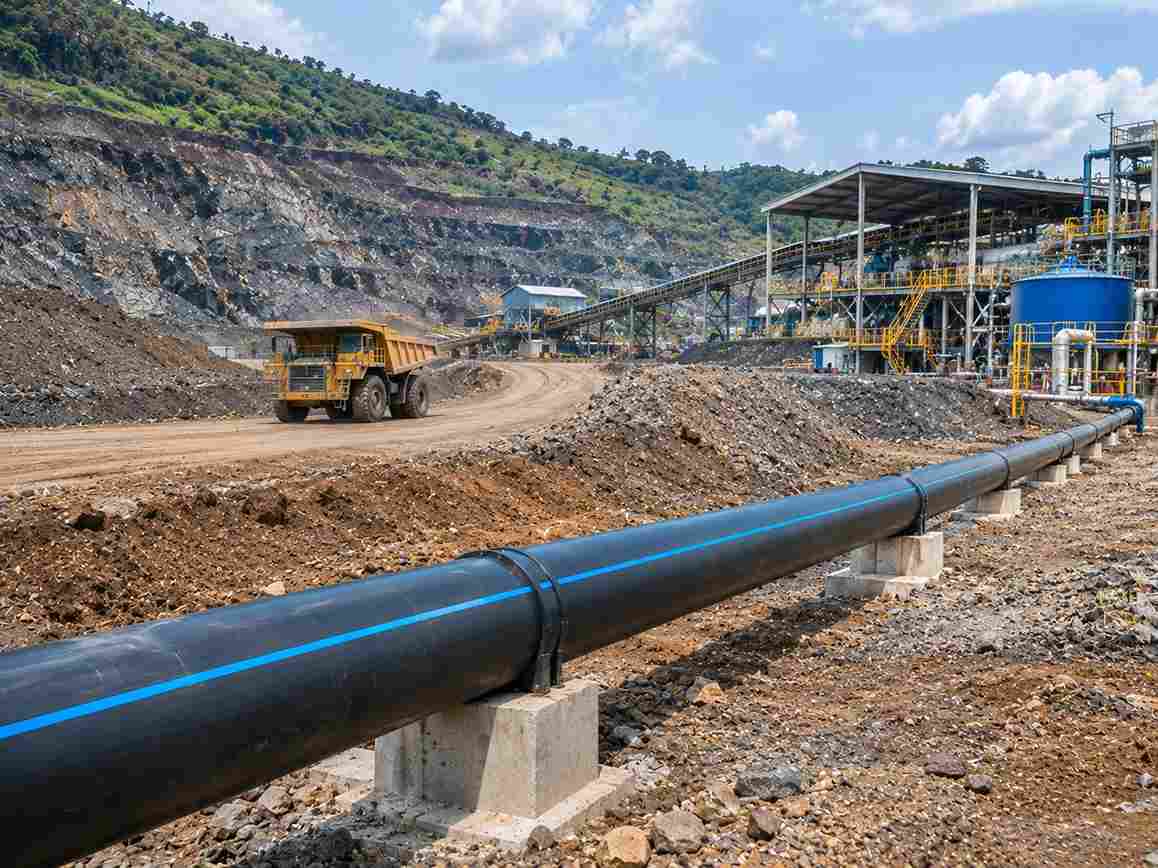
The functions of HDPE pipes in the mining industry include conveying slurry and tailings, dewatering systems, clean water distribution, and water supply for dust suppression. HDPE is flexible, corrosion-resistant, and abrasion-resistant, making it one of the materials considered for piping infrastructure in mining environments, as long as the specifications match operating conditions.
Mining and the Challenge of Fluid Lines in Extreme Terrain
Mining activity does not depend only on heavy equipment and processing machines. There is a support network that has to work behind the scenes to keep every activity running, and one of them is the piping system.
Imagine a site after heavy rain. Muddy water floods the pit floor, haul roads fill with dust when the weather turns hot again, and processing facilities need a consistent water supply.
Situations like this show that pipes are more than connecting lines. Material choice and network design affect how smoothly work runs, maintenance needs, and fluid management in the mining area.
Main HDPE Pipe Functions That Support Mining Operations
1. Slurry and Tailings Transport
Mineral processing produces a mixture of water and solid particles known as slurry. After the valuable minerals are separated, the processing residue can take the form of tailings that need to be conveyed to storage or management facilities.
HDPE pipes can be considered for these transport lines because they are abrasion-resistant and do not corrode like metal materials. However, slurry carrying sand, fine rock, or mineral particles can gradually wear down the pipe wall.
That is why pipe selection must account for particle size and concentration, flow velocity, pressure, and expected wear. Product specifications for water distribution also do not automatically mean the pipe is approved for every type of slurry and tailings.
2. Dewatering and Drainage Systems
Rainwater and groundwater seepage can collect at the bottom of the pit. If not managed, the standing water can block heavy equipment access and excavation work.
A dewatering system helps move this water using pumps and a pipe network to holding ponds or treatment facilities. HDPE pipes can be a choice for certain lines because they are flexible and corrosion-resistant.
To determine the specifications, the engineering team needs to calculate pump flow, working pressure, line length, elevation, and installation conditions.
3. Clean Water Distribution for Site Needs
Water demand in a mining area does not stop at production. Processing plants, operations offices, employee housing, and sanitation facilities also need a well-planned supply network.
In this role, HDPE pipes carry water from the source or storage facilities to distribution points. The smooth inner surface helps reduce pressure loss from flow friction.
ALVApipe Water is a PE-100 HDPE product designed for water distribution. Its diameter and pressure class specifications need to be matched to the project’s network design.
4. Dust Suppression on Haul Roads
Mine transport roads, or haul roads, are a source of dust when mining vehicles pass, especially in dry weather.
Water is used in dust suppression systems through sprinklers, water tanks, or mobile spray units. A pipe network can help deliver water to filling points and spray installations.
With the right planning of flow, pressure, and line placement, the water supply for dust control can be managed more consistently.
Why Is ALVApipe Water Worth Considering?
ALVApipe Water uses virgin-grade PE-100 material. The characteristics of this HDPE include mechanical strength, flexibility, impact resistance, and resistance to corrosion and abrasion. The product also has a smooth inner surface to support water flow.
These characteristics make ALVApipe Water worth considering as the best HDPE pipe for project water distribution networks that match its product specifications. For special applications such as slurry, tailings, or mine water with aggressive chemical content, a separate technical evaluation is needed before the material is specified.
Other equally important factors are the choice of diameter, PN pressure class, SDR, joining method, and mechanical protection at the installation site. Pipe flexibility does not mean the installation can ignore bend radius, supports, bedding, or potential loads from heavy equipment.
Easy Procurement and Project Logistics Support
ALVApipe is a brand of PT Alpha Cikupa Makmur, with production facilities in Cikupa and the Jatake Industrial Estate, Tangerang.
ALVApipe Water holds SNI 4829.2:2015 product certification and a TKDN (local content) value of 69.42%. The company also applies the ISO 9001:2015 quality management system. This standards information and product documentation can be used for evaluation in the material procurement process.
For projects in various regions, ALVApipe delivers across Indonesia. Size, pressure class, volume, destination, and delivery schedule can be coordinated before ordering so material needs are easier to plan.
Discuss Your Project Pipe Needs with ALVApipe
Every mining site has different terrain and piping needs. That is why pipe selection must match the fluid type, working pressure, diameter, and installation design so the materials used truly meet operational needs.
To learn more about product options and specifications, visit the ALVApipe website. You can also buy through ALVApipe on Shopee.
If you would like to consult on HDPE pipe needs or request a quote for a mining project, contact the ALVApipe team via WhatsApp +62877-2666-3295, or click the Contact Us button below to get information and a quote that fits your needs.