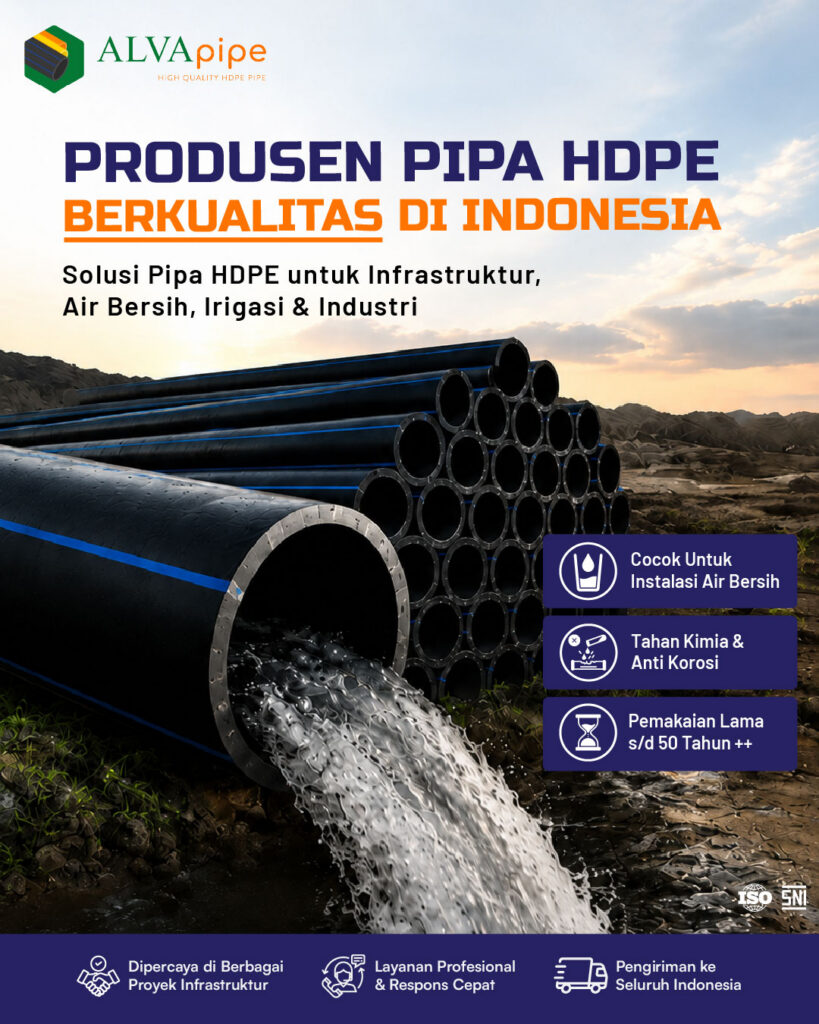
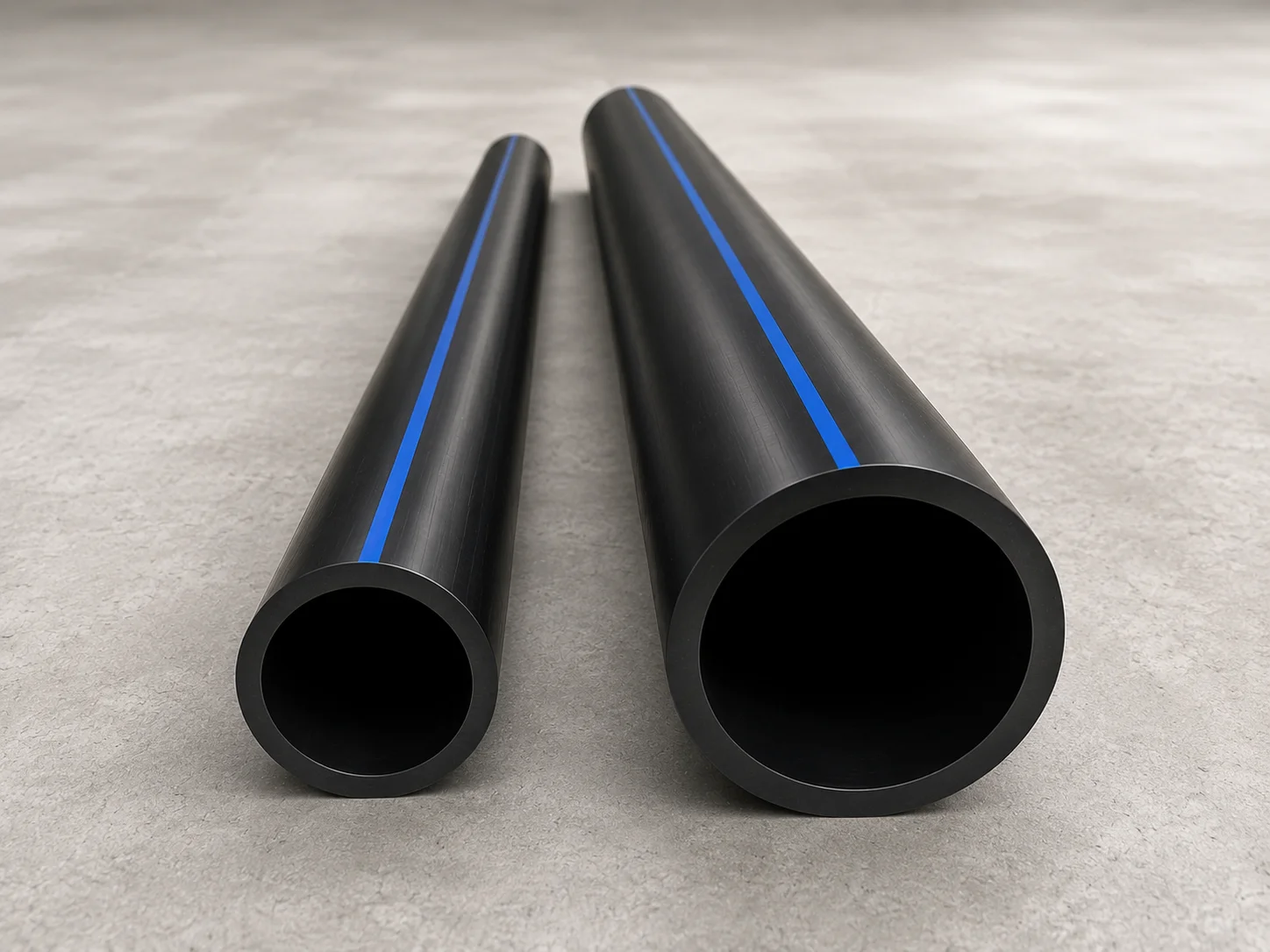
Not all HDPE pipes use materials with the same characteristics. PE80 and PE100 are two types of HDPE materials commonly used in water piping systems.
Understanding the differences between PE80 and PE100 helps in selecting the right pipe according to application requirements. This article discusses the differences between these two materials and the factors that should be considered before making a selection.
What Are PE80 and PE100?
PE80 is one type of polyethylene material used as a raw material for HDPE pipes with a certain level of strength. This material has been widely used in various piping systems before the development of higher-strength materials was introduced.
PE100 is a newer generation of polyethylene material developed with a denser molecular structure, providing higher mechanical strength compared to PE80. This material is widely used in modern piping systems that require higher pressure resistance.
The code “PE” in HDPE materials stands for polyethylene, while the number behind it indicates the Minimum Required Strength (MRS) value of the material. A higher number indicates greater material strength against internal pressure over a long service period.
The PE classification code is directly related to the overall material characteristics, including pressure resistance, required pipe wall thickness, and material efficiency. The higher the PE classification, the greater the working pressure that can be handled by the pipe with the same dimensions.
Differences Between PE80 and PE100
The differences between PE80 and PE100 can be seen from several technical aspects below.
| Aspect | PE80 | PE100 |
| Minimum Required Strength (MRS) | 8 MPa | 10 MPa |
| Pressure resistance | Lower compared to PE100 | Higher, capable of handling greater working pressure |
| Wall thickness for the same pressure | Requires thicker pipe walls | Can use thinner walls at the same working pressure |
| Flow capacity efficiency | Smaller internal diameter due to thicker walls | Larger internal diameter resulting in more efficient flow |
| Pipe weight | Generally heavier at equivalent pressure ratings | Generally lighter due to thinner walls |
| Common applications | Low to medium pressure systems | High-pressure and large-scale systems |
The difference in wall thickness directly affects material efficiency and pipe production costs. PE100 pipes allow thinner walls to be used at the same working pressure, enabling more optimal water flow capacity with a similar outside diameter.
When Should PE80 Be Used?
The selection of PE80 pipes can be considered under the following conditions:
- Systems with suitable pressure requirements:
Suitable for piping systems with low to medium working pressure that do not require pressure resistance as high as PE100. - Projects with specific specifications:
Some projects have technical standards or specifications that specifically require PE80 material according to the design requirements. - Applications that do not require PE100 characteristics:
Small-scale systems with light operational loads can generally still rely on PE80 materials without compromising performance.
When Should PE100 Be Used?
The selection of PE100 pipes is generally more recommended for the following conditions:
- Pressurized water distribution systems:
Required for clean water distribution networks operating continuously under high working pressure. - Large-scale pipeline networks:
Suitable for projects covering large areas that require large-diameter pipes and high pressure resistance. - Infrastructure and utilities:
Widely used in public infrastructure projects such as drinking water networks, irrigation systems, and urban utility systems. - Mining and industrial applications:
Required for industrial and mining applications that demand high resistance to pressure and harsh operational conditions. - Systems requiring material efficiency:
Suitable for projects prioritizing efficient material usage without reducing water flow capacity.
Choose the Right HDPE Pipe for Your Project with ALVApipe!
PE80 and PE100 have different characteristics and are designed for different application requirements. PE100 offers higher material strength, but the selection should still be adjusted according to working pressure, system design, and applicable project specifications.
ALVApipe provides PE 100 HDPE water pipes certified with SNI 4829.2:2015, TKDN 69.42%, and ISO, available in diameters ranging from OD 20 mm to 250 mm with various pressure classes from SDR 11 to SDR 26.
Manufactured directly from its production facility in Tangerang since 1998, every ALVApipe product undergoes strict quality control standards to ensure consistent quality in every delivery batch.
Let’s contact the ALVApipe team now via WhatsApp +6287726663295 to get the best offer for SNI-certified HDPE water pipes for your store inventory needs!