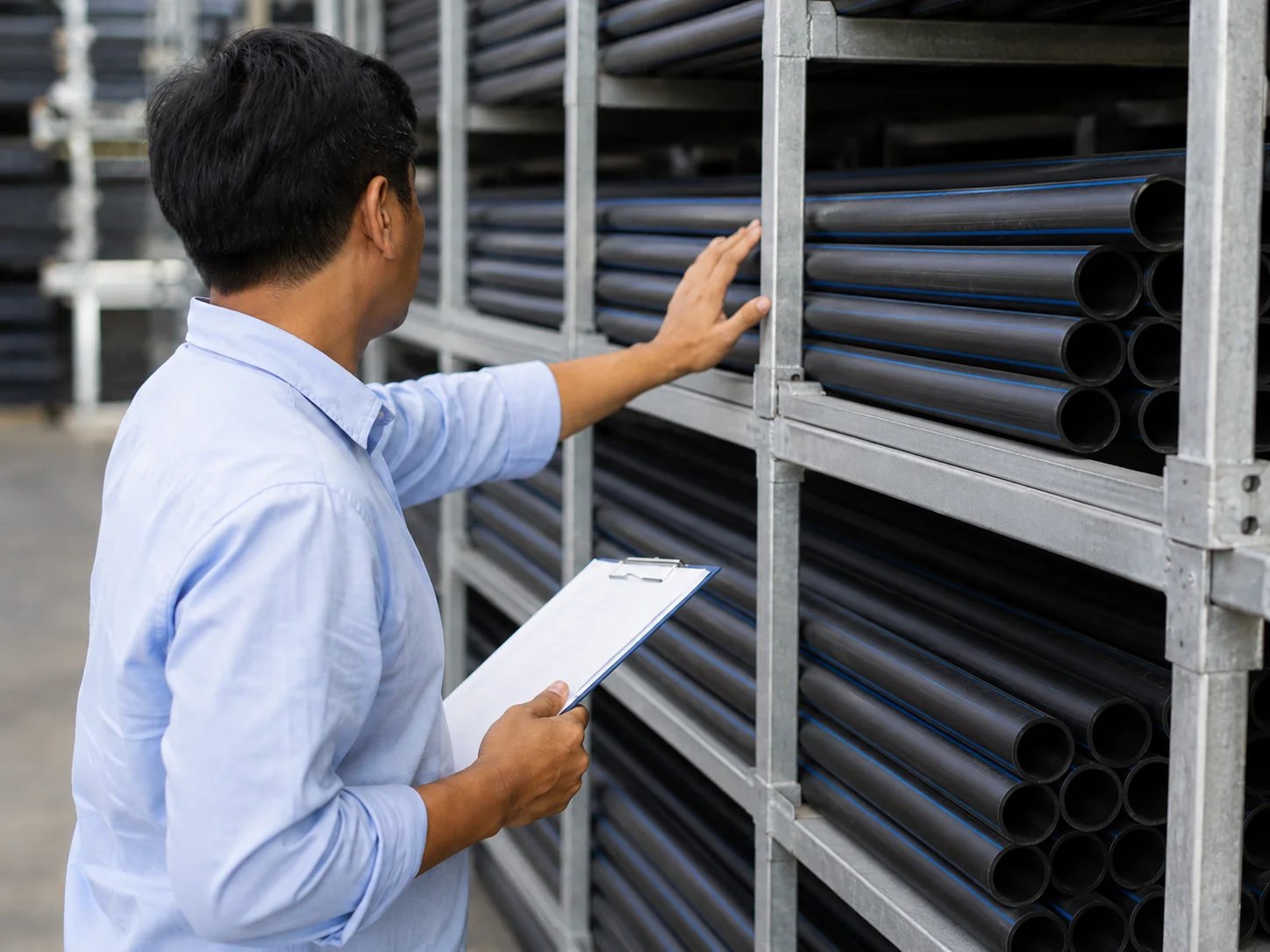
Every pipe store owner and distributors wants to have complete stock to meet various customer needs. However, limited capital often makes this difficult to fully achieve.
The problem is that buying the wrong stock can mean money gets tied up in slow-moving inventory.
Capital that should be used for other operational needs ends up sitting idle in the warehouse in the form of pipes waiting for buyers.
So, how can you still make a profit without overstocking?
Smart Tips for Buying Water Pipe Stock
1. Analyze Demand and Sales Data
Before buying water pipe stock, avoid deciding quantities based only on estimates. Check sales data from previous months first.
Pay attention to which pipe types are most frequently purchased, which sizes sell the fastest, and which products rarely leave the warehouse.
For example, if a certain HDPE pipe size is commonly used for housing installations or projects, prioritize stocking that item.
On the other hand, slow-moving products should be purchased in smaller quantities to avoid overstocking.
2. Gradual Buying Strategy
Purchasing water pipe stock does not always have to be in large quantities. If capital is limited or market demand is unstable, buying can be done gradually based on actual sales performance.
For example, if a certain HDPE pipe size sells about 50 units per month, you can initially stock around that amount. Once stock starts to run low and demand remains high, you can place another order.
3. Apply the FIFO System
FIFO (First In, First Out) is a stock management system where items that arrive first should be sold first.
This prevents older stock from being pushed to the back of the warehouse due to newer inventory.
For example, if HDPE pipes arrive at the beginning of the month and additional stock arrives mid-month, the earlier batch should be sold first.
FIFO is important because pipes stored too long may become dirty, scratched, deformed due to stacking, or difficult to track without proper labeling.
4. Utilize a Pre-Order System
For water pipe types with unpredictable demand, it is better to use a pre-order system. Pre-order means customers place orders first, and you purchase the product from the supplier only after the order is confirmed.
This method is suitable for rare pipe sizes, special pipe types, or products that are only needed for specific projects.
5. Manage Cash Flow Properly
Do not use all your capital to buy stock, as the business still requires funds for operational costs such as rent, salaries, shipping, electricity, and unexpected expenses.
It is better to set a dedicated budget for inventory purchases within a specific period, such as weekly or monthly, so stock buying does not disrupt other business needs.
For example, if the business has a monthly operational budget of Rp50 million, you can allocate Rp30 million for inventory, Rp10 million for operational costs, and Rp10 million as reserve funds.
When stock runs low, purchasing should still follow the predetermined budget plan.
How to Maximize Collaboration with Suppliers
1. Negotiate More Flexible MOQ
MOQ (Minimum Order Quantity) is the minimum purchase quantity set by manufacturers or distributors. For stores with limited capital, a high MOQ can be a burden because it requires buying large amounts of stock at once.
Therefore, do not hesitate to ask whether pipe manufacturers or distributors offer more flexible MOQ options.
For example, at ALVApipe, you can purchase HDPE pipes in retail per meter with a minimum order of only 3 meters. For instance, a 3/4 inch (25 mm) HDPE pipe PN 10 has a retail price of around Rp5,748 per meter.
This way, stores with limited capital can still stock products as needed without overstocking.
2. Favorable Payment Systems
In addition to price and order quantity, payment terms should also be discussed with manufacturers or distributors.
For businesses with limited capital, heavy upfront payments can disrupt cash flow. As a result, it becomes difficult to cover other operational costs such as rent, salaries, shipping fees, or additional stock purchases.
Therefore, try to discuss more flexible payment options, such as installment payments, partial down payments, or payment terms after goods are received.
3. Product and Stock Consultation
When purchasing pipe stock, avoid relying solely on assumptions. Utilize the supplier’s team to consult about the products that best match market demand.
For example, you can ask which HDPE pipe sizes are most in demand, which types are suitable for household use, or what specifications are commonly used for water distribution projects.
Consultation also helps avoid purchasing slow-moving products. Instead of buying many sizes at once, you can prioritize products with high demand.
Optimize Your Stock by Partnering with ALVApipe!
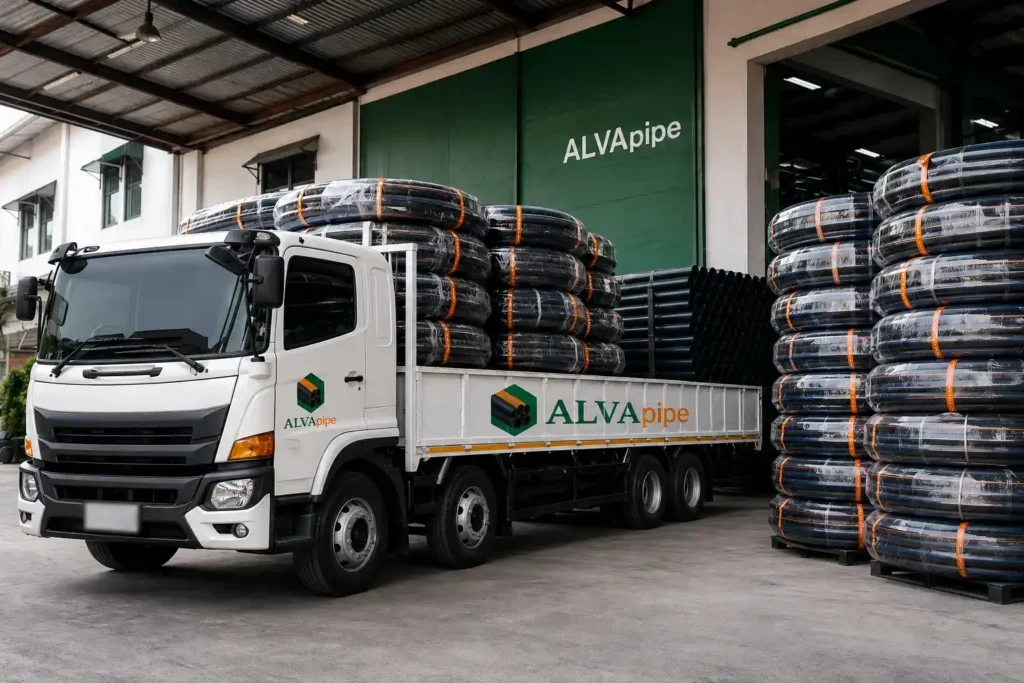
A good stock purchasing strategy becomes even more effective when supported by manufacturers and distributors who understand the needs of small-capital businesses.
PT Alpha Cikupa Makmur, through its brand ALVApipe, provides policies designed to support stores of all sizes.
ALVApipe does not set MOQ for in-stock HDPE water pipes, whether for retail per meter purchases or wholesale per roll.
MOQ only applies to custom specification products that require additional production processes. This means stores with limited capital can still purchase according to their needs.
All ALVApipe HDPE water pipes are made from PE 100 material, available in diameters ranging from OD 20 mm to 250 mm, with pressure classes from SDR 11 to SDR 26, and certified with SNI and TKDN from the Ministry of Industry.
So, don’t hesitate to consult your HDPE pipe needs with ALVApipe! Contact the ALVApipe team via WhatsApp at +6287726663295 for product recommendations and the best price offers tailored to your store’s needs.